Mannar Island
Twenty Thousand Leagues Under the SeaMannar Island lies off the northwestern coast of Ceylon, forming the Gulf of Mannar, a body of water renowned for its pearl fisheries. In the novel, this location becomes the stage for one of the most dramatic and revealing episodes of the voyage, an underwater excursion that tests the courage of the Nautilus's passengers and exposes a deep, hidden layer of Captain Nemo's character.
Geography and the Pearl Fisheries
The Gulf of Mannar, shaped by the long curve of Mannar Island, is the center of the world's most lucrative pearl fishing industry. Captain Nemo explains to Professor Aronnax that while pearl fisheries exist in the Bay of Bengal, the seas of the East Indies, China, Japan, and even off the coasts of America, it is off Ceylon that the richest rewards are reaped. The annual harvest, however, does not begin until March, and the Nautilus arrives a month early, ensuring the waters are deserted of fishermen. Nemo describes the brutal methods used by the local divers, who descend to depths of twelve meters with a heavy stone clutched between their feet, staying underwater for an average of only thirty seconds. He notes the terrible toll this occupation takes on the men, who often suffer from weakened vision, ulcers, and even apoplexy, all for a pittance—a single penny for each oyster that contains a pearl. This grim account sets the stage for the events to come, contrasting the immense wealth harvested with the human cost paid by the impoverished divers.
The Underwater Excursion and the Shark Attack
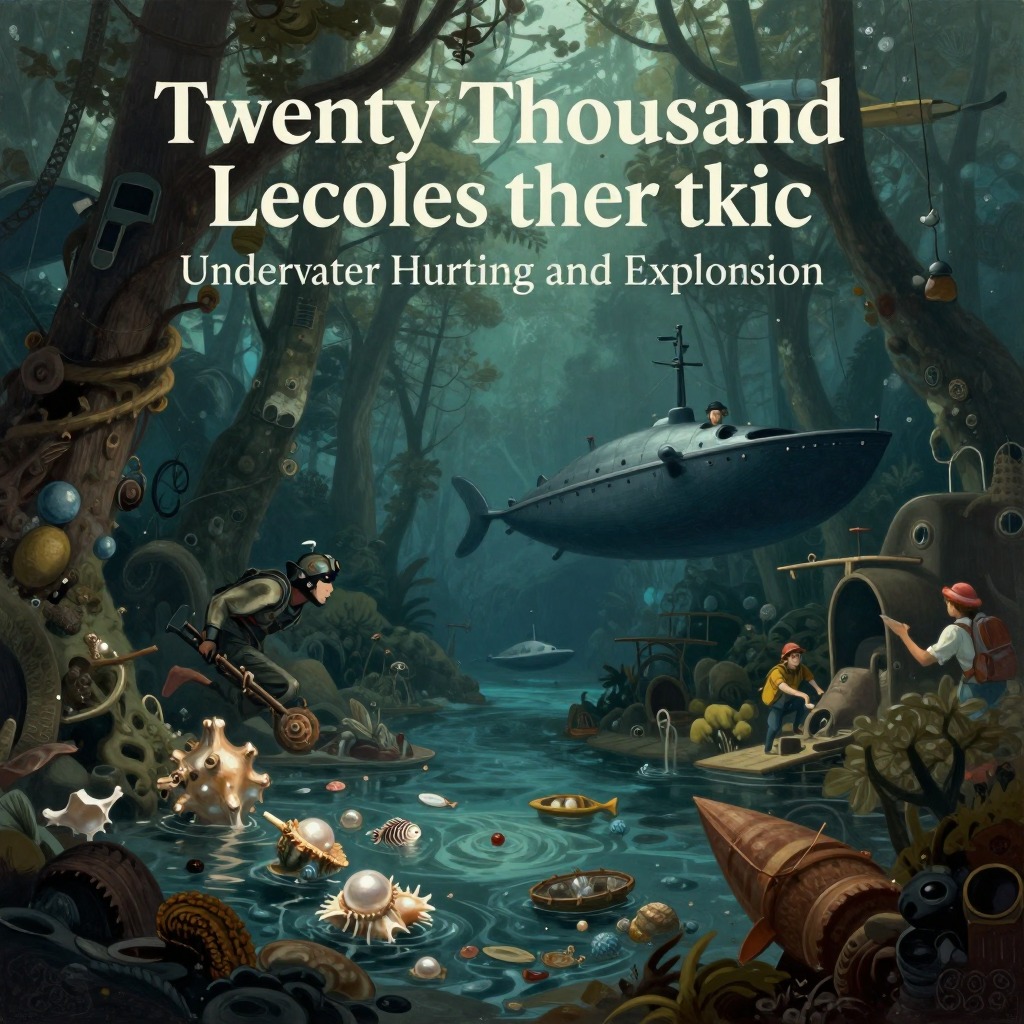
On the morning of the excursion, the Nautilus lies west of the bay formed by the mainland and Mannar Island. The skiff carries Captain Nemo, Aronnax, Conseil, and Ned Land to a shallow spot near the oysterbank. After donning their diving suits, they descend into the clear, sunlit waters. The seafloor is a carpet of mollusks and zoophytes, and they soon reach the bank of shellfish, where pearl oysters reproduce by the millions. Captain Nemo leads them to a hidden cave containing a titanic giant clam, within which rests a pearl the size of a coconut, a natural treasure he has been cultivating. The true drama unfolds when they witness a poor Indian fisherman diving for oysters. A gigantic shark, a Squalus melanopterus, attacks the man, knocking him to the seafloor. Captain Nemo, without hesitation, strides toward the monster with only a dagger, engaging in a desperate close-quarters battle. The fight is brutal, and Nemo is nearly killed when the shark's jaws open over him. Ned Land saves the captain by driving his harpoon into the shark's heart.
Consequences and Thematic Significance
After the shark is killed, Captain Nemo's first act is to revive the unconscious Indian fisherman. Once the man regains consciousness, Nemo pulls a bag of pearls from his diving suit and places it in the fisherman's trembling hands—a magnificent benefaction that saves the man's life and makes his fortune. This act of selfless generosity stands in stark contrast to the captain's usual misanthropic and vengeful demeanor. When Aronnax later reflects on the captain's matchless bravery and his devotion to a human being from a race he has fled, Nemo reveals the source of his compassion, stating with deep emotion, "That Indian, professor, lives in the land of the oppressed, and I am to this day, and will be until my last breath, a native of that same land!" This confession provides a crucial key to understanding Nemo's character: his war against humanity is not indiscriminate but is a war against oppressors, fueled by a personal history of loss and a profound solidarity with the oppressed. The incident at Mannar Island thus serves as a pivotal moment, humanizing the enigmatic captain and foreshadowing the deeper, more personal motives behind his actions, which are later connected to his role in the Cretan revolt and the sinking of the warship.