southern right whale
Twenty Thousand Leagues Under the SeaThe southern right whale (Eubalaena australis) is a large baleen whale that appears in the novel as a symbol of innocent, persecuted marine life. Captain Nemo explicitly refuses to allow Ned Land to hunt these whales for sport, arguing that humans have already depopulated entire whale populations and that the animals have enough natural enemies without human interference. This stance sets Nemo apart from the whaling industry and from Ned Land's professional instincts, and it establishes the southern right whale as a creature deserving of protection within the moral universe of the Nautilus.
Identity and Description
The southern right whale is a baleen whale, meaning it feeds by filtering plankton through the baleen plates in its mouth rather than by hunting large prey. It is distinguished from other whale species by its lack of a dorsal fin, its squat head, and its dark body. Anatomically, it differs from the white whale and the black right whale by the fusion of its seven cervical vertebrae, and it possesses two more ribs than its relatives. The species is known to frequent the southernmost and northernmost seas, and it has historically been hunted so relentlessly that it has taken refuge in the ocean basins of high latitudes.
Role in the Narrative
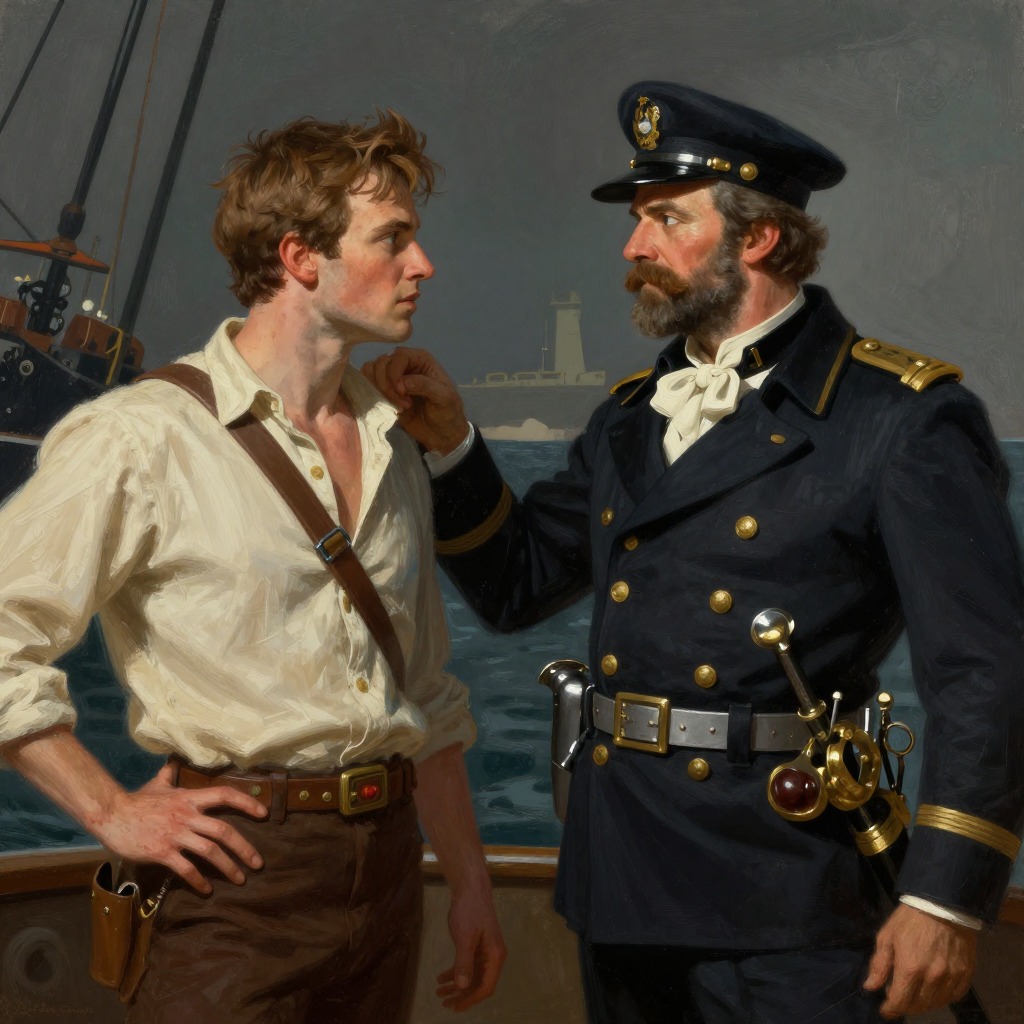
The southern right whale first appears when the Nautilus encounters a herd of these animals on the surface of the ocean. Ned Land, the Canadian harpooner, immediately recognizes them and becomes excited at the prospect of hunting them. Captain Nemo, however, refuses to allow the hunt, stating that killing these whales would be "killing for the sake of killing" and that humans have already committed a "reprehensible offense" by destroying decent, harmless creatures like the southern right whale. Nemo argues that the whales have enough natural enemies, such as sperm whales, swordfish, and sawfish, without human interference. This refusal marks a significant moment of conflict between Nemo and Ned Land, and it establishes Nemo's ecological ethics as distinct from the commercial and sporting values of the surface world.
Later, the Nautilus encounters a herd of sperm whales that are attacking the southern right whales. Nemo decides to intervene, not to save the right whales for their own sake, but to destroy the sperm whales, which he describes as "cruel, destructive beasts" that deserve to be exterminated. The Nautilus uses its steel spur to ram and kill dozens of sperm whales in a brutal, one-sided slaughter. After the battle, the Nautilus pulls alongside the corpse of a dead southern right whale that had been killed by the sperm whales. The whale's belly is riddled with bites, and a dead calf is still hanging from its mutilated fin. Nemo's men draw milk from the whale's udders, which Nemo offers to Professor Aronnax as a nutritious beverage. Aronnax samples it and finds it excellent, noting that it could be used to make salt butter or cheese.
Thematic Significance
The southern right whale serves as a focal point for the novel's critique of human violence and its exploration of natural justice. Nemo's refusal to hunt the whales for sport contrasts with his willingness to slaughter sperm whales in a mass execution, revealing the complexity and inconsistency of his moral code. The whale's death at the hands of sperm whales, despite Nemo's intervention, underscores the novel's theme that violence is an inescapable part of the natural world, even as humans are condemned for adding to it. The image of the dead mother whale with her dead calf is one of the novel's most poignant moments, and it reinforces the sense of loss and tragedy that pervades the underwater world. The southern right whale, like the coral cemetery and the sunken warship, becomes a symbol of the innocent victims of a world governed by predation and revenge.