Cassandra Vale Hotel Incident
Unchosen By My CEO Husband: A Marriage In Crisis Second Chance RomanceThe Cassandra Vale Hotel Incident is a manufactured scandal built around an encounter that, in physical terms, ends quickly and without an affair. Cassandra Vale comes to Aaron Colt’s hotel room after Beatrice Colt tells her where to find him, enters despite his objection, touches him, and is removed by security when Aaron Colt calls for help. Its decisive force lies in what happens afterward: a photograph of the scene is used to make Jacinta Colt believe that Aaron Colt lied about his whereabouts, while the Vale family’s influence turns the image into a weapon against Jacinta Colt’s credibility and work.
Causes and Background
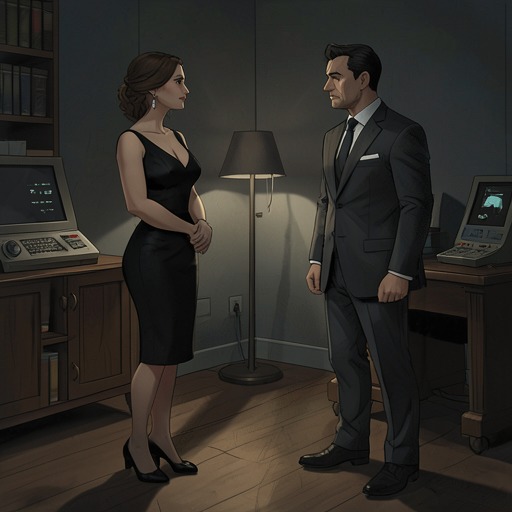
The incident begins with a warning from Beatrice Colt. Aaron Colt knows Cassandra Vale is in town because his mother has texted him to be nice, phrasing the message as though Cassandra Vale were an approaching storm. At eleven o’clock, Cassandra Vale appears at Aaron Colt’s doorway wearing a silk robe and the practiced smile preserved in photographs that Beatrice Colt keeps hidden in a drawer. The setting and costume make the visit look intimate before Cassandra Vale has said anything, and her familiarity with the room suggests the confidence of someone who believes the Vale family can enter Colt family spaces without permission.
Cassandra Vale frames the visit as harmless nostalgia, asking for one drink because Beatrice Colt has given her Aaron Colt’s location. Aaron Colt answers that he is married; Cassandra Vale replies that he is married to the wrong woman. The exchange makes the stakes explicit. This is not simply an accidental reunion but an attempt to reopen an old arrangement and displace Jacinta Colt. Cassandra Vale puts her hand flat against Aaron Colt’s chest, over his tie, and steps close enough to revive his memory of being twenty-six, when the social world seemed predetermined and he only had to stand where others placed him.
That moment of pressure is countered by a concrete memory of Jacinta Colt: labeling leftovers with masking tape and a Sharpie, keeping a drawer of notes, and maintaining three years of site plans on the kitchen table without asking anyone to make the work easier. The contrast separates Cassandra Vale’s inherited entitlement from Jacinta Colt’s sustained labor. Aaron Colt’s decision is therefore not only a rejection of physical temptation; it is a rejection of the social script that had previously allowed other people to decide what his marriage, loyalties, and public obligations meant.
What Happens at the Hotel
Aaron Colt removes Cassandra Vale’s hand from his chest, steps back into the hallway, and calls security from his cell phone. He specifically asks for a guest to be escorted out without an incident report. Security arrives, and Cassandra Vale smiles throughout the walk to the elevator, as though the outcome has still delivered something she wanted. Aaron Colt remains in the corridor afterward, unsettled by the possibility that the visit was designed less to secure intimacy than to create an image.
He types a message stating that Cassandra Vale came to his room, that he called security, and that nothing happened. The message is not sent. Aaron Colt looks instead at the unsigned Vale venue contract in his desk drawer and thinks about the gala ten days away, the hundreds of guests expected to attend, and what a phone call from the Vale family could do to everything Jacinta Colt has built. His deletion of the message is the incident’s first consequential concealment. He has resisted Cassandra Vale in the room but still protects the arrangement around her by withholding the truth from Jacinta Colt.
The photograph arrives without explanation. It shows a hotel corridor with warm light and gold wallpaper, Aaron Colt in the gray suit Jacinta Colt selected, and Cassandra Vale in a silk robe with her hand flat against his chest. The timestamp reads 11:07 p.m. on Tuesday, the same night Aaron Colt said he was staying in the city for early meetings. The image supplies exactly what the physical encounter did not: an apparently definitive visual narrative of intimacy. Its power comes from composition, timing, and omission. It records the touch but not Aaron Colt removing the hand, the hallway call, or the security escort.
Disclosure and Consequences
Jacinta Colt confronts Aaron Colt on Sunday morning after he finishes his run and shower and has resumed pretending that the weekend is normal. She places the photograph on the kitchen counter between them and identifies Tuesday, the hotel, and the entire sequence as the one occasion on which she will ask rather than discover. Aaron Colt does not open the image. His silence confirms to Jacinta Colt that the situation is bad and that he has already spent too long deciding which version of it to tell her.
Aaron Colt then gives a precise account: Cassandra Vale came to his room in a bathrobe, claimed she wanted one drink, and said Beatrice Colt had told her where he was; Cassandra Vale touched him; he removed her hand, went into the hallway, called security, and watched her leave. He insists that nothing happened and says he came home afterward. The account establishes that the photograph is not proof of an affair, but it also confirms the deeper injury: Aaron Colt knew the scene could be used against Jacinta Colt and chose silence rather than immediate disclosure.
The image becomes part of a larger public campaign. At the gala, Aaron Colt stands near the foot of the stage and watches Jacinta Colt while calculating the venue, the Vales, the contract, and the cameras. The photograph’s private ambiguity has become a public liability. Elliot Grant, who has worked in the relevant building for eleven years and has seen Jacinta Colt’s name attached to Renewal Centre site plans, budgets, and correspondence every Friday for three years, recognizes that the official story is being manipulated. He tells Jacinta Colt that his statement is a deposition, not a compliment, and offers to say aloud what he witnessed to people who matter.
The incident also exposes the family machinery behind the scandal. Beatrice Colt later admits that she gave Cassandra Vale Aaron Colt’s room and says she was managing an unfortunate situation. Aaron Colt accuses her of seating Jacinta Colt like a coat check, erasing Jacinta Colt’s name from her own project, and diagnosing her publicly before the gathered audience. Beatrice Colt’s language treats the humiliation as a matter of family management, while Aaron Colt’s response identifies it as coordinated removal: Cassandra Vale’s visit, the photograph, the venue, and the public treatment of Jacinta Colt belong to the same structure of control.
Relation to the Vale Scheme
The hotel image is not isolated from the financial and institutional conflict surrounding the Renewal Centre. Elliot Grant brings Aaron Colt the Northlight Consulting file and identifies ninety-five thousand dollars in consulting payments with no contracts, no deliverables, and only a mailbox in Delaware. Celeste Colt approved every payment, and the pages are countersigned by both participants; Elliot Grant also states that Beatrice Colt knew. He confirms that Jacinta Colt found the fraud first through a finance portal, at the very moment the city was being told that she could not manage an ordinary lunch order.
This discovery changes the meaning of the photograph. What first appears to be evidence that Aaron Colt betrayed Jacinta Colt becomes evidence of a wider effort to discredit the person most capable of seeing the fraud. The Vales can use the image because Aaron Colt’s silence leaves Jacinta Colt isolated, while Beatrice Colt’s authority supplies the family’s institutional cover. The scandal therefore works through both sexual insinuation and professional erasure: Cassandra Vale is presented as the desirable, socially legible woman, while Jacinta Colt is framed as unstable and excluded from the project she actually developed.
The consequences reach the Colt Foundation board. Celeste Colt resigns, the matter is referred to the state’s attorney, and Beatrice Colt is removed as chair of the foundation her family built over forty years. Beatrice Colt tells Aaron Colt that he chose Jacinta Colt over his own blood, emphasizing that Jacinta Colt is not even present. Aaron Colt answers that Jacinta Colt was present all along, but that Beatrice Colt taught him not to see her. The hotel incident thus becomes one of the facts through which Aaron Colt recognizes the cost of his former neutrality.
Later Reinterpretation and Significance
The incident remains a test of whether Aaron Colt can replace selective truth with accountable truth. In the hospital, when Beatrice Colt continues trying to negotiate, Aaron Colt names the connected facts without softening them: Celeste Colt stole from a charity, the Vales staged a photograph of her son, and Jacinta Colt was not having a breakdown. He states that Jacinta Colt endured a week of being treated as unstable by professionals and still found the fraud no one else could see. He chooses Jacinta Colt from anywhere, while also maintaining a boundary with his mother: he is present because she is his mother and he loves her, but he will not reverse the decision or permit the lawyers’ pressure to continue.
The event’s narrative structure turns a small physical encounter into a large ethical reversal. Cassandra Vale’s hand on Aaron Colt’s chest is initially legible as romantic evidence, but the later testimony, financial file, and family confrontation reveal an engineered scene whose real target is Jacinta Colt’s authority. Aaron Colt’s failure is not that he has an affair; it is that he sees the danger, writes the truth, and deletes it. His later conduct matters because it changes seeing into speaking and speaking into consequence.
That distinction is echoed in the marriage’s rebuilt practices. After more than a year of Dr. Weiss’s work, Sunday coffees, and a marriage rebuilt from the studs, Aaron Colt asks Jacinta Colt, “Help or witness?” The question reflects the lesson of the hotel photograph: presence is not the same as support, and observation is not the same as responsibility. Jacinta Colt asks for help with speech cards and the dinosaur fort, while Aaron Colt’s repeated showing up becomes the ordinary behavior that repairs what the staged image and his silence damaged. The Cassandra Vale Hotel Incident therefore marks the point at which the Colt marriage’s public appearance, family loyalty, and private truth can no longer be treated as interchangeable.