Haven House Recovery Gardens Opening
Unchosen By My CEO Husband: A Marriage In Crisis Second Chance RomanceHaven House Recovery Gardens Opening is the decisive public completion of Jacinta Colt’s attempt to reclaim both her work and the terms of her life. What began as a project whose authorship was erased by the Colt family becomes a nonprofit recovery garden bearing Jacinta’s name, designed around access, care, and explicit credit. The opening therefore matters as more than a ribbon-cutting: it turns private injury into public evidence and replaces a dynastic system of ownership with a structure in which everyone is credited and audited.
From Erased Project to Independent Institution
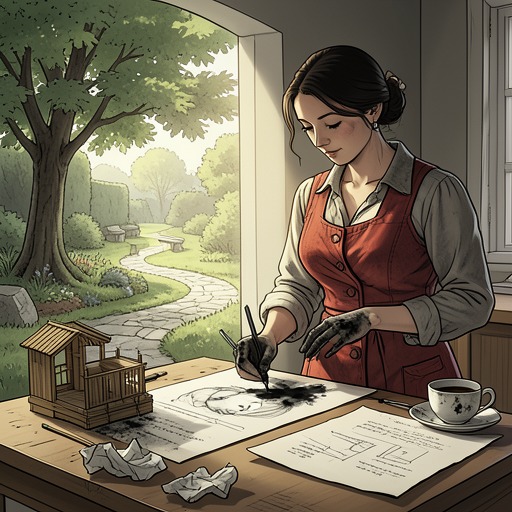
The opening grows out of the Renewal Centre conflict. Jacinta had developed the facility from an initial sketch on a takeout menu through years of planning and final board approval, yet the gala materials and public introductions reduced her to Aaron Colt’s wife. Aaron eventually acknowledged that his family had erased her authorship and that he had enabled the erasure. He terminated the Vale arrangement, released the security log and fraudulent email-registration evidence, and issued a statement naming Jacinta as the actual Renewal Centre designer.
The institutional break became material rather than merely rhetorical when Aaron transferred every Renewal Centre design file, plan, and piece of intellectual property touched by the foundation to Jacinta’s new nonprofit. The transfer was irrevocable, unconditional, and without a reversion clause. That legal act gave the new project control over the work that had previously been treated as family property, while Jacinta’s decision to pursue couples therapy on her own terms established that the marriage would not be allowed to substitute for accountability.
The Opening Site and Its Visible Principles
By the opening, the old camp is full. Over the summer, Noah’s crew and half the town install beds of lavender, sage, and lake-country roses. The paths are wide enough for people to walk side by side, and railings are placed throughout the grounds; in the project’s governing image, rails are promises. The quiet rooms contain soft light and deep chairs, while the kitchen uses bins, labels, and a four-color calendar, adapting the practical systems Jacinta has long used to keep domestic life functioning into an environment of collective care.
The central plaque states the institution’s authorship plainly: “The Haven House Recovery Gardens. Founder and designer: Jacinta Colt.” Its placement at kid height makes the name part of the daily environment rather than a ceremonial acknowledgment visible only to donors or executives. The site also includes the original Renewal Centre proposal, framed in the front hall with Jacinta’s initials and its date from three years before any gala. Elliot Grant presents the frame as evidence, and the document remains where every entrant can see whose name was there first.
Ceremony, Witnesses, and New Credit
The opening gathers the town in a setting that deliberately contrasts with the earlier gala culture. Sixty folding chairs appear again, but this time the assembly is not organized around a dynasty. Six women move into the gardens on Monday, six residents at the beginning of the institution’s work, and the charter guarantees that their names will appear on everything they make. The credit rule is written in language a lawyer cannot undo, turning recognition from personal generosity into institutional protection.
Jacinta gives the speech with forty prepared cards but needs only about nine. She speaks about the gardens, the rooms, and the porch light left on, and she describes her brain in her own words, through her own microphone, before a town that has previously used “overwhelmed” as a verdict against her. The scene restores her authority over the description of her own experience: the quality once treated as evidence of instability is no longer defined by the family or its allies.
Beatrice Colt attends because Jacinta invites her, not because the old family hierarchy automatically grants her a place. Two years of boundaries have produced neither total exile nor a return to former power, but a chair in the back row with conditions. Beatrice comes alone, wears gray, behaves, and afterward stands before the plaque for a long time before acknowledging that Jacinta built the place. Her presence makes the opening a controlled encounter with the family system that once denied Jacinta’s name.
The Children’s Ceremony and the Event’s Aftermath
Willa Colt and Theo Colt perform the ribbon-cutting. Willa holds the scissors, Theo holds the ribbon, and Willa, now ten and still the most organized person in the room, reads a speech written on a single blue index card: “Some families are companies,” she reads. “Ours is a nonprofit now. Everybody gets credited. Everybody gets audited.” The sentence condenses the project’s institutional revolution into a child’s public declaration. It rejects inherited secrecy and connects recognition with scrutiny rather than treating credit as a reward granted by power.
Theo misses the ribbon on his first attempt, tries again, and cuts it while the town cheers. The imperfect first snip keeps the ceremony from becoming a polished dynastic performance; the opening succeeds through repetition, participation, and repair. That night, after the children are asleep and the lake is quiet, the porch light remains on. A note waits on Jacinta’s pillow, continuing a nightly practice that has lasted for a year and placing the public opening within the longer, quieter work of rebuilding.
Significance
The opening resolves several connected struggles at once. It restores Jacinta’s authorship, gives survivors and residents protected credit, converts a contested facility into a nonprofit, and makes the built environment express the values of accessibility and mutual support. It also distinguishes repair from apology. Aaron’s earlier flowers and purchased gestures fail because they attempt to outsource meaning; Haven House instead embodies restitution through transferred property, public naming, enforceable rules, and Jacinta’s control of the microphone.
The event’s deepest reversal is spatial and political. The hotel and gala once positioned Jacinta as an unnamed marital accessory, while Haven House places her name on the wall, in the charter, and at the center of the institution’s public account. The gardens do not erase the earlier harm or restore the old family order. They establish a new one in which care is designed, authorship is documented, boundaries are real, and the people who live and work there are not required to disappear in order for the organization to function.