Hotel corridor photo
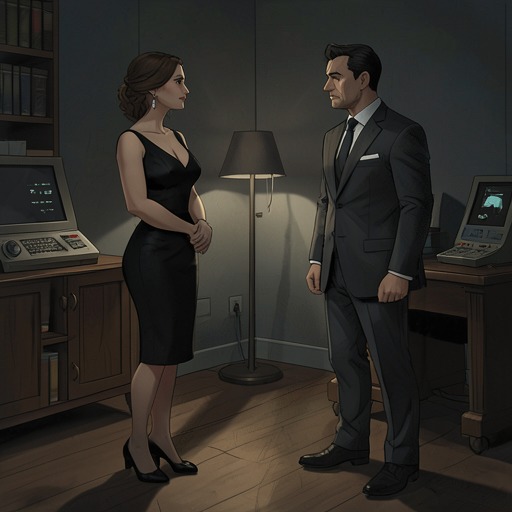
Unchosen By My CEO Husband: A Marriage In Crisis Second Chance RomanceThe hotel corridor photograph is the decisive object in the book’s revelation of how appearances can be engineered into evidence. Sent from an unknown number without accompanying text, it shows Aaron Colt in the gray suit chosen by Jacinta Colt, standing close to a woman in a silk robe beneath the warm light and gold wallpaper of a hotel corridor. The image appears to document betrayal, but its deeper significance is that it has been designed to produce a particular interpretation: Cassandra Vale arranged the setting, waited for the right composition, and used the photograph to make Jacinta doubt both her husband and her own judgment.
Appearance and Immediate Effect
The photograph arrives after Jacinta discovers that her name is missing from the Renewal Centre gala program. She initially tries to contain the omission as a possible drafting mistake, regulating her breathing according to the technique taught by her therapist and reminding herself that Aaron loves her. The unknown number interrupts that fragile explanation. There is no message to interpret or challenge, only the image itself, which gives the anonymous sender control over the first emotional meaning of the evidence.
Its visual details are calculated for maximum legibility. Aaron is recognizable in the gray suit Jacinta selected for him, while the woman’s silk robe and her hand placed flat against his chest imply private intimacy. Her upward-looking posture makes Aaron appear to be the threshold of an imminent affair, an impression intensified by the corridor’s warm light and gold wallpaper. The photograph therefore does not merely show two people in proximity; it supplies a complete scene of implied access, secrecy, and desire while withholding the circumstances that might complicate it.
The timestamp reads 11:07 p.m. on Tuesday, the night Aaron told Jacinta that he was staying in the city for early meetings. That correspondence between image and remembered explanation gives the photograph its apparent authority. It seems to fill the gap in Aaron’s account with a visual fact, turning an ordinary marital uncertainty into a specific accusation. The object’s power comes from the way its exact time appears to close off alternative interpretations.
The Corridor as a Recovered Scene
Later, Jacinta recognizes the corridor in person. The gold wallpaper and warm light are no longer generic photographic atmosphere; they become physical markers of a place she knows. She stops walking when she understands that the photograph was taken from the exact angle preserved in the image. The realization changes the corridor from a neutral hotel passage into the site of a deliberate act of observation.
The crucial discovery is not simply that the photograph was taken there, but that somebody stood in that precise position and waited for a frame. The corridor therefore reveals the presence of a photographer, a selected viewpoint, and a temporal act of preparation. What had first looked like spontaneous evidence of an affair becomes evidence of staging. The repeated details of the wallpaper, lighting, angle, and 11:07 p.m. timestamp turn the image into a reconstruction problem: the scene can be revisited, measured, and connected to the person who arranged it.
This shift also changes the photograph’s relation to Jacinta’s body and memory. At first, the image produces breath control, alarm, and the need to reassure herself that mistakes happen and that her husband loves her. When she later identifies the corridor, recognition precedes explanation: she stops walking because the physical environment confirms what the photograph concealed about its own production. The object is no longer transparent evidence of Aaron’s behavior; it becomes a conspicuous thing that demands investigation.
Investigation and Attribution
The photograph’s origin is established through a chain of practical records rather than through its visual appearance alone. Elliot Grant’s security contact obtains the hotel corridor log in a single phone call. Jacinta’s information-technology team then spends three days tracing the email account that was almost her name: “Jacinta Colt” with two t’s. The account was registered through a vendor on the Vale events payroll, linking the communications surrounding the photograph to Cassandra Vale’s organizational network.
The image is consequently understood as one component of a broader campaign. Cassandra waited in the corridor for a usable frame, created a fake email to move a meeting, supplied Beatrice Colt with the word “overwhelmed,” and texted Jacinta from a burner number. The photograph’s anonymous delivery is thus part of a coordinated attempt to shape what different people believe about Jacinta, Aaron, and the state of the marriage. Its apparent simplicity conceals multiple channels of manipulation.
Aaron confronts Cassandra with the assembled file in the lobby bar of her family’s hotel. He identifies the corridor photograph as an intentional setup and asks why he should not give the evidence to every journalist in Chicago. Cassandra remains unbothered, treating the exposure as a negotiation rather than a moral crisis. She explains the stakes through the venue and the Vale development deal, which she describes as worth forty million over five years. Her account places the photograph within a commercial strategy: the manufactured marital image was useful because it could destabilize Aaron’s private life while protecting or advancing the Vale interests.
From Apparent Proof to Counter-Evidence
Cassandra’s explanation establishes the photograph’s central reversal. She staged a photograph, but Aaron, in her formulation, staged a marriage. The contrast does not restore the image to innocence. Instead, it gives the object a double function. It is false as proof that Aaron cheated, yet true as evidence that people around the marriage were willing to construct scenes, suppress information, and exploit emotional vulnerability for institutional gain.
The photograph also exposes the weakness of a marriage dependent on presentation. Jacinta’s name has already disappeared from the gala program, and the image arrives at the moment when she is attempting to interpret that omission as harmless. The visual accusation therefore attaches itself to an existing wound. It makes the absence of public credit and the suspicion of private betrayal feel like parts of the same pattern, even before the investigation confirms that someone has deliberately connected them.
Its later evidentiary value depends on details that initially made it persuasive. The exact timestamp permits comparison with Aaron’s account. The corridor’s distinctive wallpaper and lighting allow Jacinta to identify the location. The fixed camera angle reveals that someone waited for the scene rather than merely encountering it. The gray suit ties the image to Jacinta’s own act of choosing Aaron’s clothes, making the apparent betrayal feel personal while also helping establish the photograph’s authenticity as an image of Aaron. Every detail that once intensified the accusation becomes material for proving manipulation.
Narrative and Thematic Significance
As an object, the hotel corridor photograph embodies the book’s concern with authorship, credit, and manufactured truth. Cassandra’s manipulation depends on producing a compelling frame and allowing others to supply the story around it. The photograph resembles a finished narrative whose missing context is filled by fear, marital expectation, and social rumor. Its power is therefore not located only in what the camera captured, but in the interpretation the image pressures its viewers to perform.
The object also marks a movement from emotional evidence to accountable evidence. Jacinta first receives it as a private shock from an unknown sender; later, the hotel log, the traced email, and the burner-number messages place it inside an investigable structure. The photograph cannot by itself explain who arranged the scene or why, but it can preserve the angle from which the scene was manufactured. That distinction allows the image to survive its own falsity: it ceases to prove adultery and begins to prove orchestration.
In the final confrontation, the photograph becomes the clearest emblem of the conflict between appearance and construction. Cassandra uses it to suggest that Aaron’s marriage is itself a performance, while Aaron uses the recovered facts to expose the performance surrounding the image. The corridor photograph thus does not resolve the marriage’s truth on its own. It forces the characters to confront who selected the frame, who benefited from it, and how readily a staged picture can govern the lives of the people placed inside its story.