Abbot family
Under Your Spell: A Romance Boxed Set of Masked Balls, Haunted Gardens, Magic, and MoreThe Abbot family is the bloodline at the center of the plantation’s supernatural history: its prosperity began with a deceptive acquisition, and its descendants were subsequently marked by a curse imposed by the dispossessed Moriarty family. For generations, the family’s inheritance was therefore both material and fatal. The curse turned the Abbot name, the plantation, and the family’s succession into parts of one repeating mechanism, but the surviving heir ultimately changes that inheritance by returning the property and bringing peace between the two lines.
Origins and the Plantation
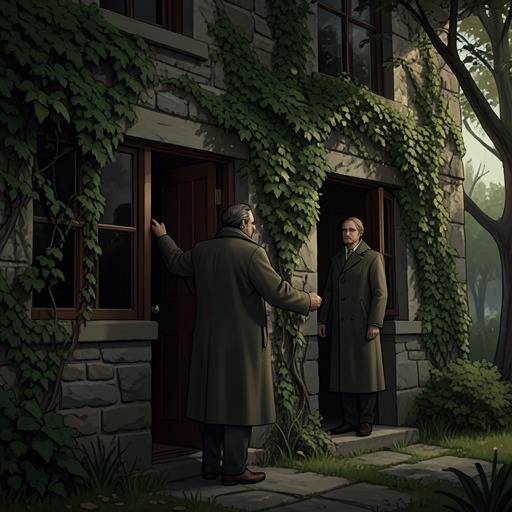
The family’s connection to the plantation reaches back to the 1800s, when the Abbots acquired a place that had once been beautiful and well maintained. It hosted numerous parties and attracted local politicians, actors, wealthy visitors, and other respectable or influential figures. This public prosperity forms the polished surface of the family history; beneath it lies the act that made the estate morally unstable. According to Gertrude, the Abbots did not purchase the plantation from the Moriarty family in an ordinary transaction. They obtained it through trickery, probably a card game, although Gertrude is not completely certain about the precise method.
The Moriarty family had moved south from Salem, Massachusetts, in the early 1800s. After losing the plantation, the Moriartys laid a curse on the Abbots. The family’s possession of the house consequently became inseparable from the injustice through which it had been obtained. The plantation was not merely an inherited home or an expensive burden; it was the physical remainder of a broken bargain, carrying the grievance of one family into the lives of another.
The Curse Across Generations
The curse expressed itself through a pattern of premature deaths. At first, an individual death might have appeared ordinary, but over the years the repetitions became impossible to dismiss. Abbot descendants kept dying in October, including the narrator’s parents and grandparents. The recurrence made the calendar itself threatening, while the family’s inability to explain or stop the pattern deepened its isolation.
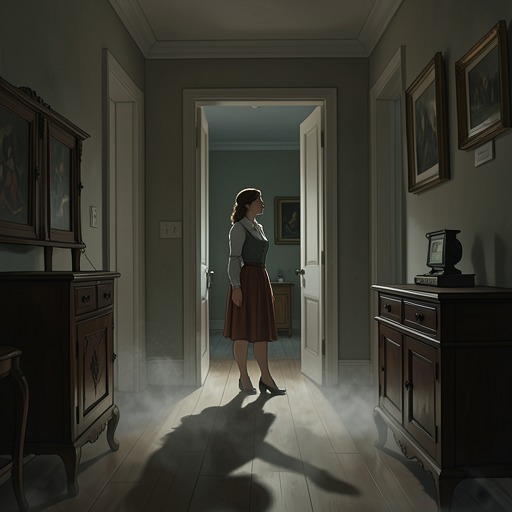
The family’s older stories preserve fear as carefully as they preserve ancestry. The narrator recalls that a great-grandmother hated living at the plantation and was almost afraid to remain there, yet was even more frightened of what might happen if she left. That divided fear—terror of the house on one side, terror of abandoning it on the other—shows how completely the curse had narrowed the family’s choices. The house was already deteriorating by the time the narrator’s great-grandparents tried to maintain it, and it had become a money pit. The grandparents wanted nothing to do with it, and their distance from the plantation may help explain why they lived longer than the narrator’s parents, though the narrator can only wonder about the connection.
The curse also depends on continuation. Gertrude explains that most Abbots do not live long, but they survive long enough to ensure that the family line continues. The ghostly force attacking the heirs needs an heir of its own in order for the curse to go on. This turns reproduction into a supernatural obligation rather than a private family matter: the bloodline must continue so that the punishment can continue with it.
The Last Heir and the Countermeasure
By the time of the family’s crisis, the narrator is the sole living Abbot. The date of the grandparents’ funeral is only two days away, and it also falls on the anniversary of the narrator’s parents’ funeral. October is associated not only with the family’s deaths but with the broader cultural memory of Harry Houdini’s bad month, making the narrator’s observation that October has been unkind to both Houdini and the Abbots a bleak piece of historical patterning.
The surviving heir responds not by accepting the plantation as an unquestionable inheritance but by identifying the original wrong embedded in it. The proposed solution is to return the property to the Moriarty family: because the Abbot family cheated the Moriartys out of the plantation, restoring it might nullify the reason for the curse and therefore lift it. Katrina Moriarty is offered ownership of the southern plantation, despite her confusion about what she would do with it. The gesture treats restitution as a practical magical intervention. Rather than defeating the curse through force, the heir attempts to remove the injustice that gives it power.
The plan succeeds. Katrina declares that the curse is over and that peace has been established between the two family lines. She also mourns the many Abbots who died before the resolution became possible. The surviving heir answers that the danger is finished and that the heir is now safe, then embraces Katrina and credits both her and Ryder. The family’s inherited story ends at the point where property is relinquished, responsibility is acknowledged, and survival no longer requires another generation to inherit the same threat.
Family Continuity Beyond the Curse
The Abbot family’s ending is not simple extinction. After the curse is broken, the surviving heir has a wife, Jade Abbot, and a daughter, Jasmine, who is already one year old. The domestic scene sharply contrasts with the earlier history of funerals, failing buildings, and October deaths. Jasmine sits contentedly in her car seat while her parents exchange affection, and the family’s future is represented by ordinary care rather than ominous succession.
This new household gives the family line a different meaning. The birth of a child is no longer evidence that the curse has secured another victim; it becomes part of a life that the curse can no longer govern. The earlier supernatural logic of inheritance is also echoed elsewhere in the story by Lavinia Lockett Sewall’s joyful announcement that she and Theodore Sewall are having a child, and by a magically accelerated infant who is revealed as the daughter of Alice and Elliot. Against those examples, Jasmine’s presence underscores the Abbot family’s movement from haunted lineage toward chosen domestic continuity.
Wider Family Legacies
The Abbot family’s history belongs to a larger pattern in which kinship carries both injury and stigma. In another family line, Griffin Durocher describes being treated as a spectacle because he is the grandson of Sophia Durocher, a celebrity murderess. Since childhood, that association has cost him schooling, his parents’ clients, friendships, and the trust of people who approached him only because of his grandmother’s notoriety. The comparison clarifies that inherited identity can function as a social curse even when it is not supernatural: the Abbot name is endangered by a plantation curse, while Griffin is burdened by a notorious family reputation.
Yet family history can also become a site of repair. Sophia Durocher’s eventual appearance, welcomed by Declan Durocher and received with softened eyes by Griffin, presents reunion as a recovery of the person beneath the inherited story. The Abbot family reaches a parallel resolution through restitution rather than reunion with the dead. In both cases, the past remains real, but it no longer has to dictate the future. The family’s decisive significance lies in that interruption: an inheritance once defined by stolen land, repeated death, and compulsory continuation is transformed into safety, marriage, parenthood, and a life that can finally begin anew.