Bahor
Under Your Spell: A Romance Boxed Set of Masked Balls, Haunted Gardens, Magic, and MoreBahor, operating under the human identity Baker, is the demon who transforms Collier Michael Dunne’s search for magical knowledge into a bargain over his soul. He first appears to Silver as an apparently privileged, confident older man on his way to Hill House to meet Collier, but the respectable surface conceals a being capable of changing its face, sex, and animal form. His decisive significance lies in that contrast: Bahor does not conquer through open force alone, but through a convincing performance of expertise, generosity, and companionship that makes exploitation look like instruction.
Baker’s Human Mask
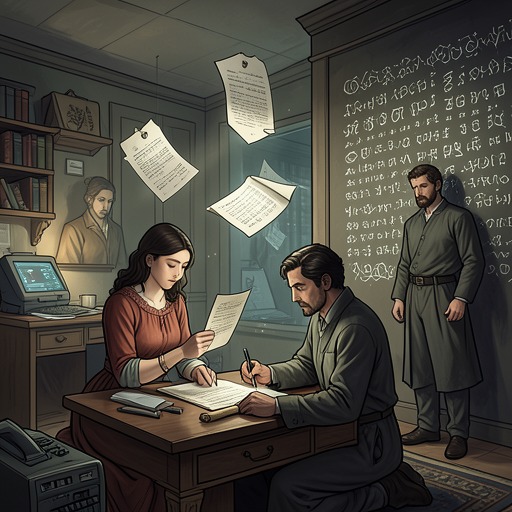
Bahor enters the story through the name Baker, presenting himself as a visitor who knows Collier Michael Dunne and is expected at Hill House. His expensive suit and shoes, apparent age, physical condition, and air of privilege give Silver the impression of a successful and possibly powerful mage. Because Collier has been studying a spellbook and seeking occult assistance, Silver initially wonders whether Baker has come to help with that work. Her jealousy at the prospect of another person being close to Collier, or to his book, occurs before she understands that Baker’s proximity is dangerous.
The apparent mentor is instead a concealed supernatural predator. When Baker asks Silver whether Collier has mentioned feeling haunted or cursed, his concern sounds like an attempt to assess Collier’s condition, yet the conversation also shows how effectively he can occupy the language of responsible intervention. He speaks of hallucination and psychosis, framing Collier’s supernatural experience as an illness requiring help. The possibility that Baker is diagnosing the problem he helped create gives his human performance a particularly sinister doubleness: he can approach the victim as adviser, observer, or concerned friend while keeping the real source of the danger hidden.
The Bargain with Collier Michael Dunne
Collier’s account of Bahor’s history begins with grief and guilt. While preparing for his parents’ dangerous mission against dark magic in the West, he immersed himself in occult lore and sought advice from anyone who might understand the hidden universe of magic. Baker seemed to know precisely what Collier needed to learn. He offered knowledge without asking for money or favors, and Collier interpreted that apparent disinterest as evidence that Baker might become a mentor. In retrospect, the fact that Collier never introduced Baker to his friends or family becomes a warning he recognizes only after the damage is done.
Baker proposed a bargain with a supernatural being through which Collier could make a wish. The wish could have brought fame, money, or power, but Collier chose to wish for his parents’ safety. Bahor’s revealed identity made the arrangement more dangerous than Collier understood: Baker was not merely a knowledgeable mage or intermediary, but the creature called Bahor, a demon who possessed the power to grant the wish. The bargain required Collier to surrender control over his spirit in exchange for one wish, while allowing him to retain control of himself unless he committed the agreement’s specified transgression.
The condition was murder, defined as taking an innocent life. Collier believed the restriction made the bargain safe because he could not imagine himself killing an innocent person. Bahor’s design depended on precisely that confidence. The bargain granted Collier power and fulfilled his wish, but it also placed his autonomy under a hidden legal and supernatural condition. Bahor’s apparent generosity therefore functions as delayed possession: the cost is accepted before its practical meaning becomes clear, and Collier’s good intentions cannot protect him from a clause written around future violence.
Revelation as a Shattering of Appearance
Bahor’s identity is exposed when Collier forces him to use his true name while holding the bloodstone. The stone becomes a material test of truth rather than a passive object. Bahor holds it gingerly, then speaks the words while accusing Silver of being his creature; the stone pulses, turns a vivid violent red, and shatters, spraying blood over the people present. The failed declaration makes the lie visible and physical. What had been an argument about identity becomes an irreversible demonstration that Bahor’s words cannot survive contact with the bloodstone’s truth.
After the stone breaks, Bahor’s face flickers. Silver realizes that the stranger’s entire appearance has been a seeming, an illusion rather than a human body. She understands that whatever Bahor is, he is not human but a demon. The revelation reorganizes the earlier details: the expensive clothing becomes costume, the confident manner becomes calculated presentation, and the supposed expertise becomes part of a disguise designed to make a supernatural bargain appear approachable.
Bahor’s shapeshifting extends beyond the particular face called Baker. Collier explains that he has seen Bahor appear as a woman, an animal, or anything else he chooses. Bahor therefore has no stable outward identity that can be used to contain or recognize him. His true name exposes him, but his visible forms remain infinitely substitutable. That instability makes him a figure of identity without essence, able to tailor the surface of the self to the expectations and vulnerabilities of the person he is addressing.
Violence, Spectatorship, and Threat
Bahor does not merely impose suffering; he enjoys watching it. When Collier accuses him of wanting to witness Collier’s killing of Silver, Bahor answers that he always likes to watch, addressing both of them with a sneer. His violence is thus theatrical as well as instrumental. He positions himself as spectator, provoker, and potential director of the scene, turning the threatened death into entertainment and making the victims conscious of his appetite for their fear.
The demon also insults and manipulates Silver directly. While Collier struggles, Bahor appears before her in a familiar form and tempts her by identifying her as a sorceress waiting in the wings. The temptation is aimed at the frustrated desires already troubling her: the wish to escape shyness and bodily self-consciousness, to taste glamour, and to be loved and admired. Bahor recognizes that magical power can be offered not only as protection but as access to the life Silver believes she has been denied. His invitation is dangerous because it addresses a genuine longing while concealing the price of satisfying it.
The familiar appearance remains only a projection, and Silver tells herself that the real demon cannot pass her wards. Yet the uncertainty itself is part of Bahor’s power. He can appear in front of her without establishing whether he has crossed the defenses or merely found another way to occupy her perception. The image makes the boundary between physical threat and supernatural manipulation unstable, while his calm confidence suggests that the distinction may not protect her for long.
Conflict with Collier Michael Dunne and Narrative Role
When Bahor confronts Collier and Silver again, he greets them as stupid human foes, preserving the contempt that has marked his dealings with them. Collier immediately steps between the demon and Silver, a reversal of the earlier arrangement in which Bahor’s bargain left Collier vulnerable and made violence the condition of his loss of control. Collier warns Silver to be careful, but he also insists that the encounter will not repeat the previous one because he is no longer bound by the curse and can now kill Bahor.
Bahor’s role consequently shifts from hidden mentor to exposed adversary. His strength remains tied to disguise, contract, and psychological pressure, but the revelation of his true nature deprives him of the protective ambiguity that allowed him to operate through Baker. The central conflict is not simply between a human and a demon; it is between Collier’s recovered agency and the bargain that once converted his own actions into Bahor’s means of control.
As a character, Bahor combines the false mentor, shapeshifter, tempter, and shadow. He offers knowledge without an immediate demand, proposes a wish that appears to rescue Collier’s parents, and hides spiritual domination inside a seemingly manageable rule. His later appearances expose the method behind that seduction: a changeable image, a taste for spectatorship, contempt for human beings, and an ability to turn a victim’s own desires into leverage. The story’s horror therefore comes not only from the demon’s inhuman nature, but from the moment when apparently helpful expertise is recognized as the first face of a curse.