Jade Abbot
Under Your Spell: A Romance Boxed Set of Masked Balls, Haunted Gardens, Magic, and MoreJade Abbot is the last known Abbot and the inheritor of a plantation passed down through her family for generations. Her decisive significance lies in the way she stands at the intersection of inherited violence and chosen belonging: the estate carries the Abbot family’s history, but the curse attached to that history threatens to end its bloodline with her. Jade’s movement through the story therefore involves more than claiming property. It is a struggle to determine whether inheritance will define her fate or whether she can turn a haunted legacy into a future of her own.
Identity and Inheritance
Jade identifies herself as twenty-two, unmarried, and named Jade Abbot. When she flashes her ring-less left hand, the gesture establishes both her independence and the absence of an existing marital tie. Her name is not merely personal identification; it places her inside the Abbot family line and makes her the person upon whom that line’s remaining history converges.
The plantation is a family legacy rather than an ordinary acquisition. Jade explains that her grandparents owned it after receiving it from her great-grandparents, and that it had been passed from generation to generation for an unknown length of time. Yet the house had not been lived in since, apparently, her great-great-grandparents. This contrast between legal or familial continuity and physical abandonment gives Jade’s inheritance its peculiar force: the property has remained in the family while ordinary family life withdrew from it.
Jade’s decision to claim the plantation is consequently an act of recognition. She cannot simply ignore what her ancestors left behind, even though the estate has been neglected and dangerous. The land is valuable—if the house and grounds were restored, Jade estimates that they might be worth at least a million dollars—but its material worth cannot be separated from the supernatural threat embedded in it. The plantation offers wealth and identity at the same time that it exposes her to inherited peril.
The Curse and the Threat to the Bloodline
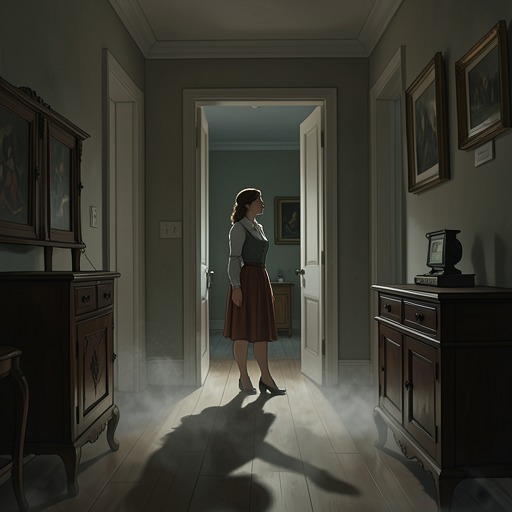
The danger becomes explicit when Jade explains that the curse has already taken her parents and grandparents. In her account, it will not stop until the last Abbot is dead, and she identifies herself as that last Abbot. The statement is delivered with a resignation that frightens Ryder Warren more deeply than the surrounding cold. Jade is not merely investigating an old family rumor; she believes that the curse has a fixed endpoint and that she is its remaining target.
This knowledge changes the meaning of her inheritance. The plantation is not only a house waiting to be reclaimed but the apparent center of a mechanism that has consumed successive generations. Jade’s fear is concrete and future-oriented: she wants to live to a ripe old age, does not want to be afraid of having children, and does not want to die in October. Her anxiety joins personal survival to reproduction, making the curse a threat not only to her life but also to the possibility of extending the family beyond her.
Her response is not simple courage. Jade is anxious and frightened during the journey to seek Katrina Moriarty’s help, while also judging that if Katrina cannot help her, no one can. The tension between the plantation’s financial promise and the danger of living there reveals the pressure under which Jade acts. She has inherited a potentially valuable property, but no economic calculation can compensate for a curse that may kill her before she can build a life.
Ryder Warren and the Movement Toward Trust
Jade’s first impression of Ryder Warren is deliberately contradictory. She claims not to like his appearance, but immediately admits that this is a lie: he has rugged good looks, a scar beside his left eye, a nose that appears to have been broken, sandy-brown hair, light-brown eyes, and a fluid grace in his movements. His mud-stained clothes and arrogance disguised as charm are turnoffs, yet she also notices how well he wears his jeans and finds herself wondering what he would look like without a shirt. Her judgment of Ryder therefore combines defensive irritation with unmistakable attraction.
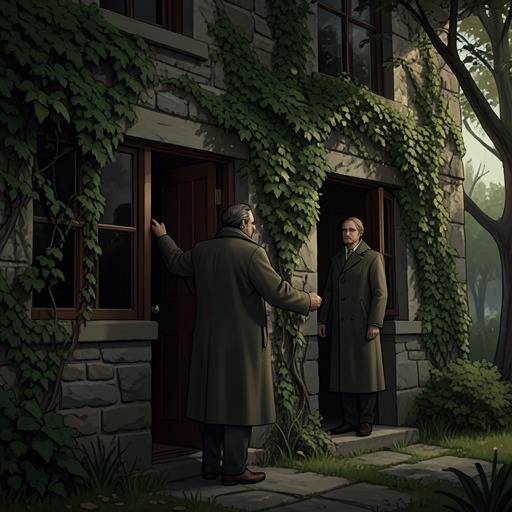
Ryder is not only a romantic possibility but also a practical presence in Jade’s dangerous new circumstances. When Jade introduces him to a neighboring woman, she calls him Ryder Warren and describes herself as living in the plantation next door to his property; identifying him as a handyman would feel inadequate after everything they have experienced. The hesitation over labels reflects the unusual structure of their connection. Their relationship is being formed through shared danger before it can be comfortably named.
Jade’s trust develops through physical and emotional reassurance. While Ryder tends to her, every contact between their skin makes her feel stronger, braver, and happier. She remains conscious of the difficult decision to come to the plantation and claim her family’s legacy, but his care gives her a temporary alternative to fear. Even amid the supernatural crisis, she finds herself wanting a kiss and a light touch. Intimacy does not erase the curse; it provides Jade with a counterforce to the isolation the curse has imposed.
From Threatened Heir to Mother
The later account of Jade’s life widens the story beyond survival. Lavinia Lockett Sewall reveals that she and Theodore Sewall are having a child, while another supernatural sequence shows a baby girl sleeping against a woman’s chest and being identified as his. These family and pregnancy motifs establish that magical circumstances in the book can alter ordinary expectations of time, conception, and parenthood. Jade’s own ending belongs to this larger pattern of supernatural history becoming domestic continuity.
At the culmination of Jade’s arc, she and Ryder are married and have a daughter named Jasmine. Jasmine is already one year old when Ryder bends down to kiss her in her car seat, and Jade tickles the child until she gives a sweet giggle. The scene is deliberately ordinary in its details: Ryder is looking for the correct set of car keys, he has developed a habit of grabbing the wrong ones, and a car seat cannot fit in his truck. Against the earlier fear of dying before having children, these domestic inconveniences become evidence that Jade has reached the future she once feared the curse would deny her.
Ryder’s final gesture toward Jade is also significant. After kissing Jasmine, he pulls his wife close and kisses her more deeply, placing the couple’s marriage alongside their shared parenthood. Jade is no longer presented only as the last endangered Abbot or as a young woman deciding whether a haunted inheritance is worth claiming. She is part of a living household whose affection continues through the next generation.
Narrative Role and Significance
Jade’s storyline follows a hybrid pattern of discovery, survival, romance, and transformation. Discovery brings her into contact with the plantation’s history; the curse converts inheritance into a threat; Ryder’s presence turns solitary fear into shared action; and the eventual family scene reverses the curse’s apparent logic of extinction. The plot’s emotional movement is from an inherited past that kills descendants toward a chosen present capable of producing descendants.
The character is also shaped by a tension between skepticism and practical belief. Jade does not begin with easy confidence about magic: during the journey she admits that she does not know what to think of Katrina’s claims, even after Katrina removes her green makeup and black dress and appears ordinary. Yet Jade cannot remain detached from the supernatural because the curse has already marked her family and her body. Her uncertainty is therefore not disbelief in the abstract; it is the frightened reasoning of someone forced to test whether extraordinary explanations can account for ordinary catastrophe.
Jade’s final family life gives the inheritance a new meaning without pretending that the past was harmless. The parents and grandparents taken by the curse remain part of the history she must survive, and the plantation remains the site through which that history reaches her. What changes is the direction of the family story. Jade begins as its threatened endpoint and ends as a wife and mother, with Ryder and Jasmine beside her. Her arc makes continuity itself the victory: not the restoration of an untouched ancestral past, but the creation of a future in which the Abbot name is no longer synonymous with inevitable death.