Polly Shepps Haunting
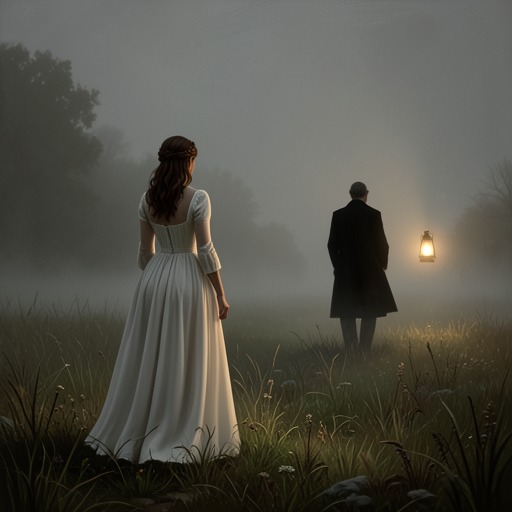
Under Your Spell: A Romance Boxed Set of Masked Balls, Haunted Gardens, Magic, and MorePolly Shepps Haunting is the supernatural disturbance that transforms Nicole Sherry’s temporary housesitting in the South into an encounter with concealed violence and an unsettled dead woman. Its decisive significance lies in the way an apparently beautiful domestic setting becomes evidence: flowers, rooms, smells, and ordinary household routines progressively reveal that the house is holding the memory of Polly Shepps’s death.
An Apparently Ordinary House
Nicole Sherry arrives from Chicago to housesit a two-story Victorian for a month before beginning a new job before Halloween. The seasonal contrast initially suggests renewal rather than menace: in October, creamy white camellias are still blooming in the South, while most flowers in Chicago have already faded. Nicole has never met the homeowner, Francie, and enters the house with only practical instructions, including the location of the key beneath a flowerpot. Her first exploration of the rooms therefore establishes the house as a borrowed, unfamiliar domestic space rather than a place with a known history.
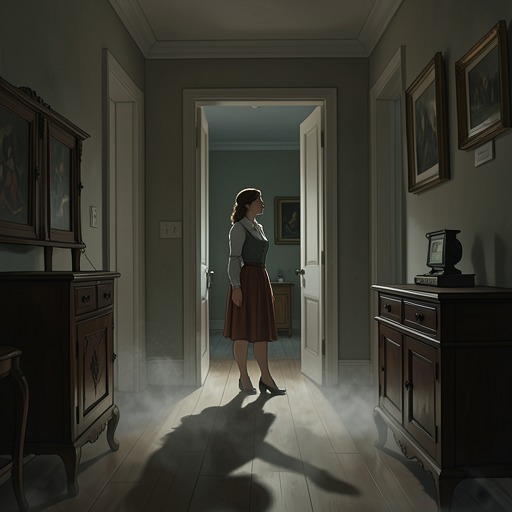
The disturbance first reaches Nicole through perception rather than explanation. Exhausted after driving from Chicago to the Georgia coast over two days, with an uncomfortable motel night in Knoxville, she goes downstairs for water and feels as though a hidden camera is watching her. At the bottom of the stairs, she encounters the stench of a dead, rotting animal. The smell seems to come from the spotless kitchen, prompting her to search the lower cabinets for a dead squirrel or raccoon, but the pots and pans offer no cause. The search turns the familiar household cabinet into a possible hiding place for decay, even though it contains nothing unusual.
Flowers as Supernatural Evidence
The smell leads Nicole from the kitchen into the dining room, where she discovers that the odor emanates from the flowers themselves. The camellias should smell pleasant, yet they resemble putrefying corpses. Their visual beauty and their revolting scent cannot be reconciled, making the flowers the haunting’s first unmistakable material sign. Nicole is left staring at the blooms, transfixed by an image that refuses the normal rules of nature.
The haunting continues through a nightmare and a morning test of reality. After the nightmare, Nicole retreats to bed; by the next morning, sunlight is streaming through the bedroom window, and she attempts to restore ordinary life by preparing instant oatmeal and working out how to use the house’s espresso machine. The domestic routine appears successful until she returns to the dining room and finds that the roses are black—not merely dead, but black in both petal and stem. The transformation turns an act of reassurance into confirmation. Nicole had brought the roses in from the garden to prove to herself that everything was fine; their charcoal-like corruption instead makes the supernatural impossible to dismiss.
Nicole and Aaron Investigate
Nicole brings the experience to Aaron Cavanaugh, fearing that he will recommend professional help or simply send her away. Instead, he agrees that there is a ghost in the house. His response changes the encounter from a private crisis of perception into a shared investigation. Nicole explains that the frightening song she remembers involved “pretty Polly,” and then describes the roses turning black overnight. Aaron’s willingness to accept her account gives the haunting a name and a possible identity before its history is fully known.
The investigation moves beyond the house’s immediate symptoms toward the surrounding garden. In a park, Aaron tells Nicole that he thinks Polly’s husband buried her there. Nicole recognizes the explanation as consistent with the flowers’ behavior and with the fear she felt before going outside on an earlier night, when she sensed that Polly was present. Aaron agrees that Polly must be there. The conclusion is not based on a recovered body in the available scene, but on the convergence of the ghost’s apparent identity, the garden’s flowers, the smell of decay, and the haunting’s repeated pressure on Nicole’s attention.
Buried Violence and the Meaning of the Haunting
Polly Shepps Haunting converts hidden domestic violence into a supernatural presence that cannot remain contained. The suspected burial in the garden gives the house and its flowers a history: the beauty associated with the Southern setting becomes inseparable from concealment, while the garden functions as both burial ground and medium of testimony. The haunting does not initially explain itself in a clear narrative. Instead, it repeats through smell, nightmare, altered blossoms, and fear, forcing Nicole and Aaron to assemble meaning from fragments.
The event also depends on a contrast between skepticism and recognition. Nicole first searches for rational causes, checking cabinets for an animal carcass and trying to reassure herself with freshly gathered roses. Aaron’s immediate agreement does not remove the fear, but it prevents Nicole’s experience from being isolated or discredited. Together, they shift from asking whether something is wrong with Nicole’s perception to asking what happened to Polly. That shift makes the haunting investigative: the ghost’s disturbance is also a demand that the buried violence be witnessed.
Narrative Function and Aftermath
Within the larger supernatural world, the haunting establishes a pattern in which the dead communicate through ordinary objects and domestic spaces. Its most important movement is from atmosphere to implication: the uncanny smell becomes evidence of a hidden death, the flowers become signs of the garden’s secret, and the remembered song supplies a possible name for the presence. The episode therefore makes the house less a neutral setting than a repository of memory, where the boundary between living occupants and the dead is repeatedly crossed.
The available account ends with Aaron and Nicole accepting that Polly is present and that Polly’s husband likely buried her in the garden. That conclusion leaves the haunting unresolved in practical terms, but it clarifies its moral direction. Polly’s appearance is not random terror; it is the return of a suppressed crime. The house can be occupied, cleaned, and furnished, yet its flowers continue to expose what its domestic surface conceals.