Willingdon prophetic-dream tradition
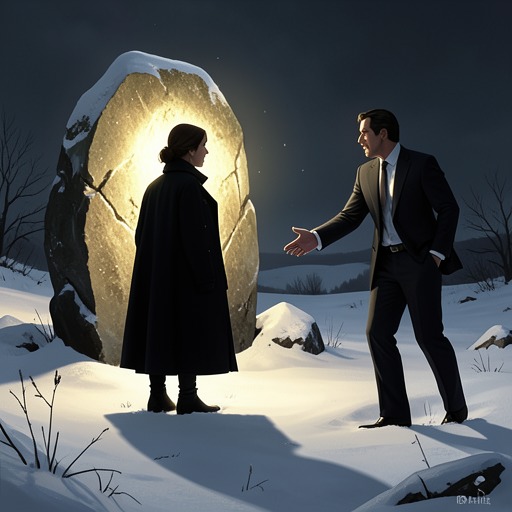
Under Your Spell: A Romance Boxed Set of Masked Balls, Haunted Gardens, Magic, and MoreThe Willingdon prophetic-dream tradition is a hereditary family belief and supernatural phenomenon in which a Willingdon sees the person destined to become a future spouse in an extraordinarily vivid dream. It gives the family’s romantic history a pattern of recurrence: dreams are dismissed as madness or subconscious trickery, yet later encounters appear to confirm them. Through Paul’s account, the tradition becomes the explanation for Julia’s impossible vision of Willingdon Manor and for the sense that their meeting was compelled by forces older than either of them.
Origins and Family Transmission
The tradition is traced through the Willingdon line across several generations. Paul explains that Lord James Willingdon was engaged to a countess chosen by his family, with the wedding arranged, when he dreamed of his future wife. The woman in the dream was not the countess, so he called off the marriage three days before the ceremony. His family regarded the decision as irrational: his mother was furious and his sister mortified, while his father reacted with silence and sudden pallor.
That reaction revealed an earlier instance of the same phenomenon. Lord Willingdon Senior had experienced an extraordinarily vivid dream of the woman he believed would become his wife when he was approximately the age his son was at the time. Unlike his son, he told no one and persuaded himself that the dream was merely a trick of the subconscious. He proceeded with the marriage arranged by his parents, only to meet the woman from his dream three years later. The contrast between father and son establishes the tradition’s central tension: a dream may be denied, but denial does not necessarily prevent the predicted recognition from occurring.
Julia and Paul’s Recognition
The inherited pattern becomes immediately relevant to Julia after she sees an image of Willingdon Manor on the same day that Paul dreams of her. Paul says that he dreamed about Julia on that day, while Julia had seen the house despite there being no physical route to the view represented in the painting. He points out that a hundred-foot rock face and a forest separate the manor from any trail leading to that perspective, making her vision impossible to explain as ordinary observation.
Paul does not claim to understand the mechanism. He can only say that the phenomenon has operated for at least five generations and that he counts himself as the sixth. His certainty is therefore experiential and genealogical rather than theoretical. Julia resists the implication because they have only just met and because she came to the manor for someone else. Paul nevertheless interprets that prior reason for her arrival as part of the same design: something had to draw her there so that the two of them could find each other.
Pattern, Doubt, and Evidence
The tradition does not operate as a simple prophecy that supplies complete knowledge in advance. Instead, it produces a vivid but incomplete recognition whose meaning becomes clear only through later events. Lord Willingdon Senior’s dream was initially reduced to subconscious illusion; Lord James Willingdon’s decision to trust his dream was treated by his relatives as a loss of reason. In both cases, the family’s social expectations conflict with the private authority of the vision.
That conflict echoes the wider book’s repeated opposition between skepticism and supernatural belief. Julia’s response is especially important because she does not accept the tradition merely because Paul offers it as family history. Her objection that they have just met keeps the interpretation open between romantic projection and supernatural design. Paul’s evidence—the matching timing of their dreams and the geographically impossible view of the manor—does not explain how the visions work, but it makes an ordinary explanation increasingly inadequate.
Narrative and Thematic Significance
The tradition gives the Willingdon family a form of inherited memory that is not preserved in documents or formal ritual, but in recurring dreams of intimate futures. It binds private desire to genealogy: each generation inherits not only a name and a house, but also the possibility of recognizing a destined partner through an image that arrives before the meeting. The family history consequently moves in two directions at once, toward repetition and toward choice. Lord Willingdon Senior suppresses his dream and enters an arranged marriage; Lord James Willingdon breaks an arranged engagement; Paul acknowledges the pattern and applies it to Julia.
Its most consequential function is to convert the hidden Willingdon Manor into a destination rather than merely a setting. Julia’s vision and Paul’s dream become parallel signs that draw them toward the same place, even though Julia initially believes another person brought her there. The tradition therefore supplies a supernatural structure for fated recognition while preserving uncertainty about how much freedom remains within it. The dreams do not remove hesitation, resistance, or disbelief; they make those responses part of the process by which recognition is tested and finally given meaning.