
Faith Turning into Violence
Under the Banner of HeavenThis thread traces how sacred certainty can transform violence from a moral transgression into an imagined act of obedience, culminating in the Lafferty murders and their survival in Dan Lafferty’s later theology.
increasing Bearing strength in each event
 decreasing
Bearing strength in each eventdecreasingThe Nephi Precedent
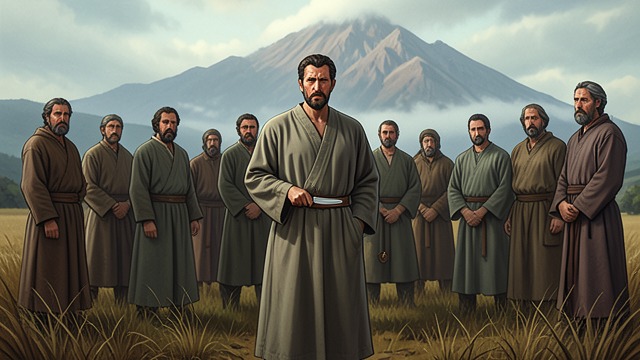
A Command Above Conscience
In The Book of Mormon, Nephi first recoils from the command to kill Laban, then obeys after being told that one man’s death is preferable to a people’s spiritual ruin. The story makes obedience to divine instruction a test of faith even when the command violates an ordinary moral prohibition.
The Moral Exception
The episode does not merely describe violence; it supplies a way to justify it. Once the command is accepted as divine, the intended victim can be cast as wicked and the killing as necessary to protect a sacred collective.
That pattern later becomes consequential for Dan Lafferty. The narrative offers him a script in which hesitation is a temptation to resist and lethal obedience can be construed as righteousness rather than crime.
Blood as Atonement
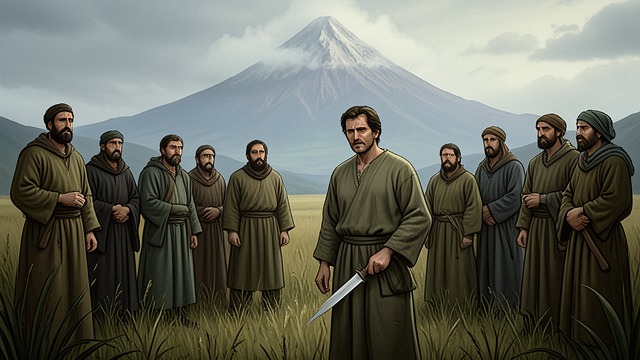
Blood and Redemption
During the Mormon Reformation, leaders including Brigham Young and Jedediah M. Grant preached that certain sins could not be atoned for through Christ alone and that a sinner’s blood might have to be shed. The teaching gave punishment a religious meaning: violence could be represented as both justice and a means of saving the condemned person.
From Sermon to Social Climate
The doctrine circulated alongside urgent calls for loyalty, plural marriage, and readiness for conflict with outsiders. In that atmosphere, communities could interpret harshness not as a failure of religious feeling but as evidence of fidelity to divine law.
The book places this history beside the Lafferty case to show that the brothers’ claims did not arise in an empty cultural space. Earlier doctrines did not mechanically cause their crime, but they made available a vocabulary in which bloodshed could be sacredly rationalized.
The Mountain Meadows Logic
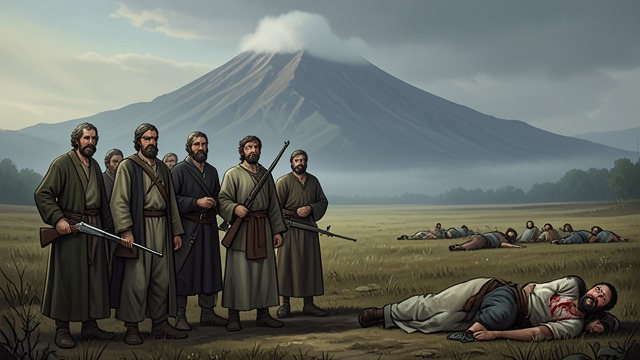
Violence in the Name of Zion
At Mountain Meadows, Mormon militiamen and their allies killed emigrants after a siege, a false promise of safe passage, and a surrender of weapons. The massacre’s organizers and participants could see themselves as defending their community and advancing the Kingdom of God even as they murdered men, women, and children.
Concealment as Religious Duty
Afterward, participants agreed to conceal the Saints’ role and blame the killings on Native Americans. The affair thus joined violence to a second moral evasion: protecting the religious community became a reason to hide what its members had done.
The massacre deepens the book’s inquiry into faith-based brutality. It shows how fear, persecution memory, and sacred purpose can make atrocities seem defensible to perpetrators—and how collective loyalty can suppress truth after the violence is over.
The Removal Revelation
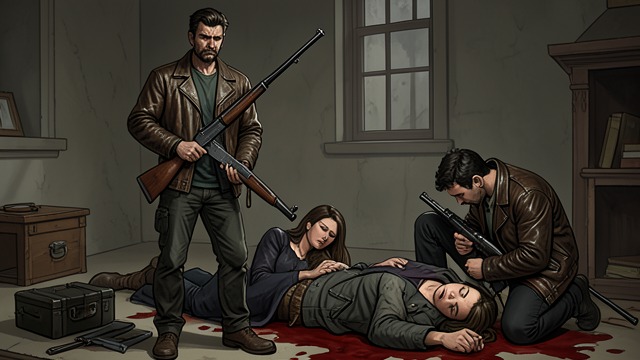
A Private Revelation Becomes a Mandate
In 1984, Ron Lafferty said that God had ordered several people removed because they obstructed divine work. The command named Brenda Lafferty and her baby, Erica Lafferty, followed by Chloe Low and Richard Stowe. Ron identified himself as God’s mouth and Dan Lafferty as God’s arm, converting an inward religious claim into a plan for action.
Reframing Murder as Obedience
Dan Lafferty deliberated, prayed, and ultimately accepted the revelation as authentic. He used scriptural precedents, including Nephi’s killing of Laban, to resolve his hesitation. Under this closed moral logic, the named victims were presumed wicked because the revelation named them, while refusing the command risked offending God.
On July 24, Dan killed Brenda and Erica with Ron’s participation. The event reveals the central danger the book tracks: when revelation is treated as incontestable and outsiders’ lives are subordinated to a sacred mission, conscience can be recast as disobedience and murder as religious service.
A Crime Called God’s Work
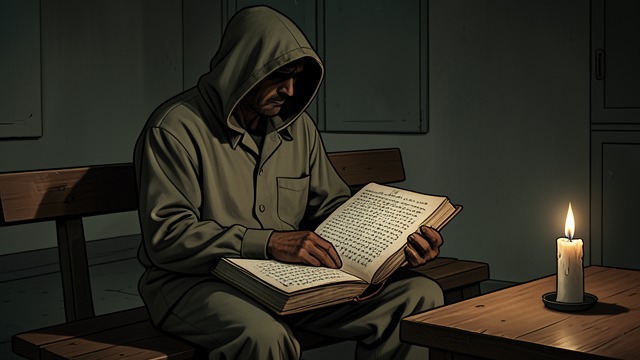
No Repentance, New Theology
Years after the murders, Dan Lafferty still said he had acted according to God’s will and did not regard the killings as a crime in the moral sense. In prison, however, his beliefs had changed: he no longer identified with Mormon Fundamentalism and instead imagined himself as Elijah, a forerunner who would announce Christ’s return.
The Argument Survives Its Doctrine
Dan’s later cosmology preserved the stark division between the righteous and the evil and retained the expectation that divine judgment would remove the wicked. He interpreted the murders as a foreshadowing of that future harvest, rather than as an act requiring remorse.
The shift matters because it shows that the problem is not limited to one doctrine or institution. Dan’s particular religious system changed, but his certainty that he possessed a privileged understanding of God’s purposes remained. The book leaves the reader facing the moral question that such certainty evades: what can correct a belief that treats its own conviction as proof?
During the 1820s, as Joseph Smith dictated The Book of Mormon
During the 1856–1857 Mormon Reformation
September 1857, during the Mountain Meadows Massacre
Late March through July 24, 1984
By the 2001–2002 prison interviews near the book’s ending
