
Dan Lafferty’s Continuing Revelation
Under the Banner of HeavenThis flow follows Dan Lafferty’s imprisonment as he revises his theology, recasts his role in the murders, and remains convinced that he is destined to announce the Second Coming.
increasing Bearing strength in each event
 decreasing
Bearing strength in each eventdecreasingThe Prison Monastery
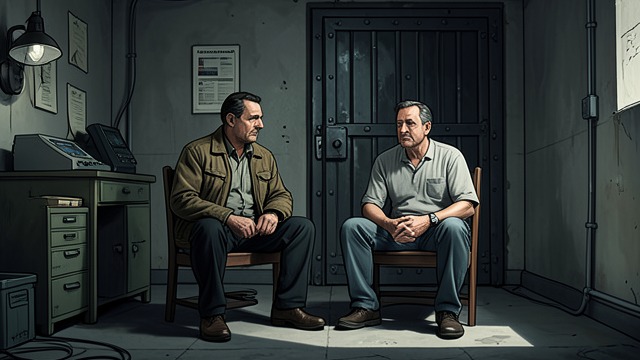
Captivity as Sacred Setting
A chosen life behind bars
Dan Lafferty begins serving two life terms at Utah State Prison after his conviction. He calls the maximum-security unit his monastery and settles into the routines of a life largely confined to his cell.
His surroundings do not make him relinquish his religious identity. Instead, prison becomes a setting in which he can interpret hardship as meaningful and continue to believe that his actions belonged to a divine plan.
A peculiar companionship
Dan shares a cell with Mark Hofmann, whose atheism and contempt for religion do not prevent a close friendship. Dan describes them as brothers bound by the heart, suggesting that human intimacy can persist across a deep disagreement about God.
The companionship complicates any simple picture of Dan as wholly isolated. Yet it does not produce remorse or a reassessment of the murders; his personal warmth coexists with an unshaken claim that he acted righteously.
The Story of the Murders
Confession Without Repentance
Dan speaks openly
After years of maintaining his innocence in legal terms, Dan Lafferty becomes willing to describe the killings in detail. He acknowledges that he killed Brenda Lafferty and Erica Lafferty but insists that he did not commit a crime because he was doing God’s will.
His account is calm and precise, a contrast that unsettles listeners. He recounts Erica’s death without expressing regret, treating the act as a painful but divinely assigned task rather than an evil he chose to do.
Disputed responsibility
Dan’s account differs from testimony by Chip Carnes about which brother killed Brenda. The disagreement does not change the central fact that both brothers were involved in the attack and that Dan accepts responsibility for killing Erica.
By speaking openly, Dan helps establish Ron’s participation at the retrial. The testimony serves the state’s case, but it does not represent a moral turn: Dan can admit the physical facts while continuing to deny that they constitute wrongdoing.
A New Religious Identity
Leaving Fundamentalism Without Leaving God
A changing system
Dan says his beliefs undergo a major evolution after imprisonment. He no longer identifies with Mormon Fundamentalism, arguing that he found contradictions in both the LDS Church and the fundamentalist teachings that had replaced it.
He calls himself a truth fanatic rather than merely a religious fanatic. In his account, continued searching explains his successive departures from religious institutions; it does not lead him to accept uncertainty or abandon the certainty that he is guided by God.
Elijah’s mission
Dan comes to believe that he is Elijah, a forerunner responsible for preparing the way for Christ’s return. This new identity gives him a future role and recasts his confinement as a stage in sacred history.
His theology preserves the stark division between God’s children and the devil’s children that had shaped his earlier actions. The details change, but the structure remains: absolute certainty, an apocalyptic timetable, and the expectation that evil will ultimately be removed.
The Great and Dreadful Day
Violence Recast as Harvest
A future cleansing
Dan interprets the future as a conflict ending in Christ’s thousand-year reign. He believes the world is ruled by the devil’s children and that the faithful are accumulating a place at a coming divine celebration.
He connects this expectation to the biblical image of a harvest in which those who do not belong to Christ are removed. In his view, human agents may carry out what scripture describes as the work of angels, turning violence into a claimed religious function.
The murders as foreshadowing
Dan says the killings of Brenda and Erica foreshadowed the coming removal of the wicked. Asked whether he may have been as misguided as other religious extremists, he acknowledges a parallel with terrorist faith but concludes that his own prophet was true and theirs false.
That answer shows why imprisonment has not brought repentance. Dan evaluates his past through the same certainty that enabled it: he remembers feeling guided by God and therefore treats that memory as proof that he did the right thing.
Waiting for the Sign
An Unresolved Prophecy
The moon’s message
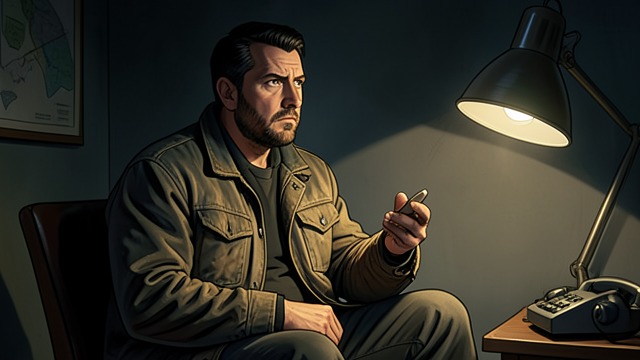
Dan recalls hearing a voice tell him, “The moon will shine from noon until nine.” After years of puzzling over the phrase, he decides it will be a sign announcing Christ’s return, though he cannot explain how such an event will occur.
The prediction offers a concrete marker for an otherwise indefinite apocalypse. It allows Dan to wait for confirmation while remaining certain that his role as Elijah will matter when the sign appears.
No opening for doubt
The book closes with Dan expecting to leave prison when the Last Days begin. He imagines a trumpet announcing the end of his confinement and his release into the Kingdom of God.
The uncertainty that might follow from a failed prophecy has not yet changed his conviction. The narrative leaves him waiting, not reconciled: his certainty persists alongside the possibility that the murders were not commanded by God, a possibility he has not accepted.
From January 1985, at Utah State Prison
By the mid-1990s, before Ron’s retrial
After Dan’s arrival in prison, in the years before 2002
By late 2002, during interviews in prison
Near the book’s ending, in 2002
