
Who Gets to Speak for God
Under the Banner of HeavenThis thread follows Mormonism’s tradition of continuing revelation from its founding promise of direct access to God to the competing prophets whose claims fracture authority and enable Ron Lafferty’s lethal commandment.
increasing Bearing strength in each event
 decreasing
Bearing strength in each eventdecreasingThe Promise of Revelation
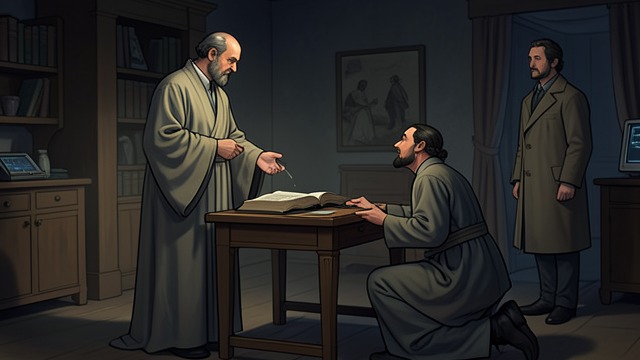
Direct Access to the Divine
Joseph Smith built a religious movement around revelation: God could speak in the present, not only through ancient scripture. The Book of Mormon and the continuing revelations later gathered in The Doctrine and Covenants gave adherents both a sacred history and the expectation that divine guidance could continue.
Authority’s Unsettled Boundary
The promise was spiritually powerful, but it raised an institutional problem. If a prophet could receive commands from God, why could another believer not claim the same access—and how could conflicting revelations be judged?
Joseph attempted to reserve churchwide doctrinal authority for himself. Yet the appeal of personal revelation could not be fully contained. The tension between a living voice from heaven and a hierarchy responsible for regulating that voice becomes one of the book’s recurring sources of religious conflict.
The Mighty and Strong

An Unfinished Prophecy
Section 85 of The Doctrine and Covenants foretold that a “one mighty and strong” figure would come to set the house of God in order. The prophecy did not identify a single uncontested successor, leaving its meaning open to later claimants who saw themselves as divinely commissioned reformers.
A Vacancy That Invites Claims
For Mormon Fundamentalists, the promise could mean that the mainstream church had lost its way and that a new prophet would restore abandoned principles. The phrase therefore carried more than devotional significance: it offered a warrant for challenging existing church authority.
The book traces how an ambiguous prophecy becomes a source of recurring schism. When the identity of the chosen restorer is not settled by a common authority, each new claimant can interpret disagreement as confirmation that the institution needs to be corrected.
Onias’s School
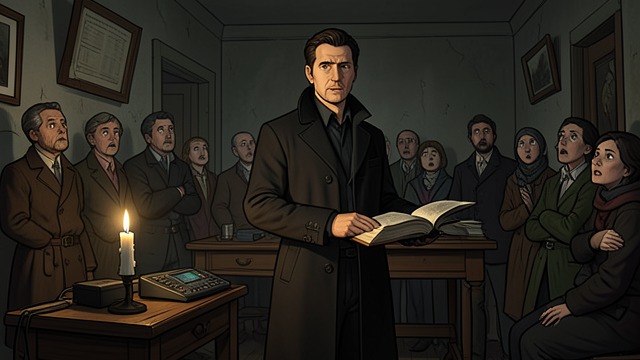
Teaching the Still Small Voice
Robert Crossfield, known as Onias, said that God had called him as a prophet beginning in 1961. His revelations affirmed plural marriage and eventually identified him as a rightful authority who could set the church in order. In Utah County, he established Onias’s School of the Prophets to teach followers to receive and interpret revelation.
The School’s Unstable Promise
The school offered a disciplined setting for spiritual experience, but it also encouraged members to treat their own impressions as potentially authoritative. Ron Lafferty rose within the group and began producing revelations of his own, including claims about his prophetic status and his role in divine work.
The institution meant to restore religious truth thus generated a new contest over who could speak for God. The book presents the school not simply as a fringe gathering but as a concentrated example of a broader structural dilemma: a tradition that valorizes revelation can produce claims that its leaders cannot safely control.
The Vote Against Ron
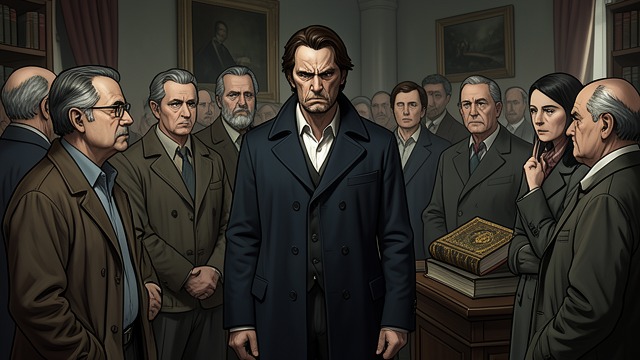
A Community Rejects the Command
When Ron Lafferty presented the removal revelation to the school, its members considered whether it was truly from God. Most rejected it; Ron, Dan, and Watson Lafferty supported it. The disagreement became a direct test of whether communal judgment, prophetic authority, or an individual’s claimed revelation would prevail.
Rejection Without Protection
Ron and Dan left the school after the vote. Their departure did not extinguish the revelation’s power over them; instead, they treated the group’s refusal as an obstacle to divine work. Members who felt alarmed did not warn the people named in the command or alert law enforcement.
The episode exposes the limits of collective discernment. A community can recognize a dangerous claim, yet its judgment has little protective force when the claimants reject the community’s authority and the witnesses fail to act on their fear. The murders that followed turned a failed theological review into a human catastrophe.
Revelation in the Courtroom

A Claim Beyond the Court’s Reach
At Ron Lafferty’s retrial, experts disagreed over whether his revelations and supernatural beliefs proved mental illness. The prosecution’s witnesses argued that bizarre religious beliefs could be culturally learned and sincerely held without making a person psychotic or legally incompetent. The defense argued that Ron’s delusional system prevented him from realistically understanding the case against him.
Sincerity and Accountability
The testimony brought into view a difficult distinction: a court can evaluate competence and responsibility, but it cannot simply declare every irrational religious belief a symptom of illness without reaching far beyond this case. At the same time, sincerity alone cannot turn a killing into a permissible act.
The jury convicted Ron, renewing the book’s question about who may judge revelation. The court could punish the acts and assess capacity, but it could not settle the truth of God’s voice for every believer. The unresolved boundary between religious freedom, mental health, and criminal accountability remains part of the story’s moral force.
In 1820s–1830s New York, during Joseph Smith’s founding years
From 1832 onward, as believers interpreted Section 85
1961–early 1984, from Robert Crossfield’s first revelations to the Lafferty meetings
April 5, 1984, when the School of the Prophets evaluated the removal revelation
March–April 1996, during Ron Lafferty’s retrial
