Chip Carnes
Under the Banner of HeavenChip Carnes is a twenty-three-year-old drifter and petty thief from New Mexico whose chance encounter with Ron Lafferty turned a westward journey into a flight from a double murder. He joined Ron and Dan Lafferty’s traveling party, heard discussions of Ron’s removal revelation, and later escaped with Ricky Knapp. Carnes’s account became crucial evidence, but it also conflicted with Dan’s version of events, leaving the division of responsibility between the brothers contested even as the narrative presents the murders as a joint undertaking.
An Accidental Passenger
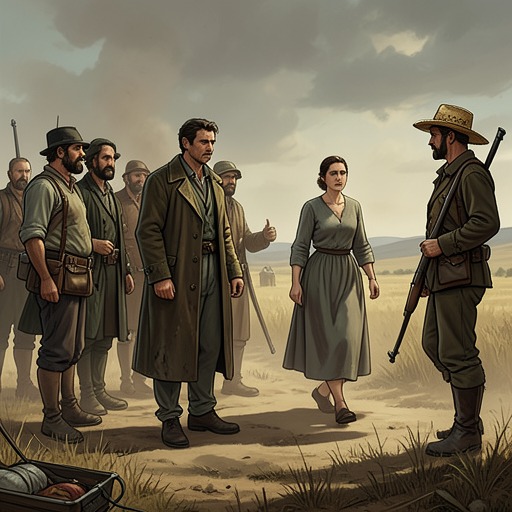
Carnes entered the story during a bathroom stop at a rest area outside Sacramento. His run-down car had lost its brakes, and after Grant’s older boys introduced him to Ron, Ron offered to help get the vehicle to a repair shop. The solution was improvised: a spare tire was strapped to the rear bumper of the Impala, and Carnes drove with the front of his car pressed against it while Ron used the Impala’s brakes to help slow both vehicles. They reached a Sacramento mechanic, but Carnes could not afford the repair. He sold the car to the mechanic, put the modest proceeds toward the group’s gasoline, and climbed into the station wagon with Ron, Ricky Knapp, and Grant’s children.
The arrangement made Carnes more than a hitchhiker. He had joined a party already moving between religious communities and family connections, and he was carried south toward Big Water, where Dan and Laurene Grant had gone ahead. The group’s destination was the compound of Alex Joseph, a prominent polygamist. Carnes had no established place in the Lafferty family or in its religious circle; his role began in practical, contingent terms, with a broken-down car and a seat in the Impala. That marginal position would later put him close to the brothers’ plans while leaving him sufficiently outside their family loyalties to become an important witness.
What He Heard Before the Murders
The party stayed only overnight in Big Water. While there, Ron shared his removal revelation with Alex Joseph. Carnes was close enough to overhear a discussion about Ron returning to Utah, collecting his guns, and going on a shooting spree. Joseph tried to dissuade him. Carnes’s recollection establishes that the prospect of armed violence was discussed before the group returned north, rather than emerging only after the killings.
Back in Provo, Carnes spent time with Ron and Dan at Claudine Lafferty’s home. On the evening before Pioneer Day, the four men sat at the dining table while Ron and Dan discussed the revelation. Claudine sat nearby knitting and listened without intervening. Carnes later testified that Ron spoke of a revelation requiring the removal of several people, including Brenda and a baby. He also recalled Dan questioning whether the victims’ throats had to be cut, and Ron insisting that this was what the Lord had commanded. The discussion gave Carnes direct knowledge that Brenda and Erica had been named before the group set out.
On the morning of July 24, Dan prepared a 12-gauge shotgun at Claudine’s home while Ron, Knapp, and Carnes loaded the Impala. Their belongings included a .30-30 Winchester and a .270 deer rifle. As items were secured to the roof, Carnes objected to killing a baby. Ron answered that Erica was a child of perdition and argued that removing her would be a blessing because Brenda would otherwise be gone. Carnes’s objection shows that he recognized the plan’s human stakes; it did not, however, lead him to leave the group before the men drove to American Fork.
From Witness to Accomplice in the Flight
At the apartment of Allen and Brenda Lafferty, Carnes, Knapp, and Ron waited in the Impala while Dan went inside. When the sounds from the apartment grew troubling, Carnes remarked on the noise, and Knapp suggested that Ron go help. Ron entered. Carnes remained outside, but he later described hearing the confrontation continue, Brenda pleading for her baby, and then a child calling for her mother before the apartment fell quiet. His position in the car made him a witness to what could be heard from outside, not an eyewitness to every act inside.
After Brenda and Erica were killed, Ron drove Dan, Carnes, and Knapp to Chloe Low’s home in Highland. Their stated next targets were Low and Richard Stowe, president of the Highland LDS Stake. No one was home at the Low residence, so Ron changed the immediate plan to searching the house for guns and money. Carnes acted as lookout. He was wearing a ski mask and holding a .30-30 rifle when neighborhood boys arrived on an all-terrain vehicle and knocked at the door. He hid in nearby brush while Ron, Dan, and Knapp continued searching inside. The men took cash, a watch, car keys, and jewelry, and Ron destroyed Low’s collection of Dresden porcelain figurines, which he knew she valued. Carnes’s role had shifted from passenger and listener to armed lookout during a burglary.
The group then set out for Stowe’s home, but Knapp missed a turn. According to Dan, the mistake exposed the men’s waning enthusiasm for carrying out the rest of the revelation. They did not turn back; instead, they drove through Salt Lake City and west toward Nevada. The missed turn mattered: Stowe was at home that afternoon, but the four men continued toward Reno rather than reaching his residence.
Conflicting Accounts and Escape
During the drive, Knapp asked what had happened in the apartment. Dan later said that he described the killings and made clear that he, rather than Ron, had used the knife. Carnes gave a different account in sworn testimony: he said Ron recounted the attack and claimed responsibility for killing Brenda, while describing Dan as having killed Erica. Carnes also testified that Ron later repeated that he had killed Brenda. Dan disputed much of this account, though he did not deny the essential exchange in which Ron thanked him for killing the baby and Dan accepted the remark.
The disagreement cannot be separated from the circumstances in which Carnes testified. After his arrest, prosecutors told him he could face a capital-homicide charge and a possible death sentence unless he provided evidence leading to the brothers’ convictions. They also promised leniency if his testimony helped the prosecution. Dan suggested that Carnes may have been confused or influenced by the state. The book does not resolve every detail of who wielded the knife; it emphasizes instead that both brothers participated in the crime and shared responsibility for its consequences. Carnes’s recollection remains significant precisely because it supplies an account from inside the fleeing party while also requiring scrutiny.
The four men reached Wendover and rented a motel bungalow. Dan rinsed bloody clothes in the bathtub, and the group bought beer and food before returning to the room. Later that night, after a Nevada Highway Patrol officer stopped the Impala because its taillights were out and it was leaking gas, the men waited for daylight. The officer did not recognize them as fugitives and told Knapp to take the car back across the Utah line. The encounter frightened Carnes and Knapp. Outside the room, Carnes told Knapp he intended to leave once Ron and Dan were asleep; Knapp said he would go with him.
They took the Impala, pushing it down the road before starting the engine so the brothers would not hear them leave. Knapp drove with his foot lightly on the brake to keep the brake lights on. Heading west on Interstate 80 and then north on U.S. 93, they found evidence in the car, including the murder weapon, a bag of bloody clothes, and a suitcase containing razors. They discarded these items along the route toward Cheyenne, where Carnes’s brother Gary lived. The flight was not a clean break from the crime: the men were still carrying its evidence, and their efforts to get away helped scatter material that investigators would later recover.
Arrest, Cooperation, and Narrative Significance
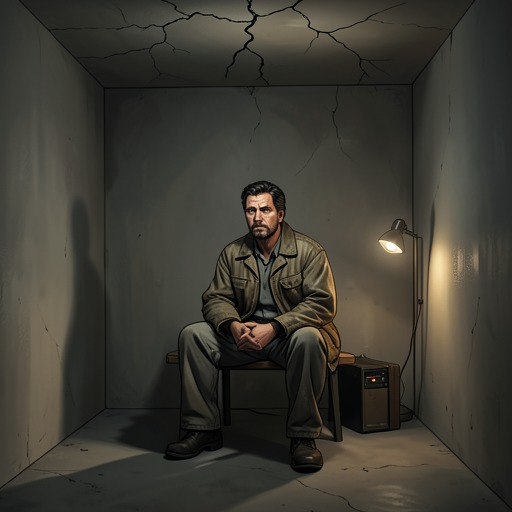
Carnes and Knapp reached Gary Carnes’s home in Cheyenne on Thursday morning. Four days later, police found the Impala outside, raided the house, and arrested them. Facing the prospect of conviction and death sentences, both agreed to provide what they knew in exchange for leniency. Their cooperation helped police recover the murder weapon and much of the other evidence thrown from the car, and they told investigators that the brothers had discussed going to Reno.
Carnes’s trajectory is defined by a series of thresholds: he joins the group after a roadside encounter, hears plans that foreshadow the killings, takes part as an armed lookout, escapes with Knapp, and becomes a cooperating witness. The sequence does not make him a detached observer. He remained with the Laffertys after objecting to the plan, and his actions at the Low home implicated him in the group’s criminal flight. At the same time, his departure from the motel ended his immediate association with the brothers and brought their route and evidence to the attention of police.
As a witness, Carnes occupies an uneasy position between proximity and uncertainty. He could report what he overheard before the murders and what he heard from outside the apartment, but the accounts of the killings inside it diverged. His testimony also came after a promise of leniency, a circumstance the book makes explicit rather than hiding behind the authority of the courtroom. Carnes therefore helps establish both the reach of Ron’s revelation and the practical chain of events that followed it, while his disputed account prevents the story from presenting every detail as uncontested. His escape with Knapp brought the brothers’ flight into focus; his cooperation helped turn that flight into evidence.