Dianna Lafferty
Under the Banner of HeavenDianna Lafferty’s story turns on the abrupt reversal of a marriage that had seemed unusually happy: as Ron Lafferty embraced Dan Lafferty’s fundamentalist teachings, the loving husband Dianna had known became controlling, and she eventually left with their children. Her efforts to preserve the family expose the pressure placed on wives by claims of religious authority, while her departure becomes a defining loss in Ron’s later account of himself and the world.
Identity and Family Life
Dianna lived with Ron and their six children in Highland, a prosperous semirural community near American Fork, between Provo and Salt Lake City. In 1982, Ron held a seat on the Highland city council and was active in the local congregation of the Church of Jesus Christ of Latter-day Saints: he had been appointed a first counselor to the bishop and led youth activities. Their marriage had lasted sixteen and a half years, and friends remembered it as exceptionally happy. Penelope Weiss recalled that young women had looked at the couple as a model of married life. The contrast between that reputation and what followed gives Dianna’s account its particular force: the crisis did not begin with a marriage already described as failing, but with a sudden change in a relationship others had admired.
Ron had long served as an emotional anchor for his extended family, so Dianna’s concerns in 1982 were not limited to her own household. She learned that four of the other five Lafferty wives were distressed by fundamentalist strictures Dan had urged the brothers to adopt. At her request, Ron went to speak with his brothers, hoping to persuade them to change course. She was seeking the return of the man whose judgment and care she trusted; instead, that visit became the point at which Ron joined the views she wanted him to challenge.
Ron’s Conversion and Its Effects
Ron attended a gathering of his brothers at their parents’ home in Provo and initially argued against Dan’s beliefs, citing warnings from the church and teachings of its president, Spencer W. Kimball. The discussion turned him around. Dan argued that the Church of Jesus Christ of Latter-day Saints had abandoned a true course by ending plural marriage; Ron, after contesting his claims, accepted them. When Ron returned home late that night, Penelope Weiss told Dianna that a different man had walked through the door. The change that Dianna had hoped Ron would bring about in his brothers had instead taken hold of him.
Ron began attending the brothers’ meetings regularly, discarded his driver’s license, removed his vehicle’s license plates, and quit his job. These choices came while he and Dianna were under severe financial pressure. Ron had borrowed to build a four-unit apartment complex and was also constructing a house for the family; the projects strained their finances, and a regional recession brought missed loan payments and the prospect of losing their home. Weiss remembered Ron breaking down in tears because he believed the family might lose everything. Dan’s message—that material loss could be accepted as part of a higher religious calling—offered Ron a new interpretation of that crisis. He also came to believe that he would become president and prophet of the church, with Dan as his first counselor and their other brothers in positions of leadership.
The consequences appeared in the household as well as in Ron’s public decisions. He began requiring Dianna to follow rules drawn from The Peace Maker, including making butter at home. Weiss described this as part of a wider reversal: a man she had known as kind and considerate now expected his wife to serve him. Dianna worked to reach him, staying up to talk and accommodating some demands in the hope of changing his mind. But she also drew a limit when she believed a demand was wrong. The effort was neither immediate surrender nor a single decisive break; the account traces a narrowing space in which she could try to preserve the marriage without accepting everything Ron imposed.
Resistance and Separation
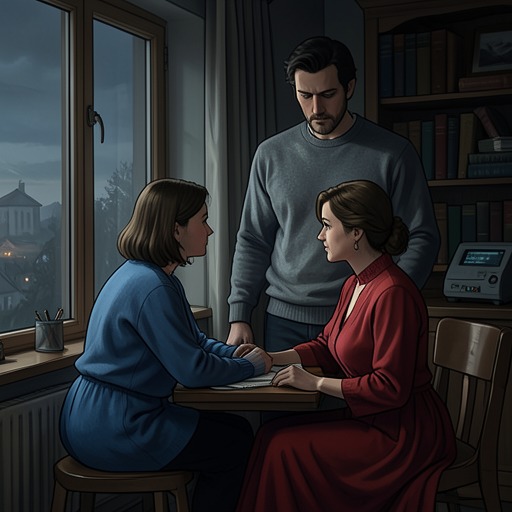
As Ron grew more controlling, Dianna became increasingly doubtful that she could restore the husband she remembered. His growing enthusiasm for plural marriage intensified her alarm. When he said he intended to marry off their teenage daughters as plural wives, she reached a breaking point and sought help from Weiss, other close friends, leaders in her LDS ward, and Brenda Lafferty, Allen Lafferty’s wife. The crisis thus widened from a conflict between spouses into a question of what would happen to the children and whether Dianna could protect them from the future Ron was proposing.
Ron’s revelations gave the conflict a sacred vocabulary. In one message, he presented himself as a conduit for God speaking directly to Dianna: the text described her as rebellious toward her husband, warned that another woman might take her place, and threatened that she and the children would be removed from their position unless she repented. It also tied her continued place in the family to Ron’s wishes. The revelation transformed disagreement within the marriage into a purported divine judgment on Dianna, while affirming Ron’s authority to define both her conduct and her place in the household.
The account identifies her eventual departure with the children as a profound loss for Ron. Psychiatrist C. Jess Groesbeck later testified for the defense that Ron could not tolerate Dianna’s leaving and that the loss precipitated a delusional disorder or schizo-affective disorder. Groesbeck described Ron as having lost a central part of his self-image and compensating by constructing an inflated view of himself and the world. This was a clinical interpretation offered in the later legal proceedings, not a fact established by Dianna’s perspective; it nevertheless shows how decisively her departure figured in the defense’s explanation of Ron’s subsequent beliefs.
Narrative Significance
Dianna’s role is not confined to being the person Ron lost. The narrative follows her as she recognizes the distance between the husband remembered by friends and the man issuing new demands, tries to intervene on behalf of other wives, seeks support when plural marriage threatens her daughters, and leaves when she can no longer trust that Ron will change. Her actions make visible the costs of a system in which religious authority is used to prescribe women’s obedience and marriage, even as the immediate conflict unfolds within one family.
Her departure also reveals a striking reversal of authority. Ron’s revelation framed Dianna’s resistance as disobedience and his desires as divinely endorsed; Groesbeck, looking back after the murders, framed her leaving as the loss Ron could not bear. In these competing accounts, Dianna’s decision is alternately treated as the offense that required correction and the event that precipitated Ron’s collapse. The narrative’s emphasis on her prolonged attempts to save the marriage preserves a third dimension: she was neither merely the object of Ron’s religious declarations nor simply a cause in a psychiatric explanation, but a person who sought help and ultimately acted to leave with her children.