Onias
Under the Banner of HeavenOnias was a self-proclaimed prophet whose revelations briefly joined his campaign to reform the Church of Jesus Christ of Latter-day Saints with the ambitions of the Lafferty brothers. He gave their fervor a program and a platform: a School of the Prophets devoted to receiving and interpreting revelation, and a nationwide effort to warn church leaders. But the authority he claimed to restore could not remain his alone. When Ron Lafferty received a revelation that challenged Onias’s leadership, the school faced the problem built into its own method: a student might claim that God had instructed him to disobey the prophet.
A prophet with a mandate
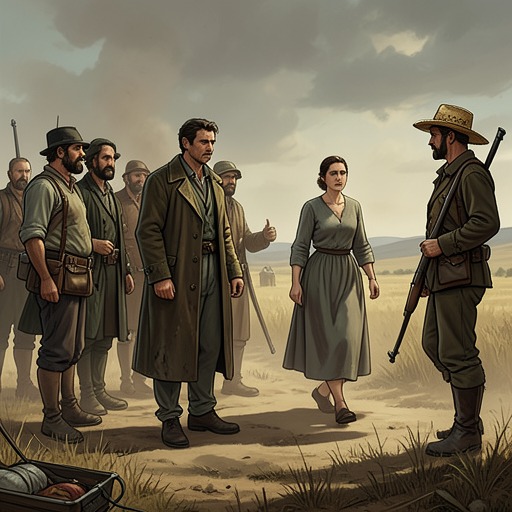
The account introduces Onias in the fall of 1983, when Utah businessman and Dream Mine supporter Bernard Brady brought him together with the Lafferty brothers, Allen absent. The meeting quickly acquired the character of a founding moment. Onias recalled that the men felt kinship and shared values, talked late into the night, and became convinced that their combined efforts were destined to change human history. Their sense of mission was not merely personal enthusiasm: the group believed it had been entrusted with divine work.
Onias’s immediate project was to confront the leadership of the Church of Jesus Christ of Latter-day Saints. In a revelation dated November 26, 1983, he said God instructed him to prepare pamphlets for stake presidents and ward bishops. The warning drew on excerpts from his collected revelations and accused church leaders of departing from the doctrines God had revealed to Joseph Smith. Onias particularly objected to the church’s support for the government’s criminalization of plural marriage. He also condemned the 1978 decision under Spencer W. Kimball to admit Black men to the priesthood, a change widely welcomed outside the church but presented in Onias’s theology as a violation of divine order. His objections placed him within a reactionary religious program that treated both legal accommodation and a major change in church policy as evidence of apostasy.
The pamphlet made Onias’s own prophetic status central to that program. It presented him as commissioned to cleanse the church and expose its leaders, promising that those who rejected the warning would face divine judgment. The leaders were offered a choice: acknowledge their errors and yield control to God’s chosen prophet, described as the one mighty and strong, or face God’s wrath. The claim combined an accusation against the existing hierarchy with a demand that authority pass to Onias. To his Lafferty allies, the message sounded like a long-denied truth and a route back to the church of Joseph Smith as they believed it should be.
The School and the pamphlet campaign
Onias and the Laffertys turned that shared conviction into organized labor. The brothers printed, folded, collated, addressed, and mailed more than fifteen thousand pamphlets to church leaders across the country. Onias later contrasted their pace with what he thought he could have managed alone: the brothers completed in two weeks, working day and night, a task that he believed would otherwise have taken several months of spare-time effort. Their contribution helped transform his revelations from private claims into a coordinated challenge aimed at the church’s leadership.
By early 1984, the School of the Prophets met weekly, usually at the Provo home of the brothers’ mother, Claudine Lafferty, above the family chiropractic clinic. The pamphlet drive was a visible part of its work, but the school’s larger purpose, as Onias conceived it, was to teach believers how to receive and interpret revelations from God. That purpose also drew the Laffertys further into the school. Onias regarded their energy as pivotal to its successful beginning and came to see their involvement as divinely arranged.
He said a January 8 revelation had identified the Lafferty brothers, even before their births, as an elect people and the chosen seed. About six weeks later, another revelation directed him to appoint Ron bishop of the Provo chapter. Onias did so, and the appointment met with the approval of the school’s members. The younger brothers, including Dan, had long looked up to Ron; the new office gave that existing family deference an institutional form. For Onias, the appointment strengthened his organization. For Ron, it gave him a place of responsibility at a time when he had suffered serious personal losses, including the end of his marriage and separation from his family, the loss of material wealth, and excommunication from the church he loved.
Revelation and the transfer of authority
The school’s practice soon made its central tension personal. Ron began to receive revelations as one of Onias’s students. On February 24, he sat at a computer borrowed from Bernard Brady, closed his eyes, and waited for what he understood as the Spirit to move his finger across the keys. He received further revelations on February 25 and 27. Dan, who had not yet experienced revelation himself, watched with fascination. Ron described the process to him as feeling the Lord’s thoughts and writing them down; sometimes the message arrived a word at a time, sometimes in complete phrases. Dan’s account conveys how the school’s teaching became persuasive not only as doctrine but as an observable practice among its members.
The revelation Ron received on February 27 was addressed to his estranged wife, Dianna, with Ron acting as its conduit. It warned that the earth would soon be destroyed and accused her of rebelling against her husband. It also threatened that she could be replaced and that her children could be removed from her unless she repented. The revelation thus carried the school’s claims into a family conflict: Ron’s wishes appeared as divine instruction, and his marital authority was framed as a command from God. For Onias, this was a striking consequence of teaching his followers to receive messages directly; the resulting revelation did not simply reinforce his own authority but gave Ron a means to assert his.
A second conflict concerned sacramental wine. After visiting John W. Bryant’s polygamist commune in Oregon around Thanksgiving 1983, Ron had taken part in its wine sacrament. On returning to Utah, he pressed the school to replace the juice or water ordinarily served at meetings with wine. At the March 9 meeting, he continued drinking after the sacrament and mocked Onias for refusing the wine and taking water. According to Onias, Ron said he was too old and slow and should be released, and that the Lafferty brothers should take over. Dan and Watson supported him. What began as a dispute over religious practice had become an open challenge to who should lead the school.
The removal revelation and the break
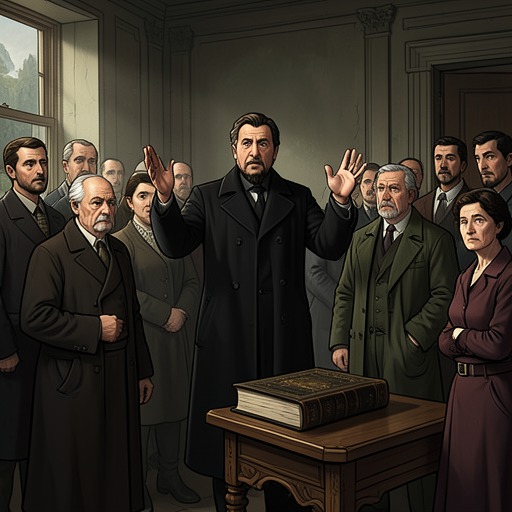
The decisive rupture came when Ron presented his removal revelation for the school to evaluate. At the April 5 meeting, the nine men present discussed whether it was a valid divine commandment and then voted. Ron, Dan, and Watson supported accepting it; the others rejected it. The three Laffertys became angry, left the meeting, and ended their association with the school. The episode marked the collapse of the alliance that had helped Onias establish his organization: the brothers who had circulated his warnings now departed when the group refused Ron’s revelation.
The break exposed a structural dilemma in Onias’s project. A school that encouraged its members to seek and interpret divine messages could not guarantee that those messages would confirm the founder’s authority. Once Ron claimed to speak for God, Onias’s position as prophet no longer settled what the school should believe. The members’ vote temporarily distinguished the school’s collective judgment from Ron’s claim, but it could not restore the earlier unity. Onias had brought the Laffertys into a shared campaign through revelation; revelation, claimed independently by one of them, became the means by which that partnership ended.