Parable of the Wheat and Tares
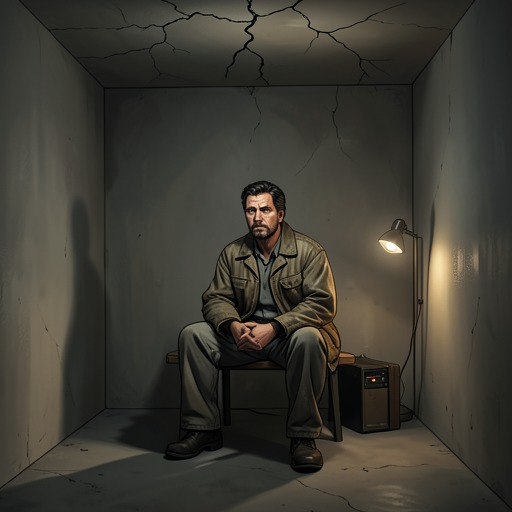
Under the Banner of HeavenThe Parable of the Wheat and Tares is a biblical allegory about evil taking root among the faithful and being separated from the good at a final harvest. In the book, its decisive significance lies in the way Dan Lafferty converts that promise of divine judgment into a rationale for violence by human beings, presenting murder as a foreshadowing of the harvest rather than as a crime against its victims.
The Biblical Allegory
The parable appears in Matthew 13:24. While people sleep, Satan sows weeds among a field of wheat; Jesus Christ tells his followers to let both grow until the harvest, when the weeds will be gathered for burning and the wheat brought into his barn. The image makes judgment the work of a future reckoning, distinguishing the faithful from those who do not belong to the kingdom.
The note accompanying the passage explains that a tare is a noxious weed that grows among grain. That detail sharpens the parable’s boundary-making logic: the weeds are not merely different plants but an infestation to be removed. Its eventual separation of wheat from weeds becomes especially consequential when believers claim the authority to decide who belongs on which side.
Dan Lafferty’s Interpretation
During Ron Lafferty’s 1996 retrial, Dan Lafferty presented his killings of Brenda Lafferty and Erica Lafferty as a foreshadowing of the parable’s harvest. He interpreted the prophecy as a time when Jesus Christ would send angels to remove and kill those who were not his. He did not understand those angels as winged beings descending from heaven, but as men already on earth who would carry out God’s work after learning their divine identity and receiving instruction.
Dan placed himself inside that apocalyptic account. He believed God had designated him as Elijah, responsible for telling the righteous who their Father was and helping initiate the thousand-year reign of God’s kingdom. In this scheme, the parable ceased to describe judgment reserved for God: Dan cast human violence as advance action on God’s behalf. The victims’ lives were made subordinate to his division of humanity into the children of love and the children of the devil.
The book also records a later revelation Dan said he received in prison, a sign that the moon would shine from noon until nine at night. He interpreted that unusual event as the sign of Jesus Christ’s return and remained certain that he would recognize and identify Christ. The episode extends the parable’s harvest imagery into Dan’s claimed prophetic role: he imagined himself not only as an agent of judgment but as the person who would announce the coming kingdom.
Recurrence and Consequences
Dan was not the only religious extremist in the book to invoke the parable. Brian David Mitchell, who abducted fourteen-year-old Elizabeth Smart in 2002, cited it in his tract, The Book of Immanuel David Isaiah. He used the image of Satan sowing tares among wheat to describe corruption in the priesthood. The recurrence shows how the same biblical language can be enlisted by different zealots to narrate a corrupt world in which their own actions appear to serve a divine sorting-out.
Elsewhere, the book sets such claims against the experiences of girls whose lives were controlled within polygamous communities. Ruby Jessop, fourteen when she was forced into marriage, was later returned to members of the faith after a social worker interviewed her in the presence of an alleged abductor. Authorities accepted a church leader’s explanation that she was on vacation when her sister reported her missing; Ruby was not heard from outside Colorado City after the summer of 2001. The account does not identify the parable as a cause of Ruby’s treatment. Its juxtaposition with the harvest rhetoric instead underscores the human stakes of systems that classify, control, and silence vulnerable people while claiming religious authority.
Meaning in the Book
The parable’s movement from patient growth to final separation becomes dangerous in Dan’s interpretation because he claims the right to anticipate the harvest. A promise of divine judgment is transformed into permission for present-day violence, and a religious image of sorting becomes a framework for treating other people as condemned. The book’s account of Mitchell’s separate use of the same passage makes this more than an isolated reading: it traces a recurring script in which zealots imagine a world divided into the righteous and the corrupt, then place themselves among those entitled to act.