Ron Lafferty assault on Dan in jail
Under the Banner of HeavenRon Lafferty’s assault on Dan in the Utah County Jail marked a turning point in the brothers’ relationship: the two men who had acted together were now divided by fear and suspicion. The episode began five months after the murders, while they shared a cell awaiting trial, and continued the next day in a sudden attack that left Dan injured and wary of Ron.
The Assault in the Shared Cell
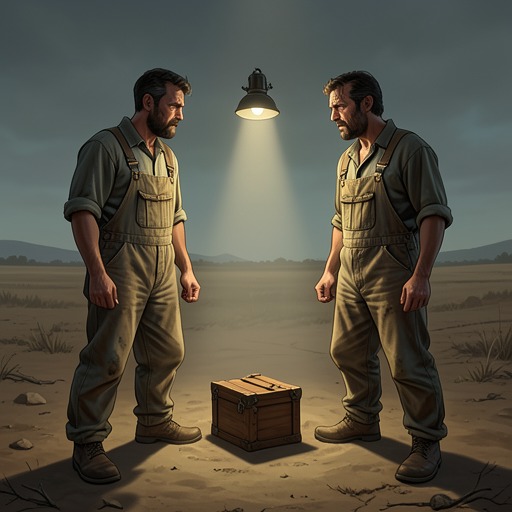
Dan was lying in his bunk when he sensed Ron approaching and opened his eyes to find him creeping toward him. Ron stopped when discovered and returned to his own bunk. Soon afterward, he asked Dan whether he thought Ron could kill someone as large as Dan. Dan took the question seriously and resolved to watch his back.
The following day, Ron struck Dan without warning while Dan was standing in the cell. Dan did not resist. Ron continued beating him until his own hands hurt too much to continue; Dan suffered injuries, including a broken rib and damage to his nose and teeth. The attack turned the brothers’ shared confinement into a source of immediate danger for Dan.
From Assault to Submission
After the assault, jailers separated the brothers, placing them in adjoining cells. Ron then passed Dan a written revelation through the bars, claiming that God had commanded Dan to let Ron kill him. Dan prayed for guidance and concluded that he should submit; the two discussed a method involving a towel around Dan’s neck.
Dan later described interpreting an ordinary bodily response as confirmation that the revelation was valid. He prepared himself for what he believed would be his death and anticipated seeing God as he positioned himself at the bars. The episode thus extended the violence of the shared cell beyond Ron’s assault: Dan’s fear and religious obedience became entangled in a second, near-lethal confrontation between the brothers.
The Estrangement That Followed
By August 1995, when both brothers appeared in Judge Steven Hansen’s Provo courtroom during proceedings before Ron Lafferty’s retrial, they exchanged a friendly greeting. It was their first conversation in eleven years. The civility of the moment concealed a complete reversal in Dan Lafferty’s understanding of his brother: he now regarded Ron Lafferty as an agent of Satan who wanted to kill him and thwart the mission Dan believed God had given him. The assault in jail had become part of a relationship defined not by shared religious purpose but by mutual danger and incompatible claims to divine authority.
Place in a Larger Pattern
The jail assault belongs to a wider pattern in which the brothers treated revelation as a source of authority for violence, even when its demands turned against one another. Ron’s earlier removal revelation named Brenda Lafferty, Erica Lafferty, Chloe Low, and Richard Stowe as obstacles to God’s work; Dan and Ron concluded that the named targets must be wicked and that they should act on the command. Dan later interpreted the killings through the idea of a prophesied harvest, imagining human agents as avenging angels. Against that background, Ron’s later claim that revelation authorized Dan’s death exposes a volatile logic: divine command could be invoked first to direct violence outward and then to make a brother its intended victim.