Schisms within Mormon Fundamentalism
Under the Banner of HeavenSchisms within Mormon Fundamentalism are not isolated disagreements but recurring contests over who holds priesthood authority and which religious obligations remain binding. The movement’s divisions grew from the conviction that plural marriage had not been revoked, and were renewed whenever a prophet’s succession or a rival revelation challenged the existing order. The resulting breaks created competing churches, reshaped communities and families, and made religious authority a source both of cohesion and of separation.
Doctrinal Roots and Competing Authorities
After the 1890 Manifesto, some Saints concluded that ending plural marriage contradicted the faith’s most sacred commitments. They argued that Section 132 of The Doctrine and Covenants remained scripture: the Manifesto, in their reading, suspended the practice under temporary circumstances rather than canceling the revelation. They also treated John Taylor’s 1886 revelation as confirmation that the marriage law had not been revoked. The dispute was therefore not simply over a social practice. It concerned whether a later church policy could displace what fundamentalists understood as an enduring divine command.
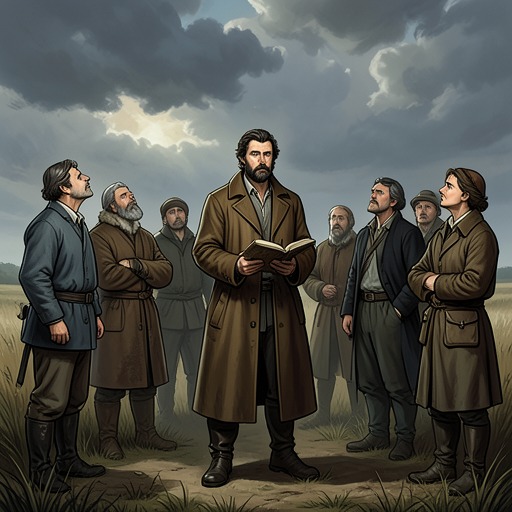
John Taylor’s revelation also became a basis for the movement’s claim to continuing authority. The account of the meeting says that he authorized five Saints to perform celestial marriages and ordain others to do so, preserving the practice beyond the reach of the church’s official policy. Its authenticity has been disputed by leaders of the Church of Jesus Christ of Latter-day Saints, but fundamentalists treated the episode as a sacred covenant and a line of priesthood authority. The narrative links that claim to the movement’s formation: when the church sustained the Manifesto, fundamentalists refused to follow it into the mainstream, holding to plural marriage and to the authority they believed Taylor had transmitted.
These disputes unfolded amid competing systems of law and governance. In Deseret, Brigham Young maintained that divine law took precedence over human law, while a Mormon-dominated territorial legislature expanded local probate courts whose judges and juries were closely tied to the church. In Nauvoo, Joseph Smith had presided over a city with unusual sovereign powers and commanded the Nauvoo Legion. These arrangements show a longer history of religious leaders asserting authority over civil and communal affairs. Later fundamentalists likewise described state scrutiny as interference with religious life, even as local priesthood structures claimed extensive control over members.
Succession and the First Major Division
The movement’s leadership disputes became especially consequential after John Y. Barlow died in 1949. His successor, Joseph Musser, suffered a series of debilitating strokes. In 1951, while gravely ill, Musser appointed Rulon Allred as his second elder and heir apparent. This decision provoked opposition from followers who believed LeRoy Johnson should succeed him, as Barlow had specified before his death. The disagreement over succession divided people who shared a commitment to fundamentalist teachings but differed over which leader possessed the legitimate authority to guide them.
After Musser’s death in 1954, LeRoy Johnson led the larger group that remained in Short Creek, later identified as the Fundamentalist Church of Jesus Christ of Latter Day Saints, or the United Effort Plan. Rulon Allred led the rival Apostolic United Brethren in the Salt Lake Valley, about 280 miles to the north. The separation reduced contact between the Short Creek community and Allred’s followers. The groups also developed different public profiles: Johnson’s community largely avoided notice beyond Short Creek, while Allred’s group became more visible. In 1977, two women associated with a different breakaway sect entered Allred’s office in Murray and killed him. The episode showed how conflicts among rival groups could extend beyond competing claims to leadership and produce lethal consequences.
Rival Prophets and Escalating Conflict
The LeBaron clan had once maintained a loose association with Allred’s group, and had sheltered him in Mexico after his 1947 polygamy conviction and parole violation. Later, three of Dayer LeBaron’s sons at different times claimed to be the one mighty and strong, a divinely appointed prophet who would restore the church. The claim placed them within a wider landscape of competing revelations, where religious legitimacy could be asserted outside established lines of succession.
Two brothers, Joel LeBaron and Ervil LeBaron, both claimed the title, and their rivalry became a distinct rupture. In 1969, Joel expelled Ervil from the sect for insubordination. Ervil then claimed to have received a revelation that Joel obstructed God’s work and should be removed. In 1972, a follower loyal to Ervil killed Joel at Los Molinos, the settlement Joel had founded on the Baja Peninsula. Ervil subsequently initiated a series of further killings. Although his group was another breakaway movement rather than simply one of the two churches formed after Musser’s death, its history illustrates how competing prophetic claims could turn separation into a struggle over followers, doctrine, and authority. Ervil’s followers also arranged the killing of Allred, whose adherents Ervil hoped to draw into his Church of the Lamb of God.
Colorado City and Repeated Splits
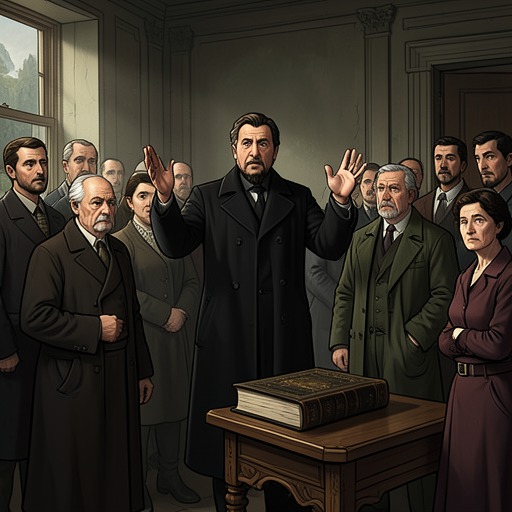
The Short Creek community experienced another succession dispute after LeRoy Johnson died in 1986. Rulon Jeffs took leadership, but followers of the bishop Marion Hammon contested his right to inherit Johnson’s authority. Nearly a third of the community left with Hammon, settled across the highway, and established a separate congregation called the Second Ward; the original congregation was known as the First Ward. Each group denounced the other as apostate and warned of its spiritual fate. The division persisted, demonstrating that shared commitment to fundamentalist religion did not settle who could speak for it.
After Rulon Jeffs died, uncertainty again surrounded the First Ward, although his son Warren Jeffs moved quickly to take control. Warren had already been running much of the church during his father’s illness, but he did not receive the same affection that followers had shown Rulon Jeffs or LeRoy Johnson. His authority was associated instead with demands for perfect obedience and fear of exclusion. In Bountiful, British Columbia, he removed Winston Blackmore from leadership and installed Jimmy Oler as bishop. At least half the community remained loyal to Blackmore, leaving open the possibility that they might follow him into an independent sect. The leadership struggle thus crossed geographic boundaries and threatened to produce another division within a movement already marked by them.
Authority in Daily Life and the Meaning of Division
The costs of religious authority could reach beyond formal church membership. In Colorado City, Rulon Jeffs claimed priesthood power over marriages and families; the account describes his wives and children as subject to reassignment by the priesthood. When DeLoy Bateman left the community’s religious order, a representative was sent to take his wives and children, whom its doctrine treated as belonging to the priesthood rather than to an individual household. Both wives refused to leave, and most of the children also became apostates. Their decision made the break a family rupture as well as a dispute about belief and leadership.
The movement’s recurring divisions expose a tension between unity under prophetic authority and the possibility of competing claims to revelation. Communities could share doctrines, historical heroes, and a conviction that plural marriage remained sacred, yet fracture over the person authorized to interpret and enforce those commitments. The portraits displayed in Colorado City and Bountiful—from Joseph Smith and Brigham Young through John Taylor, John Y. Barlow, LeRoy Johnson, and Rulon Jeffs—present one succession of priesthood keys. Other fundamentalist communities honored different lines of prophets. The contrast captures the movement’s central difficulty: authority was understood as divinely transmitted, but its transmission remained contested, and each contested succession could redraw the boundaries of the faithful.