Stephen Golding
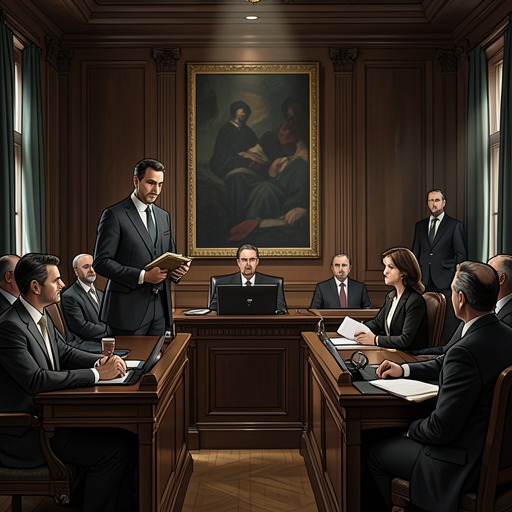
Under the Banner of HeavenStephen Golding is a forensic psychologist whose testimony in Ron Lafferty’s trial addressed a central question: whether extreme religious beliefs, even when unsupported by facts, establish mental illness or an inability to stand trial. Called as the prosecution’s final expert witness, Golding argued that belief alone could not settle either issue; the relevant assessment required criteria beyond whether a belief was true or false.
Professional Background
In 1980, Golding coauthored a highly praised book on the legal parameters of mental competency and helped develop a leading method for assessing fitness to stand trial. That background gave his testimony particular weight in the courtroom dispute over how to interpret Ron Lafferty’s religious ideas: Golding approached the question as one of legal and clinical competence, not simply the factual accuracy of those ideas.
The Dispute Over Delusion
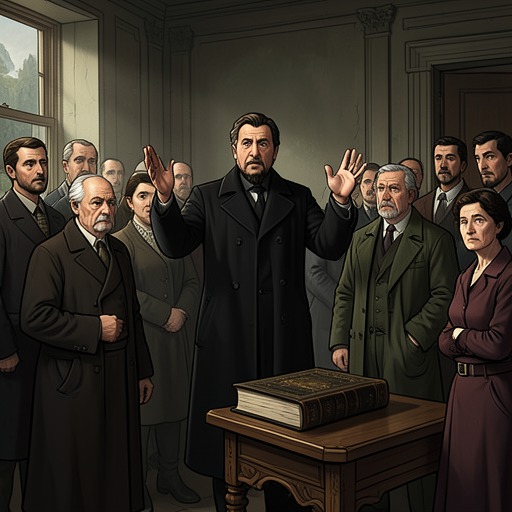
During cross-examination, Mike Esplin invoked the DSM-IV’s definition of delusions as false beliefs. Since the parties appeared to agree that Ron’s beliefs were not based on fact, Esplin challenged Golding to explain why he would not call Ron delusional. Golding resisted treating the manual’s language as a self-sufficient test. Religious belief systems, he argued, commonly include articles of faith that cannot be reduced to facts; applying Esplin’s definition without context would therefore classify such beliefs broadly as false or delusional.
Golding separated that diagnostic argument from the question of trial competence. Whether Ron’s beliefs were true or false, he said in substance, was irrelevant to determining whether Ron was competent; other criteria had to be considered. His distinction did not establish that Ron’s beliefs were factually sound. It limited what their falsity, by itself, could prove about his mental condition or legal fitness.
Zealotry and Mental Illness
Golding also addressed the prosecution’s characterization of Ron as a religious zealot. He compared Ron’s approach to the outlook of political and religious zealots in different settings, including Iran and Montana, and maintained that fervent extremism did not, in itself, demonstrate mental illness. In his account, a zealot holds an extreme belief and may go to great lengths to impose or act on it; Golding used Hamas as an example of zeal expressed through an organization’s name.
The argument drew a boundary between intensity of conviction and clinical diagnosis. Golding’s testimony framed zealotry as a pattern that could describe people across political and religious contexts, rather than as a diagnosis in its own right. In Ron Lafferty’s trial, that distinction helped the prosecution present religious extremity and mental illness as separate questions, neither of which could be answered solely by labeling Ron’s beliefs false.