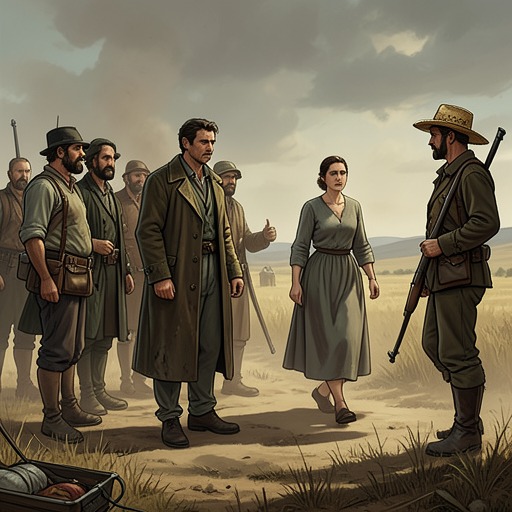
The Second Book of Commandments
Under the Banner of HeavenThe Second Book of Commandments, also known as The Book of Onias, is the revelation text that drew David and Pamela Coronado into the religious movement of Onias, the prophet who wrote it. Its decisive role in their story lies not in any specific teaching described in the account, but in the authority and familiarity they recognized in its revelations: the book seemed to them to echo Joseph Smith and The Doctrine and Covenants, and reading it set their path toward Onias’s meetings and the Work.
Identity and Titles
The Book of Onias is an alternative title for The Second Book of Commandments; the two names refer to the same book. The text was printed for Onias by Philosophical Library, a vanity press. The account identifies it as a collection of revelations, but does not describe its contents in detail.
Discovery and Reception
David and Pamela encountered The Book of Onias at a used-book store. After reading its revelations, both felt that they sounded like those of Joseph Smith and resembled The Doctrine and Covenants. Their comparison registers the book’s importance to them: they approached it not simply as an unusual volume, but as a possible continuation or return of a revelatory tradition they already regarded as significant.
The book prompted David to write to Philosophical Library to ask how he could contact its author. The press told him that Onias had recently moved his base of operations to the Provo area, where the couple lived. The text therefore did more than shape their impression of Onias from a distance; it gave them a concrete reason to seek him out.
Role in the Coronados’ Entry into the Work
David and Pamela went to a meeting held at the Lafferty family home in Provo, where they met Onias and the Laffertys. Pamela later described that encounter as how the couple came into the Work. The sequence is explicit: discovery in a used-book store, recognition of a familiar revelatory voice, inquiry through the publisher, and a meeting in their own area. The Second Book of Commandments thus functions in their account as the point of contact between their prior religious expectations and the community gathered around Onias.