
The Soul as a Burden and a Gift
UndineThis flow explores the novel’s contrast between elemental existence and mortal inward life, tracing how gaining a soul deepens Undine’s love while introducing suffering.
increasing Bearing strength in each event
 decreasing
Bearing strength in each eventdecreasingThe Question of a Soul
A Disturbing Admission
Playfulness Breaks
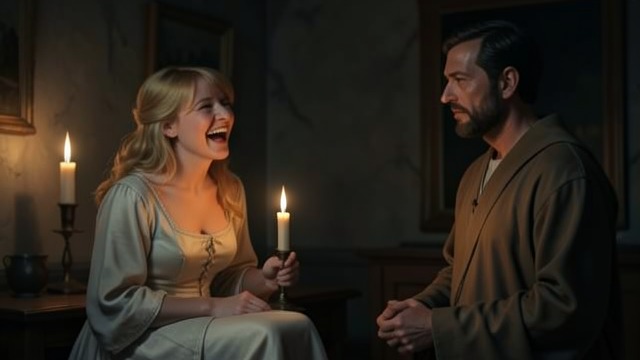
Undine jokes that she has no soul, responding to the priest’s advice about harmony between spouses. The remark makes the wedding party see her as mysterious and possibly dangerous.
Her laughter gives way to tears as she considers that a soul may be both beautiful and terrifying. The change reveals a question she cannot answer through play.
A New Standard
Father Heilmann treats the statement seriously and asks Sir Huldbrand to act with prudence and fidelity. The scene shifts marriage from a festive arrangement to a moral responsibility.
The soul is presented not as an ornament but as a capacity that changes what a person can owe and suffer.
The Elemental Condition
Life Without Inward Memory
Beautiful but Mortal
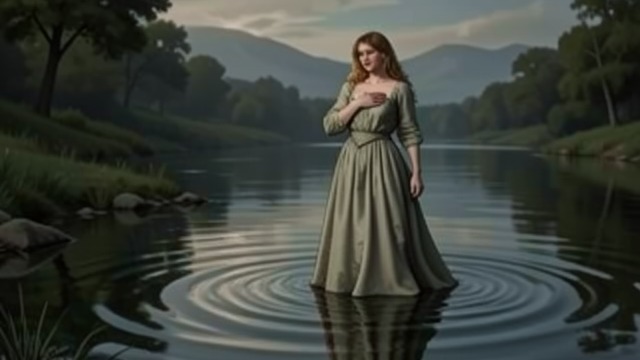
Undine describes the water spirits as fair and cultured beings who lack souls. When they die, they vanish without leaving the enduring spiritual trace associated with human life.
Their element sustains and moves them, yet also scatters them. Their merriness resembles natural life unburdened by reflective grief.
Aspiration Beyond Nature
Undine says her father wanted her to gain a soul even though it would bring suffering. She explains that all beings aspire to something higher than their present condition.
The desire for spiritual growth carries risk. Advancement is not a painless improvement but an entrance into responsibility and loss.
The Mortal Cost of Love
Love Opens a New Interior
A Soul Through Union
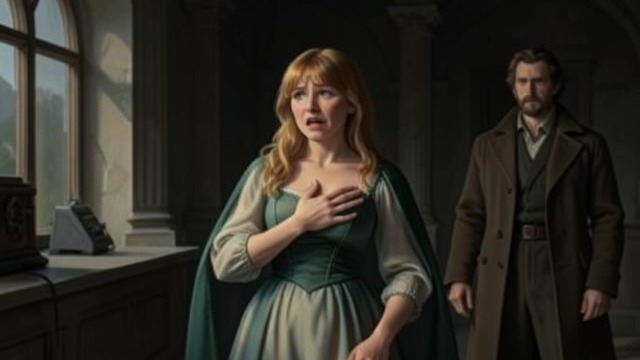
Undine says that close affection with a human has given her a soul. She thanks Sir Huldbrand for the transformation and fears what life will mean if he rejects her.
Her new inward life makes affection more than instinctive attachment. It allows her to understand fidelity, gratitude, fear, and sorrow.
Freedom and Vulnerability
Undine offers to leave if Sir Huldbrand does not want her. The choice demonstrates a moral agency that her earlier, impulsive self did not show in the same way.
The soul is both gift and exposure: it makes her capable of love that can be betrayed.
Tears the Spirits Cannot Understand
Inward Life Misread
Kuhleborn’s Limit
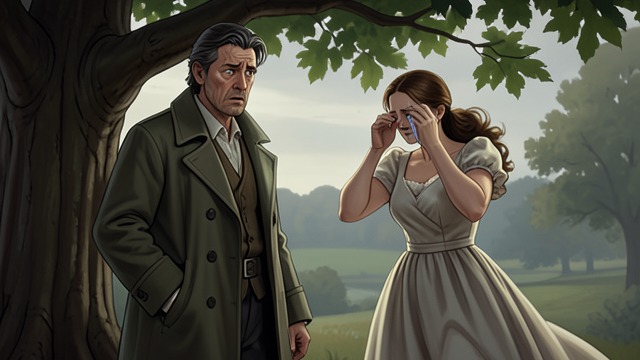
Undine explains that Kuhleborn sees outward appearances but cannot understand the inward world of human love. He mistakes a smile and tears as contradictions instead of connected expressions.
Her account separates emotional complexity from elemental power. A supernatural being may control water and still fail to understand a human heart.
A New Kind of Judgment
Undine’s own soul lets her recognize how joy and sorrow can coexist. Her tears do not cancel her love, and her fear does not erase her loyalty.
The scene presents inwardness as a form of knowledge, one that power alone cannot supply.
The Soul’s Last Tears
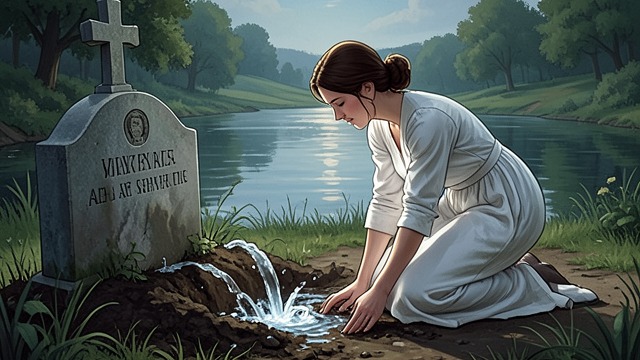
The Cost of Spiritual Feeling
An Irreversible Embrace
Undine returns after the fountain is opened and embraces Sir Huldbrand. Her tears express a love that remains even as the marriage law makes the encounter fatal.
She tells the servants that she has wept him to death. The words make grief, not hatred, the immediate force of the ending.
A Lasting Image
At the funeral, Undine’s tears and presence become a small spring around Sir Huldbrand’s grave. The villagers understand the water as her enduring embrace.
Her soul does not spare her from sorrow or undo death. It gives her a lasting emotional bond that the elemental world alone could not have sustained.
During the wedding celebration
The morning after the wedding
After Undine’s revelation at the brook
During the castle-fountain explanation
At Huldbrand’s death
