
The Lake, the River, and the Limits of Human Control
UndineThis flow traces water as a force that shelters, separates, guides, and finally carries the consequences of human choices.
increasing Bearing strength in each event
 decreasing
Bearing strength in each eventdecreasingThe Lake as Home
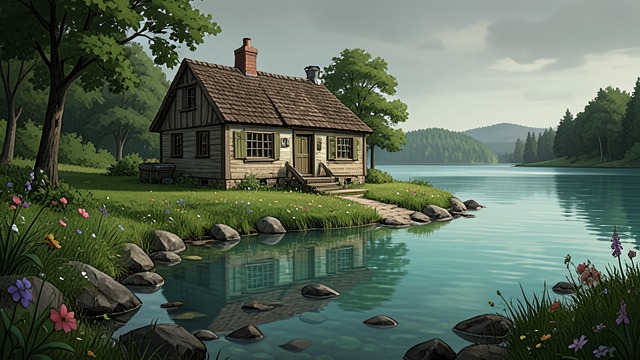
A Beautiful Boundary
Pasture Beside Water
The Fisherman’s Peninsula extends into a clear lake, with grass, flowers, and trees surrounding the cottage. The landscape appears welcoming and almost affectionate in its meeting of water and land.
The setting offers the fisherman’s family a quiet home apart from other people. Its beauty depends on an equilibrium that human beings do not control.
A Hidden Depth
The lake is also the place where the fisherman’s infant disappears and where Undine first emerges from the water. Its calm surface conceals both loss and another life.
The landscape’s beauty therefore never guarantees safety. Water is already a power that gives and takes without explaining itself.
The Brook’s Flood
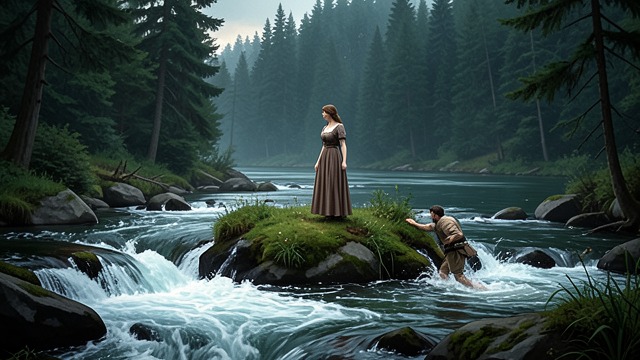
Water Reorders the World
The Sudden Torrent
The Forest Brook by the Lake rises during a violent storm and cuts off the peninsula. Trees bend, the lake roars, and the familiar pasture becomes an island.
The flood interrupts ordinary movement and creates uncertainty about Undine’s whereabouts. Human plans are suddenly subordinate to the landscape.
A Place of Reunion
Sir Huldbrand crosses the current and finds Undine safely sheltered on a small island. The same flood that threatens to divide them creates the meeting that deepens their bond.
Water does not have a single narrative role. Its danger and its capacity to bring characters together remain inseparable.
Water as Guide
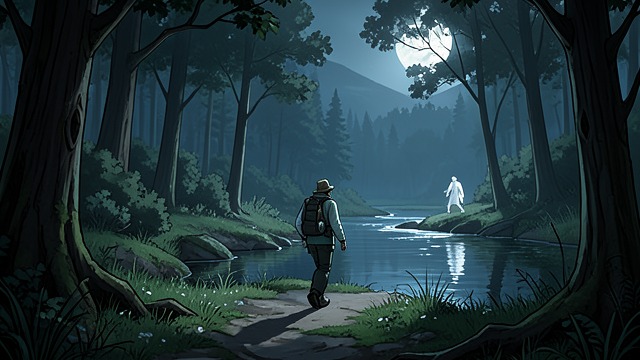
A Path Through Confusion
The White Man’s Direction
Sir Huldbrand experiences the white figure in the Haunted Forest as a terrifying pursuer. The presence drives him onward while blocking the route he thinks he should take.
Eventually, the figure leads him to the cottage and disappears. The apparent threat has also functioned as a guide.
A World Beyond Human Routes
The forest streams and the lake do not merely furnish scenery; they shape where travelers can go and when. Their movements expose the limits of the knight’s confidence and control.
The journey suggests that natural forces may have purposes invisible to human observers.
The Danube as Unstable Road
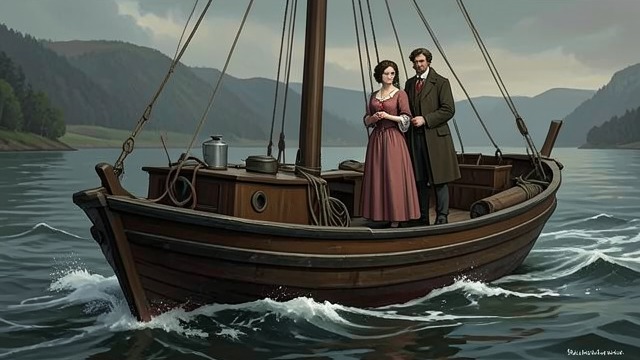
Travel Becomes Exposure
The River’s Disturbances
The party expects a beautiful voyage down the Danube, but Kuhleborn repeatedly agitates the water and disrupts the boat. The travelers cannot make the river behave like a dependable road.
Undine calms the waves, yet each intervention underscores the party’s dependence on her. Sir Huldbrand experiences that dependence as confinement rather than care.
The River Takes and Returns
The water steals Bertalda’s necklace, and Undine answers with a coral replacement. Sir Huldbrand rejects the gift and drives Undine away into the river.
The Danube carries away a treasured ornament and a beloved wife. Human attempts to possess the journey’s pleasures cannot prevent the river from changing their lives.
The Spring’s Quiet Continuance
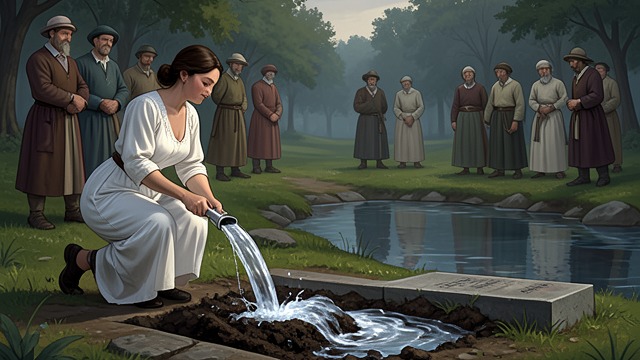
Water Remains After Loss
A Spring at the Grave
A silver spring rises where Undine kneels at the funeral. It runs around Sir Huldbrand’s grave and eventually reaches a nearby lake.
The mourners see the flow as Undine’s continuing embrace. Water gives grief a visible form without restoring the dead.
Memory in the Landscape
The villagers preserve the spring as a local belief and a lasting part of the story’s world. The final image returns water to the role of intimate witness.
The lake and river once seemed forces beyond human control; at the grave, their movement becomes a memory of love that survives only as a trace.
Before the knight arrives
The storm-night after Undine flees
During the journey out of the Haunted Forest
During the spring journey toward Vienna
After Huldbrand’s burial
