
Grief, Memory, and the Failure to Hold On
UndineThis flow traces how grief changes form, fades with time, and returns too late to prevent a second marriage and a final loss.
increasing Bearing strength in each event
 decreasing
Bearing strength in each eventdecreasingThe First Bereavement
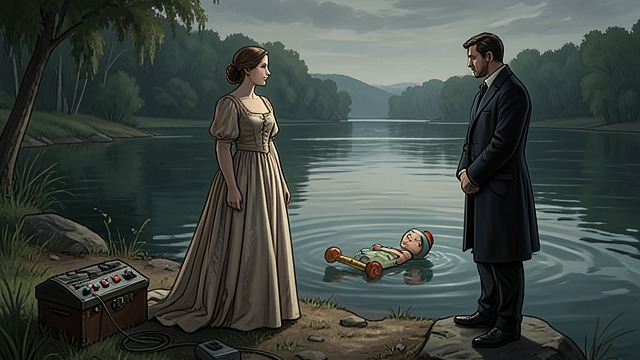
Parents Without Their Child
A Sudden Loss
The fisherman’s infant daughter slips from her mother’s arms into the lake. The parents search but find no trace of her.
The loss silences the household and changes the meaning of its home. The lake is beautiful, yet now holds an absence that cannot be explained.
A Child Who Cannot Replace Her
Undine’s arrival that same evening gives the couple someone to care for, but not knowledge of what happened to their daughter. They adopt the stranger without knowing she belongs to a different family history.
The novel presents grief as something that can coexist with new love without being erased by it.
The Songs of Loss
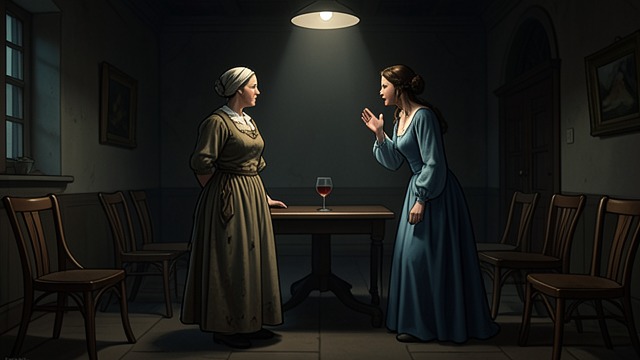
Grief Finds a Voice
An Empty House in Song
Undine sings of a mother who searches for the child she has lost and a father who returns to a home without her. The ordinary turn of seasons only sharpens the absence.
The songs give the fisherman’s family history a language that the public celebration had excluded. Their sorrow enters the hall alongside the feast.
Joy and Pain Converge
The old parents find Bertalda, but she rejects them. The fisherman’s wife experiences the recognition as real even when her daughter cannot accept it.
The scene shows that reunion does not cancel grief. It creates a new injury when recognition arrives without welcome.
Grief on the Riverboat
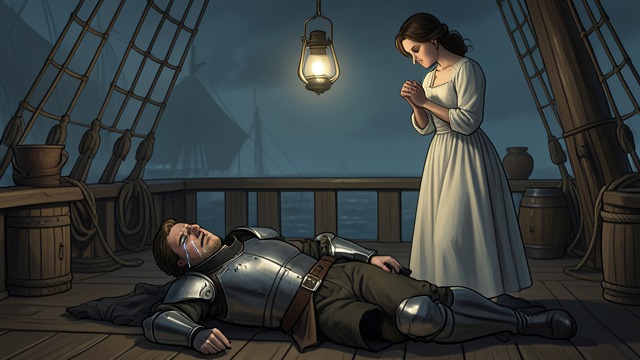
The Knight’s Collapse
A Sudden Separation
After Sir Huldbrand insults Undine, she disappears into the river. He lies on the deck bathed in tears and falls into a swoon.
The grief is immediate and nearly total. At first, the knight believes he can scarcely survive the loss.
Mourning as Memory
Bertalda also weeps, and the pair live quietly at Ringstetten Castle. Undine appears in the knight’s dreams, caressing him before leaving in tears.
The dreams keep memory alive, but they do not repair the broken marriage. Grief preserves an image rather than restoring a relationship.
The Fading of Sorrow
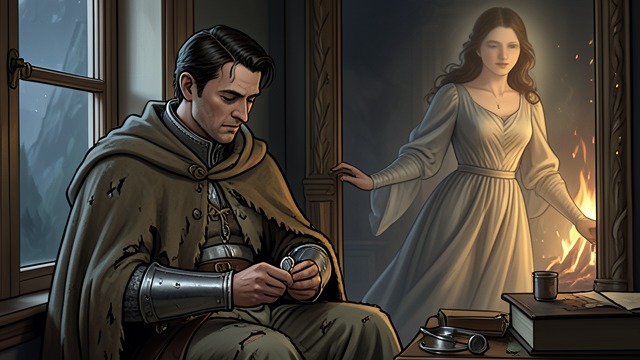
Time Alters Mourning
Less Frequent Dreams
As time passes, Undine visits Sir Huldbrand less often in dreams. His grief becomes less acute, though he still remembers and speaks of her.
The change reflects the novel’s sober view that even profound sorrow is vulnerable to other experiences. Its fading is not necessarily a deliberate choice to forget.
New Desire Enters
When the fisherman demands Bertalda’s return, Sir Huldbrand discovers that his former affection for her has revived. The prospect of losing her reveals a desire that grief had temporarily obscured.
The movement from mourning to remarriage makes the transience of sorrow part of the plot’s moral danger.
A Spring Around the Grave
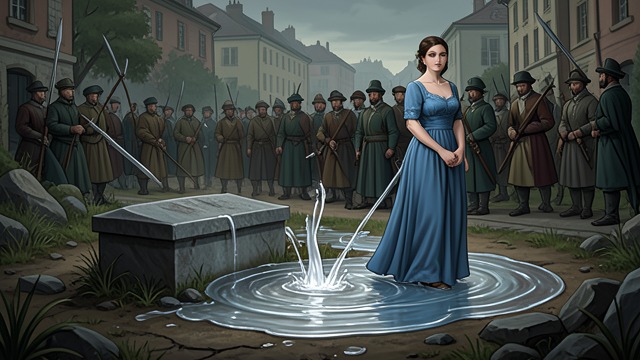
Grief Becomes Landscape
The Veiled Mourner
Undine appears at Sir Huldbrand’s funeral and follows the procession with her hands clasped in sorrow. Though the attendants fear her, she remains near the grave.
Bertalda’s response shifts when she remembers the coral necklace Undine offered her. A gesture once rejected becomes part of what the mourner’s presence means.
A Continuing Trace
After the burial prayer, Undine vanishes and a silver spring rises where she knelt. It circles the grave and runs toward a nearby lake.
The water carries grief forward as a visible trace. It cannot reverse death, but it prevents the final image from being one of complete disappearance.
Fifteen years before the main events
At Bertalda’s name-day feast
Immediately after Undine leaves the Danube boat
The years after Undine’s disappearance
At the conclusion of the funeral
