
A Secret in the Name-Day Songs
UndineThis flow tracks how Undine’s songs turn Bertalda’s celebrated identity into a contested family history and force public recognition of her origins.
increasing Bearing strength in each event
 decreasing
Bearing strength in each eventdecreasingThe Missing Infant
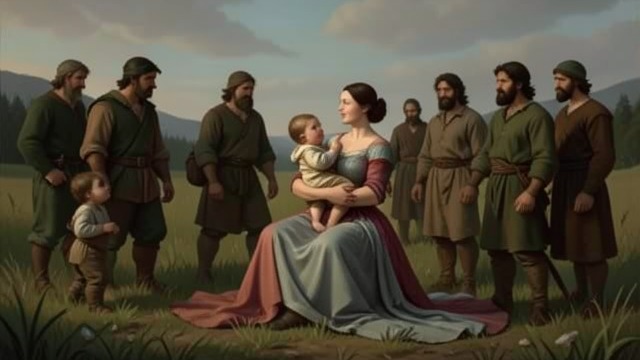
The Lost Beginning
A Mother’s Vigil
The fisherman’s wife sits with her infant beside the lake, then loses the child when it reaches toward the water. Her grief begins a family story with no witness able to explain the disappearance.
The fisherman searches in vain, and the cottage becomes a place of mourning. The parents never learn that the event is connected to a broader supernatural world.
A Different Home
A duke later discovers a small child on a meadow and brings her home. That child is raised as Bertalda, separated from the parents who continue to wait.
The gap between her humble birth and noble upbringing becomes the secret at the heart of her identity.
The First Song
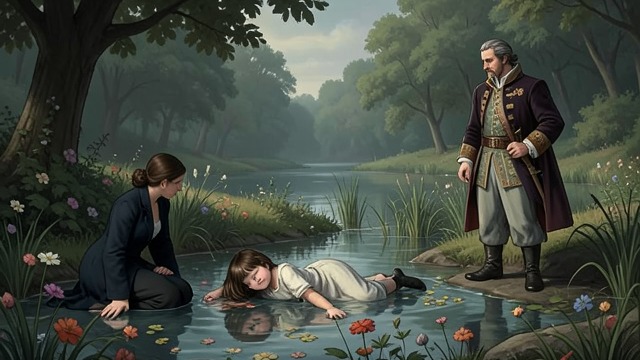
An Orphan’s Public History
A Child by the Water
Undine sings of an infant found among flowers after the lake has carried her to an unfamiliar shore. The duke’s rescue appears in the song as a chivalrous answer to abandonment.
Bertalda listens as the song quietly rearranges the story she has told about herself. Her comfortable foster history now seems incomplete.
A Lost Maternal Bond
The song insists that the child has lost a mother’s embrace, however fair her new life may be. Its tenderness turns noble success into a form of deprivation.
Undine’s performance prepares the company to recognize that Bertalda’s social elevation has not erased her first family.
The Second Song
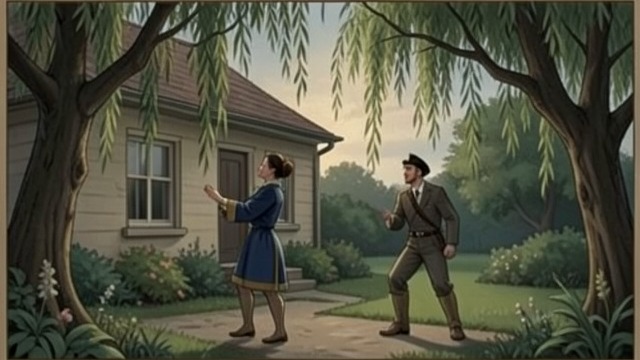
The Waiting Parents
Grief at Home
Undine sings of a mother searching an empty house and a father returning to find no child waiting. Familiar seasons continue, but ordinary renewal cannot replace the missing daughter.
The song gives the fisherman’s private loss a public voice. Listeners begin to understand that the child’s discovery had left another household incomplete.
Recognition in the Hall
Undine asks where the waiting parents are, and the fisherman and his wife come forward. Their presence makes the song’s sorrow part of the celebration itself.
The lyrical account does not force Bertalda to accept the claim. It does make denial harder by joining emotional testimony to identifiable people.
Birthmarks and Proof
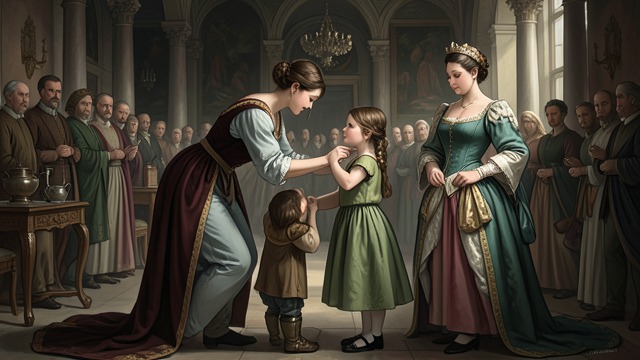
Evidence Against Status
The Mother’s Testimony
The fisherman’s wife says Bertalda has a violet-like mark between her shoulders and another on her left instep. She asks for a private examination rather than a public argument.
Bertalda refuses to reveal herself to a peasant woman. The duchess instead insists that the inquiry take place under her authority.
The Duchess Confirms
After examining Bertalda, the duchess confirms that the marks match the mother’s account. She declares Bertalda to be the fisherman’s daughter.
The proof establishes biological parentage, but it does not guarantee reconciliation. The public setting deepens Bertalda’s humiliation even as it ends uncertainty about her origins.
A Recognition Refused
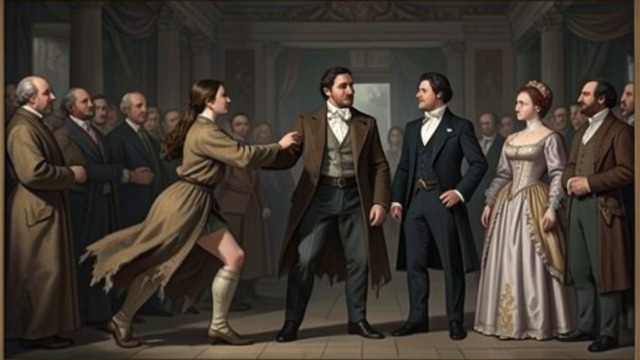
Truth Without Welcome
Anger After Confirmation
Bertalda tears herself from the old couple’s embrace and accuses Undine and the parents of deception. She had expected her identity to rise in splendor, not to be recast as the child of a fisherman.
The fisherman’s wife still recognizes her as her daughter, while the fisherman hopes the claim might somehow be false. Their responses expose different ways of bearing a long-awaited reunion.
Consequences Beyond the Hall
The duke and duchess withdraw their protection, and Bertalda must confront the loss of her former place. Her shame later brings her back to Undine and the knight seeking forgiveness.
The revelation changes her circumstances, but the possibility of belonging remains an emotional task rather than a fact proved by birthmarks.
Before Bertalda is found by the duke
During Bertalda’s name-day feast
Immediately after the first name-day song
After Bertalda rejects the fisherman and his wife
At the close of the name-day feast
