
The Price of Believing
UnforgivenLilith’s learned suspicion makes happiness difficult to accept, while the story tests whether encouragement can help without demanding that she ignore real harm.
increasing Bearing strength in each event
 decreasing
Bearing strength in each eventdecreasingExpecting the Worst
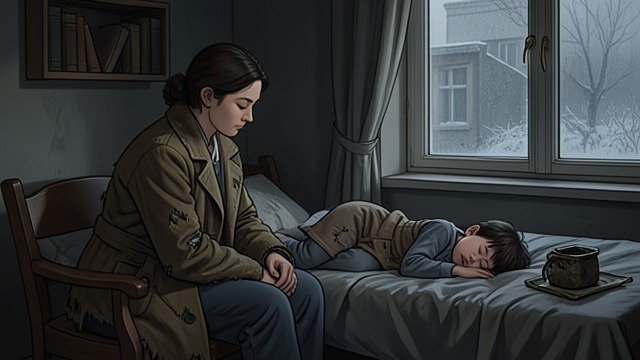
Expecting the Worst
A defensive worldview
Lilith sees little reason to expect kindness or opportunity. Poverty, illness at home, and routine ridicule have made disappointment feel more reliable than hope.
Protection that isolates
Her distrust protects her from easy promises, but it also makes every offer of friendship suspect. The novel treats that defensiveness as an adaptation to repeated hardship rather than a personal flaw.
Praise Meets Resistance

Praise Meets Resistance
Encouragement from Cam
Cam tells Lilith that she can sing, but she struggles to trust his confidence because she does not know his motives. The hostile audience seems to confirm her fear that exposure leads to humiliation.
A voice nevertheless heard
She sings “Exile” despite the risk. The moment suggests that courage need not depend on believing success is guaranteed; it can consist of acting while fear remains.
Good News Seems False

Good News Seems False
Recognition resisted
When Lilith learns that Ike Ligon has praised her song, she initially suspects a joke. Her response shows how deeply past disappointment has trained her to reject favorable evidence.
Friends help her receive it
Cam, Bruce, Jean Rah, Luis, and other students celebrate with her. Lilith begins to let the recognition be real, though accepting happiness feels unfamiliar and frightening.
A Setback Reopens Doubt

A Setback Reopens Doubt
Trust tested by revelation
Lilith hears that Cam’s former beloved died by suicide and asks whether he caused it. Cam confirms that the girl died, and Lilith recoils before she knows the full story.
Earlier hope cannot settle the question
The good experiences she has had with Cam do not erase the seriousness of the accusation. Her skepticism responds to genuine uncertainty, not simply an inability to be happy.
Belief After the Truth
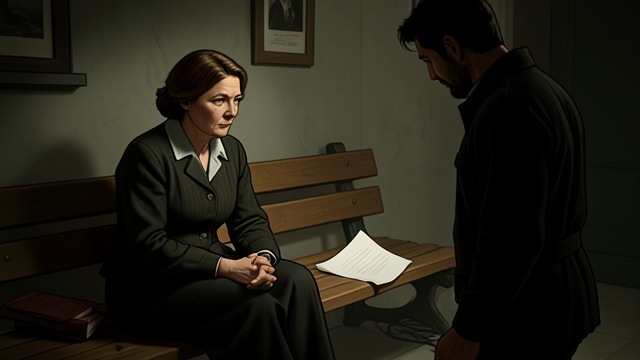
Belief After the Truth
Hope without denial
Lilith learns that she was the girl who died and that Cam’s old rejection helped drive her despair. She does not have to pretend his actions were harmless in order to recognize his love now.
A difficult possibility accepted
She chooses Cam after confronting the facts, not because every injury has vanished. The ending presents hope as a decision made with full knowledge rather than a return to naive trust.
During the opening school days
At Lilith’s open mic performance
Five days before prom
After the suicide rumor spreads
During the final confrontation
