Cam and Lilith's marriage license
UnforgivenCam and Lilith's marriage license is a hand-prepared parchment scroll that turns their planned wedding into a visible promise—and, when the relationship breaks, becomes its last physical trace. Created by Dani for the ceremony beside the river, it bears elegant Aramaic writing and painted scenes of the couple embracing. Lilith's objection to the place named in it unsettles the wedding plan; Cam's later decision to end the marriage ends with her throwing the document into the water.
Creation and Design
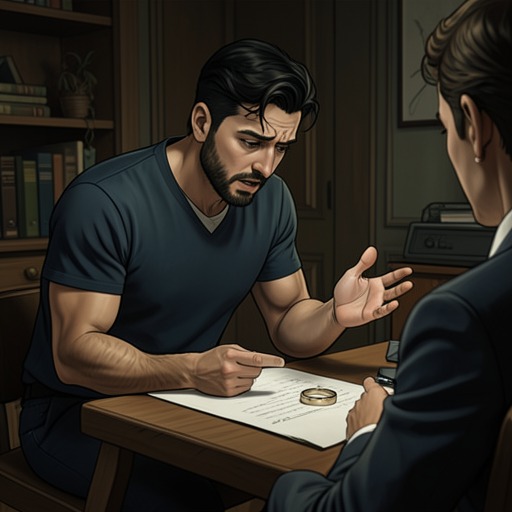
Dani tells Cam that he finished the marriage license the previous night and that its paint should be dry. The document is therefore not an impersonal form retrieved at the last moment: it has been prepared for this particular couple and their ceremony. Its handwritten and painted details make the commitment tangible before either Cam or Lilith has formally entered into it.
When Dani unrolls the thick parchment, Cam admires the elegant Aramaic writing and the airy paintings forming its border. Those images depict Cam and Lilith in a dozen embraces. The license thus presents their union not only through written terms but through a repeated visual image of intimacy. Its design gives the planned marriage a personal history: the document's decoration recalls the love that brought them to the river, even as the ceremony has not yet taken place.
The Planned River Ceremony
The license names the river as the place where Cam and Lilith will marry. Lilith notices this detail when Dani presents the scroll, and the wording makes the document an immediate point of disagreement. Cam had imagined marrying her there because it was where they fell in love; he tries to keep his response cheerful while dreading her objection.
Lilith does not reject the marriage itself. She says she respects the long tradition they are about to enter and wants to marry in the temple, despite liking the way Cam and Dani flout convention. Her response distinguishes their shared commitment from Cam's choice of venue: the license records a plan that matters to her, but its river setting does not match the ceremony she wants. At this point, the scroll marks a wedding still under discussion, not a completed marriage.
The Wedding's End and the License's Destruction
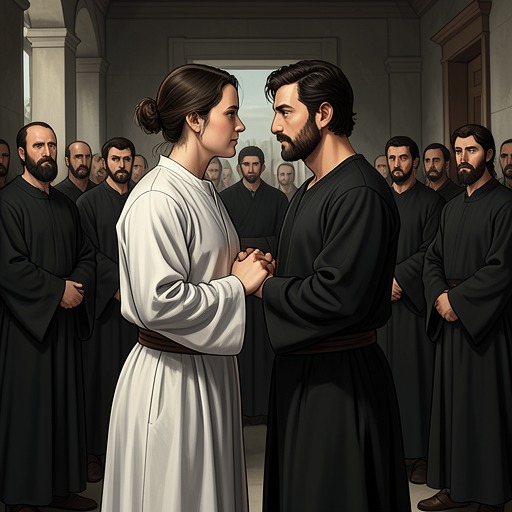
The wedding plan collapses later, when Cam tells Lilith that it is over—the wedding and everything between them. He interprets her words through the angry version of events he needs in order to leave, rather than accepting what she actually says. Lilith tells him that he is breaking her heart. The marriage license, once prepared to formalize their future, remains with her as the ceremony ends without a marriage.
Lilith grabs the document and flings it into the river. She then kneels, weeping, with her arm extended toward the water as if she wishes she could take the act back. Cam watches the parchment—the last evidence of their love—disappear with the current. The physical ending of the license gives the breakup a visible, irreversible gesture: the document made for a shared future is surrendered to the same river that had been chosen as their wedding place.
Meaning and Aftermath
The license's significance rests in the contrast between what it was made to do and what happens to it. Dani prepared it as a particular, carefully decorated record of a marriage they expected to enter. Its text fixes the river as their intended venue, while its illustrations surround that plan with images of affection. Yet it cannot settle the disagreement over the ceremony, prevent Cam from ending the relationship, or preserve the couple's future once Lilith casts it away.
Its disappearance also shapes the memory of the breakup. In the dark days and decades afterward, Cam remembers Lilith in increasingly ugly ways, including details that did not happen at the river. Against those later distortions, the license's destruction remains a concrete event: Lilith threw it into the water, then grieved over what she had done. The scroll therefore links a specific loss to the instability of memory. It is both the planned marriage's most personal document and the final material sign of a love that Cam leaves behind.