
From Discontent to Departure
Unorthodox: The Scandalous Rejection of My Hasidic RootsDevorah’s growing awareness of communal secrecy and her commitment to her son gradually overcome the fears that keep her in a failing marriage and religious life.
increasing Bearing strength in each event
 decreasing
Bearing strength in each eventdecreasingSeeing Silence as Complicity

Knowledge Changes the Stakes
Stories that disturb the peace
As Devorah hears accounts of suspected abuse and a boy’s death, she is appalled by the possibility that people with authority may conceal serious harm to protect the community’s reputation. The stories unsettle her trust in a system that speaks constantly about law yet appears unwilling to confront certain violations.
She is especially disturbed by the argument that the community should remain quiet because proof is incomplete or public knowledge would cause embarrassment. The gap between the value placed on religious rules and the reluctance to seek accountability becomes increasingly difficult for her to accept.
A promise to speak
Devorah keeps one disturbing account to herself, fearing consequences for the person who shared it and for her own family. Still, she makes an inward promise to her unborn child that she will not keep silent forever.
That promise gives her dissatisfaction a moral dimension. Leaving is no longer only a way to find personal freedom; it becomes connected to the possibility of raising a child in a world where dangerous secrets are not treated as ordinary communal business.
Small Freedoms Fall Short

The Limits of Partial Escape
Two lives at once
In Airmont, Devorah gains room to drive, study, and cautiously explore experiences unavailable to her in Williamsburg. At Sarah Lawrence College she begins to imagine an intellectual and social identity outside the role of a Hasidic wife.
Yet she still hides much of her life from Eli, changing clothes in the car and concealing books and opinions. The distance between her daily choices and her private aspirations makes ordinary compromise feel increasingly like a second form of confinement.
The son she will not leave
Devorah initially fears that leaving may mean losing Yitzy or failing to support him. Her concerns about his education and future grow sharper as he approaches the age when the community will claim more control over his daily life.
Gradually, the cost of staying becomes more vivid than the risk of departure. She realizes that the limited privacy of a less strict setting cannot satisfy her need to make decisions openly or give her son a broader life.
The Marriage Breaks Down
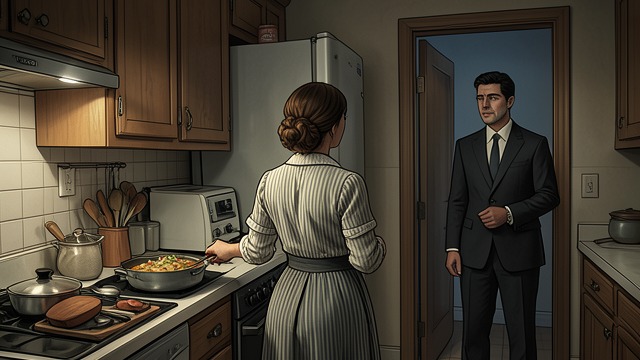
A Relationship Near Its End
Accumulated injuries
Devorah and Eli’s marriage is shaped by unresolved sexual strain, arguments, religious expectations, and the influence of Eli’s family. Even when they share a home, Devorah feels that she is expected to perform the role of a compliant wife rather than be recognized as an equal person.
Her growing education and private exploration intensify the separation between them. Eli’s preference for established rules and Devorah’s desire for independent choices increasingly pull their lives in opposite directions.
Deciding that return is unlikely
Devorah begins preparing mentally and practically to leave, although she has no fully secure plan. She weighs the possibility of being alone with a child against the prospect of spending her life suppressing the person she has become.
The decision is not presented as effortless or free of grief. Devorah still fears poverty, isolation, and the consequences for Yitzy, but her fear no longer persuades her that remaining is the only responsible option.
The Crash at the Threshold
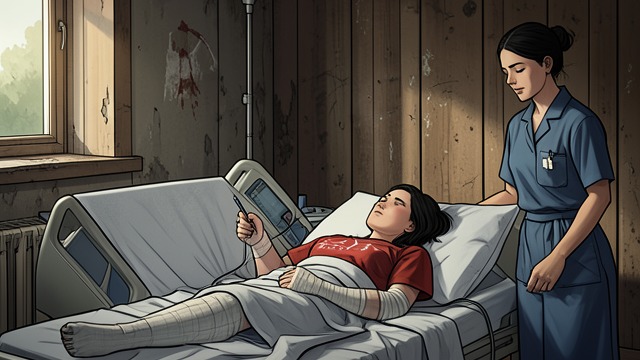
A Near-Death Turning Point
The accident
Driving home after spending time at Sarah Lawrence College, Devorah’s car spins out of control, strikes a barrier, and overturns. She crawls from the wreckage with injuries but alive, stunned that a crash so violent has not killed her.
The date carries added force because she remembers the warning about the number nine given by a mystic during her pregnancy. In the hospital, she interprets the timing not as proof of a fixed destiny but as a sign that her life has reached a dividing point.
A decision hardens
The accident occurs just as Devorah has been preparing to leave her old life. Instead of driving her back toward obedience, survival sharpens her sense that she cannot keep postponing the choice to live differently.
She signs a contract to write a memoir about the life she is leaving behind. The act turns private departure into an intended public account, giving her past a voice while she begins separating from it.
Leaving With Her Son
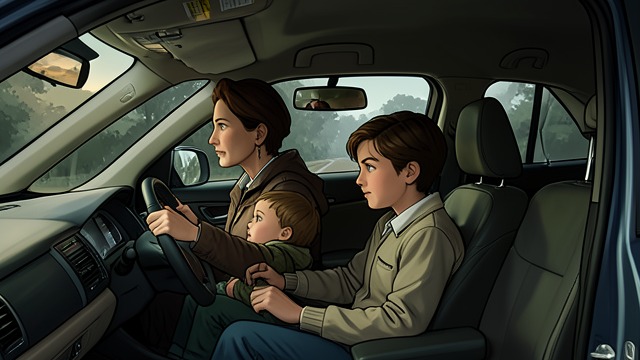
Choosing an Uncertain Freedom
The last practical steps
Devorah and Eli seek religious marriage counseling, but the conversation confirms how little remains of their partnership. When Eli suggests divorce, she does not resist the possibility; she has already concluded that returning to the marriage would not restore trust or make her feel at home.
She packs what she can into a rented car, takes Yitzy, and leaves. Selling some wedding jewelry gives her money and marks a deliberate break with objects tied to the life she is abandoning.
A new relationship with her son
In the new setting, Devorah changes her phone number and keeps her address private while she tries to establish security. With fewer relatives and community members between them, she and Yitzy begin to know one another in a more direct way.
She teaches him English and reads with him, relieved that he is still young enough to adapt. Leaving does not erase fear or uncertainty, but it gives mother and child room to build a life shaped by choices rather than inherited rules.
During her pregnancy in Airmont
After Devorah begins college and lives in Airmont
In the months before September 2009
Midnight on September 9, 2009
Shortly after the September 9, 2009 crash
