
Zeidy’s Faith and Its Limits
Unorthodox: The Scandalous Rejection of My Hasidic RootsThis thread traces Zeidy’s effort to turn survival, scholarship, and family authority into religious purpose, and the growing distance between that purpose and Devorah’s independent judgment.
increasing Bearing strength in each event
 decreasing
Bearing strength in each eventdecreasingSurvival Given a Purpose
Survival Given a Purpose
A survivor’s explanation
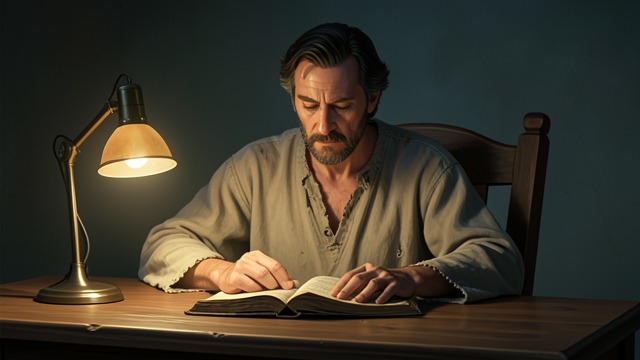
Zeidy interprets his survival through religious responsibility. He believes that the children and grandchildren of survivors must grow into devout Jews, giving meaning to lives that were spared when so many others were lost.
His faith offers a structure for grief and uncertainty. He treats hardship as a spiritual test and sees religious commitment as a way to answer the catastrophe that shaped his generation.
Purpose becomes discipline
That purpose governs how Zeidy raises his family. He favors restraint, study, modesty, and obedience, believing that individual comfort is less important than religious duty and the preservation of the community.
For Devorah, the same convictions that give Zeidy direction can make deprivation seem mandatory. His personal response to historical trauma becomes a system of expectations imposed on children who did not choose it.
Scholar and Household Authority
Scholar and Household Authority
Learning as prestige
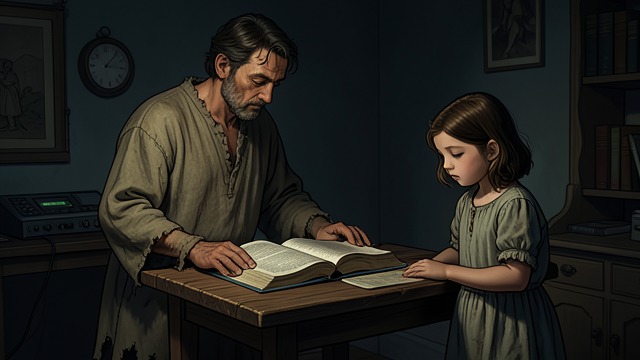
Zeidy is known both as a serious Torah scholar and as a businessman. His devotion to study gives him authority in the family and community, while his practical life remains partly opaque to Devorah.
He also rejects many forms of luxury, insisting that intellectual and spiritual development matter more than comfortable surroundings. The worn household furnishings and Devorah’s hand-me-down clothes make visible how his principles shape daily life for those around him.
A rule-making grandfather
Zeidy asks Devorah about her behavior and expects her to embody the family’s religious standards. He polices secular reading, English, dress, and other signs of outside influence, presenting these limits as protection of the soul.
Devorah does not simply dismiss his intelligence or devotion. She admires his scholarship and sometimes seeks his approval, but begins to notice the difference between his intellectual openness in legal debate and the strict control he exercises over her life.
A Crisis Managed Through Faith
A Crisis Managed Through Faith
Confinement in the family home
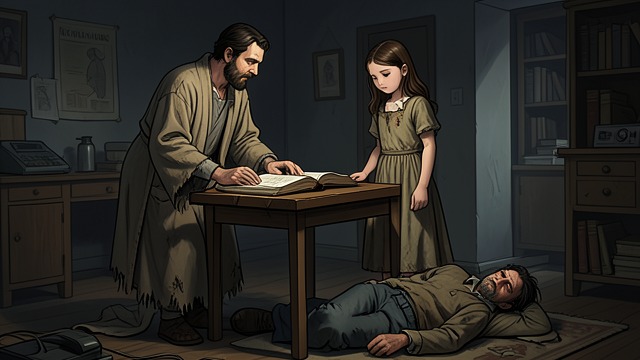
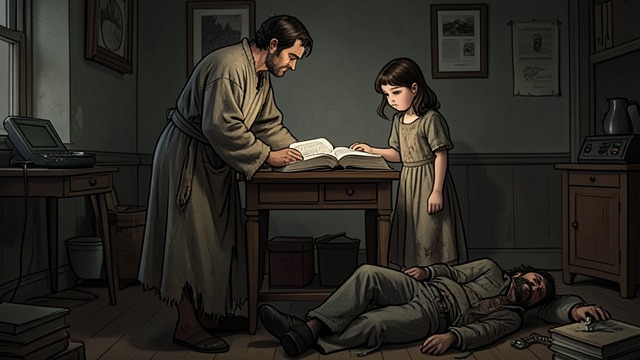
When Baruch develops severe mental illness, Zeidy keeps him confined in a room in his office for months rather than placing him in an institution he distrusts. He fears that outsiders will not understand or protect a Hasidic patient’s religious needs.
The arrangement ends in crisis when Baruch escapes, injures himself, and has to be restrained by emergency responders. Devorah witnesses the aftermath and sees Bubby left to clean up the damage while the family struggles to manage what it does not understand.
Protection and harm intertwined
Devorah can understand why Zeidy fears an unfamiliar institution, but she also sees the consequences of his decision. His devotion to family and religious responsibility does not equip him to provide effective mental-health care.
The episode complicates her view of him. Zeidy is neither simply cruel nor simply wise: his choices arise from fear and commitment, yet those choices can impose serious costs on the people he intends to protect.
A Father He Cannot Repair
A Father He Cannot Repair
The family’s unanswered problem
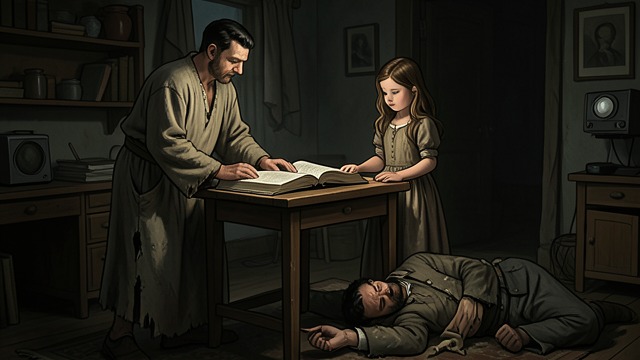
Devorah’s father, Shia, behaves childishly and cannot reliably care for himself or his daughter. Zeidy and Bubby respond by sustaining him through family support and occasional work, but they do not pursue a clear, effective course of treatment.
Zeidy views family suffering as part of a religious test and fears the social consequences of medical labels. That approach leaves Devorah trying to reconcile her grandfather’s authority with the visible neglect of a problem everyone can recognize.
Authority meets contradiction
Zeidy asks Devorah to behave in ways that bring him pride, while her father’s condition repeatedly exposes the distance between ideals of family dignity and lived reality. Devorah wants to protect Zeidy from pain, but she also feels shame and resentment that the family does not do more to help her father.
This contradiction weakens the certainty of Zeidy’s explanations. His faith remains important to him, but Devorah begins to ask whether accepting suffering is always virtuous—or whether it can become a reason not to act.
A Legacy Devorah Refuses
A Legacy Devorah Refuses
A covenant she questions
As Devorah grows older, she questions whether the strict rules enforced by Zeidy are binding simply because earlier generations accepted them. She distinguishes the inherited Jewish covenant as she understands it from the later obligations that tie her family to a particular community and its authorities.
Zeidy’s reverence for the rebbe and the community remains genuine, shaped by the insecurity of a survivor seeking stability. Devorah can see that history while refusing to treat his choices as an unbreakable contract for her own life.
Affection without submission
Devorah continues to want Zeidy’s pride even as she becomes less willing to obey him. The cost of that divide is emotional: leaving means moving away from a grandfather whose love and authority have been inseparable in her childhood.
By 2009, she chooses a future he would not have designed for her. Her departure does not prove that Zeidy’s faith was meaningless; it marks her decision that his survival story and religious commitments cannot dictate every choice she makes.
After the Holocaust and before Devorah’s childhood
During Devorah’s childhood in Williamsburg
During Devorah’s childhood, after Baruch’s breakdown
Throughout Devorah’s childhood and adolescence, as she encounters her father’s instability
From Devorah’s adolescence to her departure in 2009
