Devorah
Unorthodox: The Scandalous Rejection of My Hasidic RootsDevorah’s sharp literacy and watchful self-awareness distinguish her within a childhood shaped by limited schooling and adult control. In the episodes surrounding an arranged match and her first mikvah visit, she learns to perform the expected image of a marriageable girl even as she questions what has been withheld from her, especially the story of her mother.
Identity and Reading
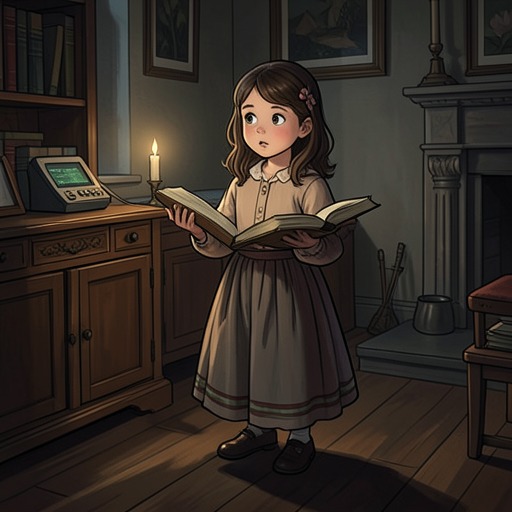
At the weekly literature sessions, Devorah is restless for a specific reason: she finishes the story in minutes, then must wait while classmates labor through it. The stories are often at a fourth-grade level, and the girls receive no other reading practice. When Miss Mandelbaum mistakes Devorah’s daydreaming for an inability to read, she calls on her to prove otherwise. Devorah asks where the class has reached, then reads a passage about a boy and his dog quickly, easily, and with excellent inflection. Miss Mandelbaum’s shock registers the distance between her assumptions and Devorah’s ability; the teacher, who comes from Borough Park, had not expected such fluent English.
The incident makes Devorah’s competence visible, but only after it has been misread as idleness or pretence. Her reading is both an established private pleasure and a skill that unsettles an adult’s expectations. The classroom scene shows how easily a girl’s capacities can be overlooked—and how decisively performance can change what others believe about her.
The Arranged Match and Its Performance
When Devorah learns that her family is looking into a match, Aunt Chaya tells her that she and Uncle Tovyeh will take her to meet the prospective boy’s mother and sister. Devorah understands the sequence: the families first inspect one another, and only if both sides approve do the young man and woman meet. She also understands what this first visit is meant to assess. Information about her has already been gathered; now her appearance, clothing, and reputation as a “good girl” are on display.
Devorah prepares accordingly. She parts her hair in the approved style, applies drugstore foundation and CoverGirl blush, then blends the pink stripes until her makeup is barely noticeable and her face appears suitably blank. The effort is not simply vanity: it is a studied performance for a system in which appearance helps determine whether she is considered eligible. She knows how to play the game even as she sees its rules.
The preparations come with material rewards she has never previously enjoyed. In the months around the match, she receives a new coat and scarf, a sleek black handbag, Italian leather shoes, pearl studs, and a silver necklace bearing her Hebrew name. Aunt Chaya explains that an eligible bride needs elegant clothes. Devorah feels the pleasure of finally receiving things she once saw other girls display, but suspects the gifts may also be meant to make her presentable—or to sway her. Their warmth and attention thrill her, and she fears that pleasure could distract her from thinking clearly.
The night after the meeting, the house is empty, the lights are off, and the refrigerator contains nothing; Devorah eats sour pickles with bread. Too stirred up to read, she lies awake to the speed with which the distant prospect of marriage has become immediate. She imagines herself approaching a cliff from which she will fall, then dreams of horses galloping over ravines, their motion mingling with the shadows of street traffic and the clatter of the elevated train. The images give shape to her apprehension without resolving it.
Aunt Chaya, the Mikvah, and Devorah’s Mother
At the mikvah, Devorah later concludes that Mrs. Mendelson had treated her cruelly by making her sit in the tub, a demand no other attendant made after her marriage. At the time, she interprets the treatment as an effort to toughen her or as religious extremity. Years later, she learns that police arrested a mikvah attendant who had molested brides brought to her. The revelation unsettles the authority that had made submission seem unquestionable: when a woman presents a demand as God’s command, Devorah reflects, challenging it can feel like challenging God.
After the visit, Aunt Chaya rides beside Devorah in the taxi, occupying the place usually associated with a mother at a central mother-daughter rite. Devorah questions that role inwardly: she sees Aunt Chaya’s concern as focused on keeping her obedient and preventing her from embarrassing the family, not on the intimacy the occasion implies. In the taxi, she finally asks, “What went wrong?” When Aunt Chaya replies, “What do you mean?”, Devorah clarifies that she is asking about her mother. The exchange exposes a question that the preparations for marriage cannot answer; Aunt Chaya’s presence does not erase the mother’s absence.
Narrative Role
Across these scenes, Devorah moves between knowing how to meet an expectation and recognizing what the expectation conceals. In class, her reading ability contradicts an adult’s low estimate of her; during match preparations, she deliberately adopts the appearance adults will assess; at the mikvah, her later understanding complicates the religious authority she was taught to obey. Her question to Aunt Chaya turns the narrative from outward eligibility toward an unresolved family history. Devorah’s attentiveness—to others’ assumptions, to the uses of gifts, and to the difference between a ritual role and a real relationship—makes these episodes part of a larger portrait of a girl learning to see the systems around her even before she can change them.