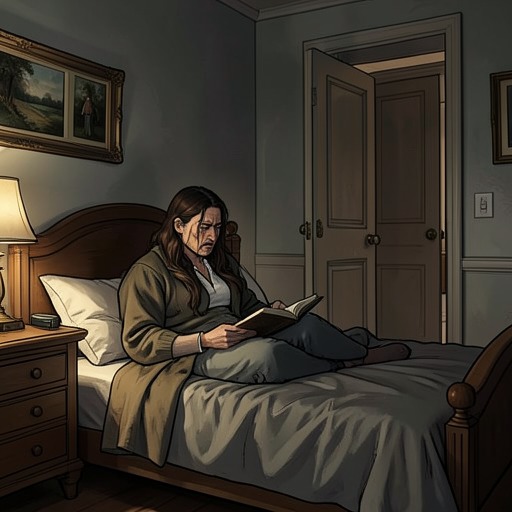
Eli leaves home and returns
Unorthodox: The Scandalous Rejection of My Hasidic RootsEli leaves home and returns in a single night, but the departure changes the meaning of Devorah’s marriage even after she accepts him back. His absence, communicated by his mother rather than by Eli himself, turns their private sexual difficulties into a possible divorce and exposes how little control Devorah has over the decisions shaping her life. His apology restores the household’s outward arrangement, not her trust or affection.
The departure and its immediate cause
By this point, Eli has watched Devorah struggle with recurring panic attacks, though she believes he does not understand what is happening to her. One day in June, he does not come home from work. Devorah tries calling him and waits into the evening; when she contacts his mother, she is told that Eli will not return that night and does not want to speak to her. The account gives no explanation for where he is or why he has chosen to leave.
Devorah calls Chaya, who already knows what is happening. Chaya explains that Eli’s mother thinks he should divorce Devorah because they have been unable to have intercourse. The proposed separation thus arrives not as a conversation between spouses but as a decision relayed through his mother. Devorah is shocked that Eli could choose his mother over her without warning or even telling her directly.
Fear, anger, and the unequal burden
The news first leaves Devorah numb with fear. She recognizes that divorce could mean losing her home and friends, and she doubts she would ever remarry. Yet anger soon overtakes that fear: she feels blamed for a failure that she does not believe is hers alone to bear. She thinks back to nights when she comforted Eli because he could not maintain an erection, and questions why her inability to have intercourse makes her responsible for the couple’s failure while his difficulties did not carry the same judgment.
Her anger widens beyond Eli. She resents Chaya’s advice, Zeidy’s role in marrying her to a family she considers fanatical, Eli’s failure to protect their privacy, and the interference and gossip of his parents. She also recalls that her father-in-law lectures Eli about religious sexual practices and seems to take pleasure in their failure to consummate the marriage. Awake until dawn, Devorah muffles her wails so she will not wake the neighbors. The crisis makes a private marital problem feel like a whole network of family authority closing around her.
Eli’s return and the outward reconciliation
At seven the next morning, Eli comes home and prostrates himself before Devorah, apologizing. She can see his lips moving but cannot take in what he says; inwardly, she has already cut him out of her life. She agrees to take him back, and he hugs her with relief. The gestures restore the appearance of reconciliation, but Devorah believes that remaining married will mean performing the part of a loving, good wife without again caring for Eli as a person.
This is therefore a return without emotional repair. Devorah’s agreement ends the immediate threat of separation, but the account does not describe a renewed intimacy or a resolution of the couple’s sexual difficulties. Instead, her silent assent leaves the marriage in place while registering an inward break that Eli does not seem to recognize.
The aftermath and the longer arc
Eli’s mother responds to the crisis by telling him not to let Devorah read library books, treating her reading as though it were responsible for their problems. Devorah feels too tired to resume the childhood deceptions that had enabled her to read, and puts her books into a large plastic garbage bag for Eli to take to the Dumpster outside his office. The episode links the threatened marriage to another loss of privacy and independence inside the home.
The fear of being alone that shapes Devorah’s response here contrasts with her later resolve to imagine a life beyond the community. As Yitzy approaches the age when he will begin cheder, she worries about his prescribed religious education and about being pushed to the margins of his life. When readers of her anonymous blog warn that she may not be allowed to leave with her son, she remains determined that both of them will eventually be free. Much later, after the September 9, 2009 car crash, she signs a memoir contract and recognizes that she is not returning to her life with Eli. In the intervening years, this night’s reconciliation proves not to be the end of the marriage’s rupture, but an early instance of the difference between outward compliance and inward separation.