Little Women
Unorthodox: The Scandalous Rejection of My Hasidic RootsIn Devorah’s childhood, Little Women is first a thin paperback hidden beneath a mattress; years later, a hardcover bought with her own wages becomes a mirror for her hopes and fears about womanhood. Her changing readings of Jo’s struggle to fit her time give the novel a particular force: it offers Devorah the possibility of making a place for herself, even as its movement toward love and marriage suggests that society may soften the very resistance she recognizes in Jo.
A hidden childhood book
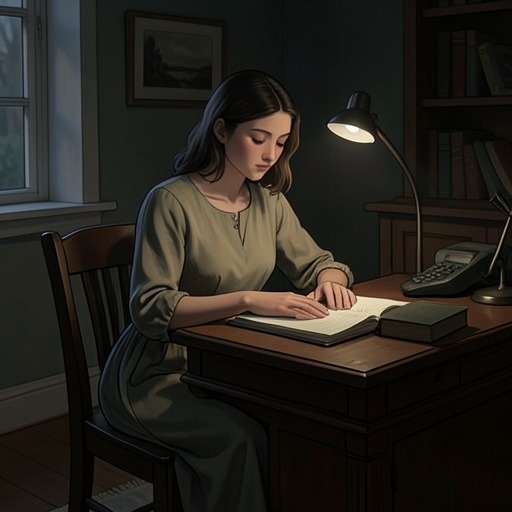
When Devorah comes home to an empty house, as usual, she uses the uninterrupted hour to read. Her grandmother, Bubby, is away at an old-age home helping feed the patients, and the paperback copy of Little Women is concealed beneath Devorah’s mattress. The edition is thin enough to hide easily. At this age, Devorah is unsure how to understand Jo and Laurie, wondering whether Jo is a boy and Laurie a girl, or the reverse, or whether they are both boys. Even in that uncertainty, she knows that she likes Jo.
The reading is private but precarious. Hearing Zeidy’s heavy footsteps on the stairs, Devorah quickly returns the book beneath the mattress and smooths the sheet so the room will not look disturbed. Her repeated reassurance that she is a good girl follows this act of concealment, setting obedience beside the pleasure of a book she has chosen for herself.
Reading with greater freedom
Later, Zeidy no longer inspects Devorah’s room as he once did, and she can read with less fear of discovery. She goes to Barnes & Noble and buys hardcovers with money she has earned herself. Her first purchases are books she already knows from the library, including a newer edition of Little Women. It lies between two slips in her bottom dresser drawer, a more substantial and carefully kept object than the tattered copy she remembers holding as a child.
Returning to the novel changes what Devorah sees in it. The spirited sisters that once delighted her now carry sharper emotional weight, especially Jo’s difficulty fitting comfortably into her time. Devorah reads Jo’s life and destiny as unnatural to her, and sees in the pressure to reform a woman’s character something like the binding discomfort of an ill-fitting dress. The image turns the novel’s social constraints into a recognizable bodily pressure rather than an abstract expectation.
Jo as a measure of possibility
Devorah’s identification with Jo is mixed with apprehension. She suspects that society will soften and tame her, as it seems to do to Jo, but also finds a promise in the possibility that a person might carve out a place in a world with which she has always been at odds. Her reading does not imagine freedom as simple escape: she hopes that a woman might remain herself and still count as proper, with both the individual and the surrounding world yielding something in the struggle to fit.
The ending Devorah perceives in Jo complicates that hope. In her reading, love and marriage make Jo into the lady she had resisted becoming. Devorah wonders whether her own temperament, too, might be calmed. Thus Little Women serves at once as a language for recognizing the cost of social conformity and as a possible script for accommodation. The novel’s significance lies in that unresolved double promise: it lets Devorah imagine a place for herself while leaving open whether belonging will require her to change.