The Holocaust
Unorthodox: The Scandalous Rejection of My Hasidic RootsThe Holocaust stands in Devorah’s account as a mass loss that continues to shape religious belief, family memory, and the obligations imposed on the living. Its effects appear not only in the deaths of Bubby’s relatives but also in the Satmar community’s postwar return to tradition, its emphasis on rebuilding through children, and the conflicting explanations of suffering that Devorah hears from her elders and teachers.
Historical Background and Communal Aftermath
In the author’s account of Satmar’s origins, the sect takes its name from Satu Mare, a city on the border of Hungary and Romania. During World War II, Hungarian Jewish lawyer and journalist Rudolf Kasztner rescued the rabbi from that city from certain death. The rabbi later emigrated to America and gathered a following among survivors, naming the Hasidic sect after his hometown. Other rabbis likewise used the names of their former towns, preserving the memory of communities destroyed in the Holocaust.
The postwar community’s return to inherited practice was deliberate. Hasidic Jews in America adopted traditional dress and spoke Yiddish, seeking to restore a heritage that had nearly disappeared. Many opposed the creation of the State of Israel, believing that the genocide had come as punishment for assimilation and Zionism. Reproduction acquired particular weight: having children was understood as a way to replace some of those who had perished and to rebuild the community. The author describes the continued growth of Hasidic communities as a form of revenge against Hitler, turning survival and continuity into a collective answer to attempted destruction.
Bubby’s Loss and the Family Record
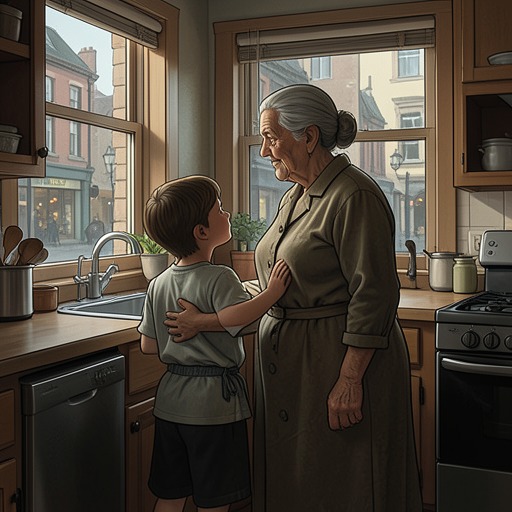
The public story of survival is not the only story carried within Devorah’s family. At a family Passover gathering, Zeidy recounts scarcity during the war, including a time when there was no flour for matzo and the family ate small portions of potato instead. Bubby has heard the account many times; her quiet, weary response makes visible the imbalance between the story repeatedly told and the one rarely voiced.
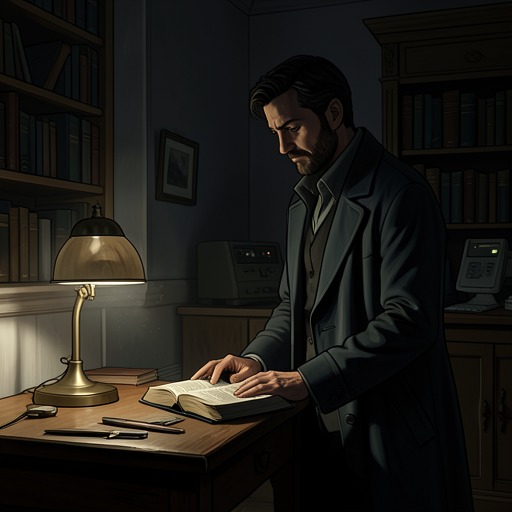
Bubby lost her relatives in the Holocaust. Her family members were murdered at Auschwitz while she worked in the factories at Bergen-Belsen. By the time liberation came, she was close to death from typhus. She seldom speaks about this history, but she lights a memorial candle for each of the dead, including baby Mindel and fourteen-year-old Chaim. The candles give private form to a grief that family conversation often leaves unspoken: the names and ages make the losses specific, while Bubby’s silence shows how little of her experience reaches the next generation as a spoken account.
Zeidy’s own survival takes on a different emphasis. Devorah understands that he survived the war and sought to bring more Jewish children into the world, partly to replace those who had been lost. In the family’s religious language, this becomes both an act of continuity and a response to catastrophe. Yet the costs of that history are not confined to the past. Devorah notices the suffering within her family and wonders how survival can coexist with further misfortune, a question that unsettles the reassuring image of postwar rebuilding.
Competing Explanations of Persecution
Devorah is taught that God sent Hitler to punish Jews who had embraced enlightenment and assimilation. In this explanation, the victims’ perceived departure from religious tradition becomes the cause of catastrophe, and the living are told that they now atone for earlier generations’ sins. The first great Satmar Rebbe offers a related promise: if Jews become exemplary in religious observance, a Holocaust will not happen again because God will be pleased with them. Small visible changes, such as thicker stockings or longer skirts, are presented as part of that effort. Devorah questions whether such adjustments could truly determine God’s favor or prevent another catastrophe.
Bubby does not share the confidence that stricter observance can secure safety. She believes another Holocaust may happen, places Jewish persecution within a long history that includes pogroms, Crusades, and the Inquisition, and rejects the idea that people control when disaster comes. She also warns Devorah not to trust non-Jews, even when they appear kind. Her outlook gives persecution a relentless, recurring quality; Zeidy, by contrast, trusts the Satmar Rebbe’s capacity to protect the community and places hope in the rabbi’s rescue from the camps. Their disagreement shows how the same history can sustain both a search for religious safeguards and a fear that no safeguard is enough.
Devorah’s Inherited Fear and Doubt
These accounts shape Devorah’s understanding of herself before she can assess them from a distance. She hears that suffering is measured out by God and that failing to repent before the final call of the ram’s horn on Yom Kippur brings divine judgment. The teaching makes pain appear deserved: the greater the suffering, the greater the presumed wrongdoing. But Devorah sees that Bubby and Zeidy are devout and have nevertheless endured profound loss. Their lives make the doctrine difficult to reconcile with experience.
The Holocaust also enters Devorah’s private fears. At night she wonders whether God loves her and whether another Hitler could come to kill her. She connects this fear to feeling rejected by relatives because of her parents and asks whether her mother, who has left the community, belongs among those she has been taught to distrust. In a dream, Devorah imagines a mass escape and her mother arriving to rescue her. The dream does not resolve the family’s history or religious questions, but it reveals how the Holocaust has become an imagined threat in the child’s present—and how her mother represents safety within that fear.
The event’s narrative significance lies in this uneasy inheritance. The Holocaust is not presented only as a completed historical catastrophe: it is invoked to explain communal identity, religious discipline, childbearing, distrust, and the possibility of future danger. Against Zeidy’s faith in religious protection and Bubby’s expectation of recurrence, Devorah’s questions expose what neither account can settle. Survival gives the community a reason to rebuild, but it does not quiet grief or make the cause of suffering clear.