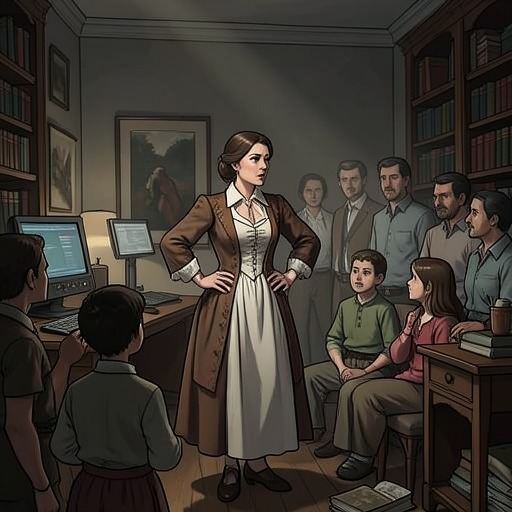
The narrator leaves Eli and Hasidic life with Yitzy
Unorthodox: The Scandalous Rejection of My Hasidic RootsDevorah’s departure from Eli and Hasidic life with Yitzy is not a sudden rejection of one household but the decisive act at the end of a long, constrained struggle over belief, motherhood, and self-determination. Her fear that Yitzy will be raised within the limits she is trying to escape makes leaving a choice about his future as well as her own. The departure breaks open a new life, but it begins in uncertainty and carries the losses of a marriage, a family network, and the world she has known.
Causes and Background
Devorah’s marriage has been shaped by a system in which family reputation and religious standing weigh heavily in choosing a match. Before her own engagement, she recognizes the competing expectations around marriage: Zeidy wants a pious match with a strong Satmar family background, while Devorah hopes for a husband who will allow her to read, write stories, and travel to Union Square. At the time, she can still imagine marriage as a route to a larger life. That hope later confronts the circumstances of her actual marriage, which she tells a counselor began with Eli leaving her because she could not have intercourse and with his failure to defend her when his family put her down.
The urgency of leaving grows as Devorah considers what will happen to Yitzy. When he turns three, she expects him to receive payos and begin cheder, spending his days learning Torah. She fears that the side curls and prayer shawl, and the male influences of school, will mark the beginning of a life in which she is pushed to the margins. The prospect makes the decision more than a personal break from restrictions: Devorah cannot bear the thought of sending her son into an education and childhood she sees as confining while she seeks wider horizons for herself.
Her private resistance has also become an effort to speak openly. In her anonymous blog, readers question whether she could leave with her child and warn that a community or rabbinical court may prevent it. One commenter identifies as a lawyer and claims it has never been done. Devorah does not dismiss the danger, but the warnings do not persuade her to stay. She is exhausted by pretending to be pious and ashamed of her doubts; she wants to acknowledge herself and present her true face to the world.
The Decision and Departure
Before leaving Airmont for good, Devorah and Eli attend a religious marriage counselor. Eli believes counseling shows he wants to repair the marriage, but Devorah already knows she will not return. She recounts their first year and the injuries that remain unresolved. The counselor, who is a rabbi rather than a therapist, tells Eli that their problems are serious and recommends that they see a professional. Afterward, Eli proposes divorce. Devorah says they could divorce if that is what he wants; the exchange marks the marriage’s collapse, not a reconciliation or a settled legal outcome.
Devorah then rents a tiny white Kia and packs it with as much as it can hold. Yitzy rides in his booster seat among the boxes and garbage bags, sucking his thumb before falling asleep on the highway. Traffic on the Tappan Zee Bridge brings back the sensations of the car crash only days earlier, so the physical journey away is accompanied by an involuntary return to danger. The loaded car is both practical and symbolic: Devorah is carrying what she can, not moving with the security of a prepared new life.
She sells her diamond ring and wedding gifts to a jeweler in Westchester for cash. When he says the pieces will probably be melted down, she feels relief that they will disappear rather than pass to someone else. Other losses are harder to dispose of so cleanly: the dishes and linens she chose, friendships she worked to build, and the extended family network she once belonged to. With few possessions to anchor her, she experiences freedom alongside panic and rootlessness. Leaving removes familiar ties, but does not instantly replace them with security.
Life After Leaving
Devorah changes her phone number and withholds her new address because she fears being tracked down. She needs time to settle and find security. In the new space, however, she notices an immediate change in her relationship with Yitzy: without other people between them, mother and son must get to know each other directly. She feels that only now is she allowed to be his mother in an honest relationship. The departure therefore alters not only where they live but how they can relate.
Her first practical step is to teach Yitzy English. They read books and watch Sesame Street; he learns quickly, and Devorah is grateful that he is still young enough to adapt. Within weeks, he speaks English with a childlike charm. They sleep together in the queen bed she buys after leaving and talk before falling asleep. When Yitzy tells her, “Your hair is pretty,” she recognizes his attempt to comfort her and is shaken by how perceptive he is about their difficult circumstances. His care makes their new closeness tender, but also reveals how much he has already noticed.
Yitzy has not yet asked about his father. Once, after sliding down a playground slide, he looks at Devorah and asks, “Daddy and you aren’t fighting anymore, right?” The question leaves open what he understands about the separation; it does not resolve the place Eli will have in his life. The departure is thus a beginning rather than a completed adjustment, with mother and son building a relationship in a world where they know no one else.
Significance
The event turns Devorah’s private wish for freedom into action, with motherhood acting as its immediate catalyst. Her son’s approaching entry into cheder forces her to weigh the future she might endure against the one she fears for him. Yet leaving is not presented as effortless liberation: Devorah faces warnings about custody, the end of her marriage, the severing of family connections, and the practical uncertainty of starting over.
The contrast between the car packed with bags and the new intimacy of the shared bed defines the change. Devorah leaves with little, unsure what can replace the life she has relinquished, but she gains room to teach Yitzy, read with him, and encounter him without the community standing between them. The event’s consequence is therefore both rupture and relationship: a break from the world that shaped them, and the first chance for mother and son to know one another on more honest terms.