Williamsburg public library
Unorthodox: The Scandalous Rejection of My Hasidic RootsThe Williamsburg public library is both a real building at the edge of Devorah’s school world and a private possibility beyond its rules. Satmar students are forbidden to enter, yet the library’s quiet rooms and chosen books offer Devorah a rare experience of intellectual freedom. Its importance lies in that contrast: she is taught to avoid the building, but finds that reading there makes life feel more bearable.
Setting and Prohibition
From a classroom window, Devorah sees the public library on a small triangular block amid the overpass of the Brooklyn-Queens Expressway. The redbrick building stands alone, wrapped in ivy and enclosed by a high wrought-iron fence. Its entrance, on Division Avenue facing the highway, is reached by three tiers of broad stone steps leading to a Gothic doorway. The details make the library conspicuous, while its position beside the overpass sets it apart from the ordinary route through the neighborhood.
The prohibition has practical force in the daily movement of students. Those from Satmar schools who must pass the library take care to walk behind it; the block containing its entrance is rarely entered. Devorah knows the rule and can see the building from school, but the threshold remains socially and religiously off limits. The library is therefore not distant or inaccessible in a literal sense. Its power comes from being close enough to see and deliberately avoided.
Secret Visits and the Cost of Being Seen
Devorah remembers that her last secret visit took place when she was ten. Even then, she understood that avoiding notice mattered. The library was mostly empty, and its large rooms seemed cavernous in the silence. Rather than feeling unobserved, she experienced an intense self-consciousness, believing herself watched by God. The building’s quiet offered room to explore, but did not remove the fear she carried into it.
When she considers returning, the stakes have changed. She fears losing the social standing she has carefully built and imagines how difficult the remaining three years of school could become if Miriam-Malka learned what she had done. Her hesitation is not simply about obeying a rule: it is also about protecting a reputation and a place among her peers. The thought that she might still find a way to have both access and acceptance captures the risk she weighs, not a settled resolution to take it.
Reading as Refuge
On another visit, Devorah reaches the library after leaving a session early. She walks along Sixteenth Avenue, seeing women and girls preparing for Shabbos, and reflects on how unlike them she feels. She believes that her thoughts show on her face, even when she keeps them unspoken, and recognizes her decision to consider the library as a forbidden thought. With an hour and a half before she is expected back in Williamsburg, the library offers a possible use for time that would otherwise be governed by obligation.
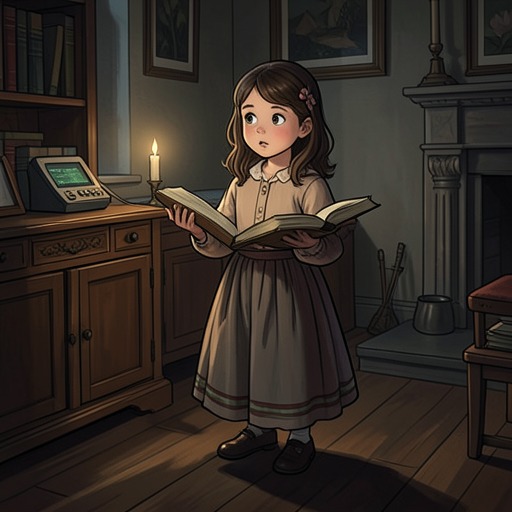
Inside, the quiet seems to let her thoughts expand. She gravitates toward the children’s section, which is empty and provides places to sit, with books already selected for her. The librarians smile when they see her; their silent encouragement contrasts with the scrutiny she associates with life outside. She has no library card and therefore cannot take books home, a practical limit that makes the refuge temporary. Even so, reading there makes her feel extraordinarily happy and free, and she imagines that access to books all the time could make everything else in her life bearable.
Narrative Significance
The library’s meaning develops through the difference between seeing, entering, and being able to carry something away. From school, Devorah can observe its distinct architecture but understands that students are expected to avoid it. Her childhood visit crosses that boundary, yet the fear of being watched follows her inside. In the later visit, the library becomes a place where thought can widen and where librarians’ smiles offer encouragement without requiring her to explain herself.
That freedom remains bounded: Devorah cannot borrow books, must return to Williamsburg, and fears the social consequences of being discovered. The library does not resolve those constraints. Instead, its brief, recurring presence makes the limits legible and gives Devorah a concrete experience against which to measure them. It is at once an ordinary public institution, a forbidden destination, and a temporary refuge for reading and imaginative independence.