
From Secret Reading to Self-Determination
Unorthodox: The Scandalous Rejection of My Hasidic RootsDevorah’s childhood hunger for forbidden books develops into a private intellectual life that helps her question inherited authority and imagine a future beyond Williamsburg.
increasing Bearing strength in each event
 decreasing
Bearing strength in each eventdecreasingA Hidden Inner Life
The First Private World
Books as refuge
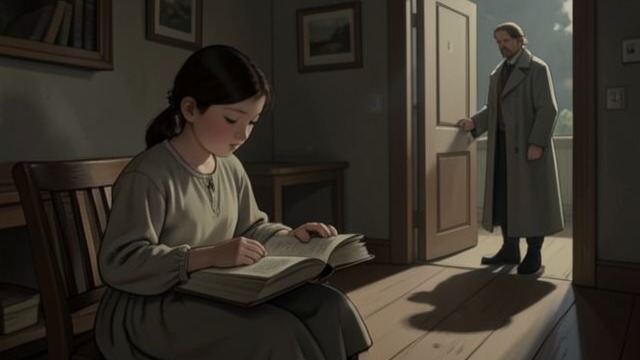
Devorah grows up under close supervision in Williamsburg, where her grandparents’ home offers food and shelter but little room for private curiosity. The contrast between the rules imposed on her and her own restless questions becomes an early source of tension.
Books provide a refuge she cannot find in the approved lessons. In the public library, stories about neglected and misunderstood children make her feel recognized and suggest that her circumstances are not the only possible life.
A power of her own
Her reading is secret because the household treats secular books and English as spiritual dangers. That secrecy makes literature more than entertainment: it becomes a space in which Devorah can consider who she might be apart from other people’s expectations.
When she identifies with characters who imagine a rescue or a different future, she begins to form a sense of inward possibility. The rescue she hopes for will not arrive as a fairy-tale event, but the habit of imagining alternatives remains important as she grows older.
Testing Her Secret Power
Acting Against Expectation
A calculated prank
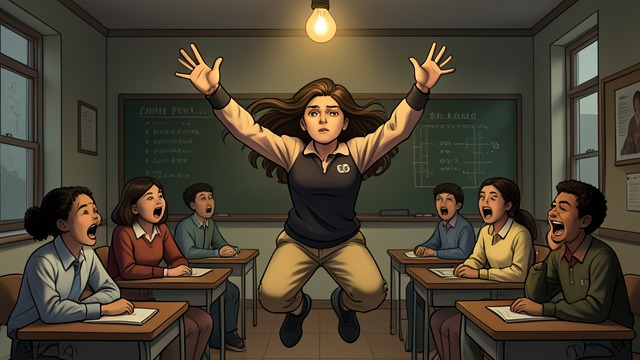
At school, Devorah discovers that she can convincingly perform an emotion she does not feel. She stages a false mouse sighting, provoking a classroom commotion while appearing as startled as everyone else.
The prank matters because it gives her a small form of control in a life organized by adults’ rules. Her performance allows her to disrupt the classroom without being immediately identified as its instigator.
A tool for concealment
Devorah understands this discovery as a kind of personal power: the ability to manage what others believe about her. The skill is not the same as freedom, but it becomes useful within a world where speaking openly can invite punishment.
Her outward compliance and hidden intentions begin to coexist. The divide between the girl others expect and the person she privately recognizes will later widen into a central struggle over whether she can live honestly.
Reading Beyond the Approved
A Forbidden Text
Buying the Talmud
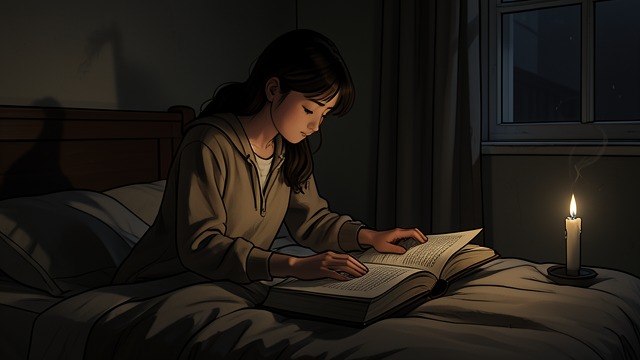
Devorah secretly buys an English translation of the Talmud with money she has earned babysitting. The purchase requires planning and deception, and she hides the heavy volume beneath her mattress rather than risk discovery by her grandfather.
When she finally reads it alone, she encounters a more complicated account of biblical figures than the simplified lessons offered at school. The text does not instantly resolve her questions, but it gives her grounds to compare what she is taught with what she can discover for herself.
Authority becomes debatable
The episode marks a shift from curiosity about forbidden knowledge to independent judgment. Devorah begins to see that authoritative interpretations can omit or smooth over difficult details.
That realization does not make her openly rebellious overnight. Instead, it unsettles the assumption that obedience is the same as truth, strengthening the private intellectual life she has been building through books.
The Wider World in Books

Imagining a Life Elsewhere
Recognizing her own society
Reading works such as The Chosen and A Tree Grows in Brooklyn gives Devorah a new way to see familiar streets and customs. She recognizes that literature can make a restrictive environment legible rather than merely making it easier to endure.
Pride and Prejudice offers another kind of recognition: a young woman can question the social calculations that shape her marriage prospects. Devorah reads the story through the pressures she knows, seeing how reputation and choice govern women’s futures in different settings.
Education as a possible exit
As her reading expands, college becomes more than an abstract idea. It represents a route out of the boundaries drawn around girls’ education and work, even though she has been taught that further schooling is unnecessary or dangerous.
Devorah cannot yet see a practical path from her neighborhood to an independent life. Still, the books help her name the possibility of such a path, and she resolves that she will leave Williamsburg someday.
A Voice in the Classroom
Turning Reading into Ability
A demanding teacher
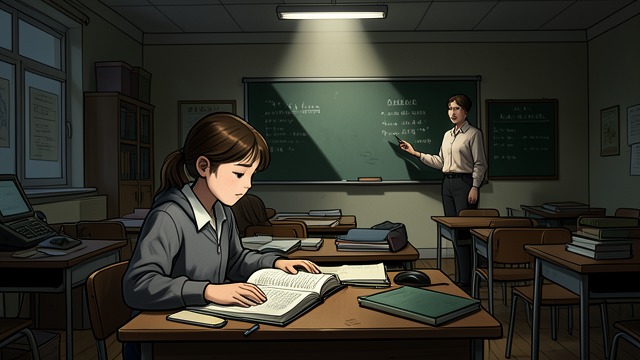
In her final year, Devorah meets Mrs. Berger, whose rigorous English lessons offer knowledge far beyond the censored, limited material she has encountered before. The teacher’s sharp dismissal of her students provokes Devorah to prove that she can do serious academic work.
Devorah earns an A after sustained effort, demonstrating that her years of private reading have developed real skill. The grade is personally meaningful, but it also exposes the limits of achievement inside a system that offers few paths to use it.
The next threshold
After graduation, Devorah takes a teaching job in the same educational world that restricted her. She can now use her abilities and gain a measure of independence, yet her future remains shaped by marriage expectations and the narrow opportunities available to women.
Her success does not resolve the conflict between belonging and self-direction. It gives her more confidence that the capacities nurtured in secret can become part of an outward life.
Around age eleven
During sixth grade
Around age twelve
From early adolescence through high school
At seventeen, in her final school year
