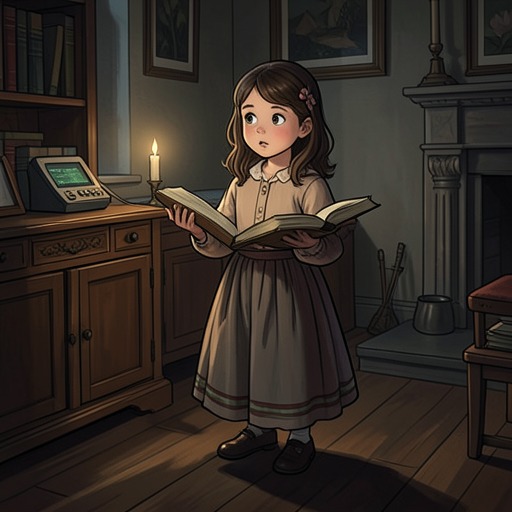
A Tree Grows in Brooklyn
Unorthodox: The Scandalous Rejection of My Hasidic RootsA Tree Grows in Brooklyn is the novel Devorah reads as both a reflection of her own surroundings and an uncertain model for leaving them. Its heroine, Francie, grows up in a crowded Brooklyn marked by hardship, then takes small steps toward greater material comfort and eventually goes to college. For Devorah, that trajectory makes literature more than a temporary escape: it offers a way to imagine a life beyond Williamsburg, even as the limits imposed on her make the book’s hopeful ending difficult to claim as her own.
A Book Found in Secret
In the weeks before school begins, Devorah travels by bus to Borough Park to bring books home. She has gone without reading all summer because taking books to camp would have been too dangerous; now, the privacy of her time alone lets her read without fearing that her thoughts are being overheard. At the library she finds school reading lists on display and carts crowded with new paperbacks. She chooses the latest Harry Potter book, the first in Philip Pullman’s popular trilogy, and A Tree Grows in Brooklyn, which the library recommends.
The choice follows an earlier encounter with The Chosen. That book had given Devorah a warm, comforting feeling, which she associates with Bubby’s chicken soup on a cold day. A Tree Grows in Brooklyn promises a more immediate kind of recognition: its heroine is also a girl growing up in Brooklyn, on streets Devorah imagines as much like her own. The library book is therefore not simply one more story among the paperbacks. It brings a distant literary life close enough for Devorah to compare it with the place she knows.
Williamsburg in the Novel’s Mirror
The resemblance between Francie’s world and Devorah’s is not presented as a likeness without difference. Devorah sees both settings as crowded and burdened by hardship, environments that seem ill-suited to the elegance of poetry and classic literature. In Francie’s story, refined words enter a world already full of suffering; in Devorah’s experience, literature likewise seems out of place in her own Williamsburg. The contrast makes the act of reading feel precarious: beauty can reach into a constricted life, but it does not erase the conditions that constrain it.
As Francie improves her material circumstances through small but steady advances, Devorah follows her prospects with growing personal investment. Francie’s setbacks matter to her because she has begun to treat the heroine’s possibility of getting through hardship as a possible sign of her own future. That identification is hopeful, but not secure. Devorah worries that Francie’s eventual success may not be available to her, and the more closely she cares about the character’s fate, the more personally she feels each disappointment.
The College Ending and Its Cost
Francie’s departure for college makes the novel’s promise harder, not simpler, for Devorah to interpret. She cannot regard college as an ordinary next step: in her schooling, the word itself is censored from textbooks, and education is represented as leading nowhere good. Zeidy has warned that college begins a path away from Williamsburg and toward promiscuity, with each misstep carrying a person farther from God. Within that teaching, education threatens spiritual loss; in Francie’s story, it is also the threshold of a future beyond the poverty in which she began.
Devorah cannot settle whether Francie’s ending should count as a triumph, or whether leaving home guarantees that dreams will come true. The book offers no answer to the question of what Francie does after college or whether she returns. That uncertainty matters because Devorah’s own possible departure is not simply a matter of reaching another place. She is made to weigh the pull of a wider life against the fear of failing to belong elsewhere, while asking herself whether a person can ever entirely leave the place she comes from. The novel opens that dilemma without resolving it for her.
Reading as a Map of Possible Change
The book’s epigraph supplies a frame for Devorah’s response: a child can grow up knowing that the tenements of Williamsburg are not the whole world. Read beside her clandestine trip to the library, the epigraph turns the novel into a small act of enlargement. The physical book has traveled home with her, but its more consequential movement is imaginative: it makes another life thinkable without promising that such a life will be easy or assured.
Devorah’s response develops into a decision. With Monday marking the start of high school and three years of school still ahead, she counts the remaining time of childhood and resolves that she will leave Brooklyn one day. She does not know how she will do it. Francie’s example suggests a possible pattern of gradual progress, but Devorah recognizes that her own path may take years and may consist of small steps. A Tree Grows in Brooklyn thus becomes neither a guarantee of escape nor a substitute for action. It gives Devorah a form in which to imagine departure, while leaving her to face the distance between a fictional heroine’s college future and the restrictions governing her own.