Rumors of a boy’s death and a community cover-up
Unorthodox: The Scandalous Rejection of My Hasidic RootsThe rumors of a boy’s death and a community cover-up enter Devorah’s story not as a confirmed investigation but as a disturbing account passed from one person to another. While she is pregnant and confined to bed, Eli tells her that a Hatzolah responder described finding a boy dead in his home and being instructed to remain silent. The reported order to conceal what happened, rather than the account’s unresolved details alone, makes the episode a test of what communal loyalty demands—and what it may cost.
Circumstances and Participants
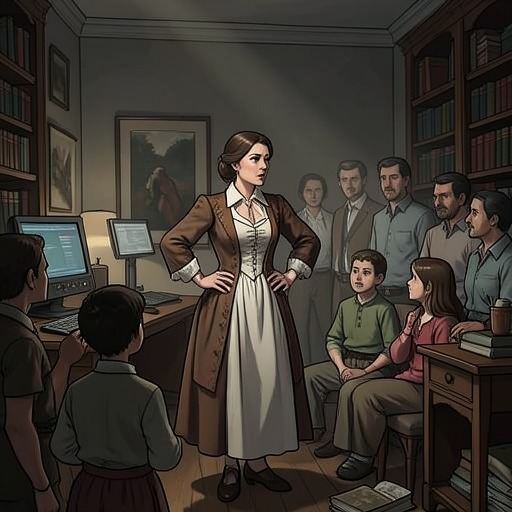
The account reaches Devorah during the weeks she spends on bed rest after a hospital scare. Eli has been coming home early on Fridays to prepare for Shabbos, doing the tidying and warming the challah because she is no longer strong enough to manage the household as before. On one rainy Friday, she is reading a pregnancy guide in bed when she hears him speaking anxiously on the phone in the kitchen. After the call, she goes to ask who had been speaking with him. The ordinary domestic setting gives way to a report of death and secrecy, arriving while Devorah’s attention is already fixed on the child she is carrying.
Eli says the caller was a Hatzolah responder who had gone to the home after receiving a call. According to this account, the boy’s father directed him to the basement, where he found the boy dead. Eli relays that the father did not appear upset and attributed the situation to the boy’s conduct. These details are not presented through an independent witness or official record: Devorah hears them from Eli, who heard them from the responder. The chain of retelling is central to the event. It offers enough to provoke alarm, but not enough to establish exactly what happened or who, if anyone, was responsible.
The Reported Concealment
Eli also relays that neighbors had heard a loud argument in the home. The responder reportedly said that when he contacted dispatch, he was told to go home and keep quiet, and that others would handle the matter. He further reported that the boy was buried within thirty minutes and that no death certificate was issued. The narrative presents these assertions as part of the responder’s account, not as independently verified findings; the alleged concealment is therefore a rumor within the story, rather than a resolved case.
That uncertainty does not make the allegation inconsequential. Devorah immediately considers the possibility of a killing and questions why a suspected crime might be hidden to protect the community’s reputation. Eli cautions her that the responder himself does not know for sure what happened. He invokes the requirement for two witnesses in a murder trial and warns that the person who spoke to him could get into serious trouble. The exchange leaves two pressures in direct opposition: the demand to take a grave report seriously, and the fear that repeating it could bring consequences for the person who disclosed it.
Devorah’s Response and the Secret
Devorah is angry at the prospect that people might enforce minor rules while remaining silent about a possible death. Her reaction is not a discovery of proven guilt; it is a response to the possibility that reputation and obedience could take precedence over investigation. Eli asks her not to tell anyone, both because the account is uncertain and because the caller may be endangered by its circulation. Devorah restrains herself at the Shabbos table. When no one else offers anything to discuss, she wonders whether another person is also holding back a troubling story. The silence around the table becomes a social echo of the instruction Eli has relayed.
She keeps the secret for a long time, but it continues to affect her. In recurring nightmares, the dead boy is replaced by her own son, and she wakes frightened and checks for the baby’s movements. The dreams do not resolve the boy’s fate or prove the allegations; they show how the account has lodged in Devorah’s imagination, joining fear for the child she has not yet met to her fear of a world in which serious harm might go unspoken. She addresses the baby silently in her thoughts and resolves that she will not remain quiet forever. The event thus changes from hearsay into a private obligation: Devorah cannot establish what happened, but she can recognize the danger of allowing silence to stand in for an answer.
Narrative Significance and Limits
The episode belongs to the memoir’s account of Devorah’s growing independence of judgment. Looking back, she identifies her loss of innocence as a gradual break with accepting authority for its own sake; this scene makes that break concrete. Eli offers reasons for caution grounded in uncertainty and risk, while Devorah sees the moral danger in treating silence as the safest response. The disagreement does not establish that her suspicions are correct. Instead, it marks the widening distance between deference to communal handling of a crisis and her emerging insistence that a troubling report cannot simply be forgotten.
The memoir also cautions readers about the status of its material: it says that the incidents are true but that some events have been compressed, consolidated, or reordered, and that dialogue approximates remembered conversations. Names and identifying characteristics have been changed. That framing reinforces the need to distinguish the event’s reported claims from established facts. The boy’s death, the account of what the father said, and the alleged instruction to conceal the matter remain mediated through recollection and hearsay. What the narrative firmly records is the effect of hearing the story: Devorah’s fear, her enforced silence at the family table, and her promise to the unborn child that she will eventually speak.