
Emma’s Changing Self-Understanding
UpEmma Nieuwenhuis moves from declaring herself recovered to accepting a chronic and changing condition without allowing diagnosis to replace identity.
increasing Bearing strength in each event
 decreasing
Bearing strength in each eventdecreasingThe Recovered Patient
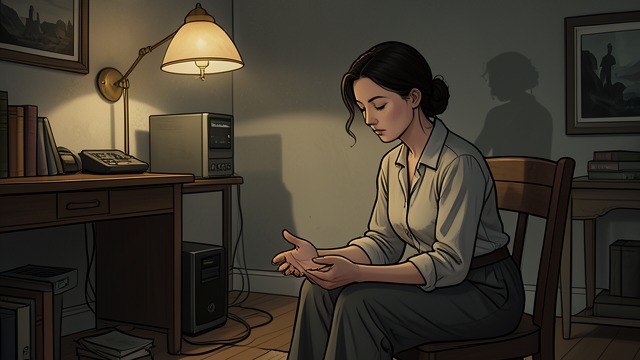
The Recovered Patient
A bright self-assessment
Emma believes that medication has ended her depression and that she is ready to stop seeing a psychiatrist. She describes her energy as proof that she has returned to herself.
Certainty masks danger
Her conviction prevents her from recognizing that a plan to die can coexist with feeling unusually good. She treats the future as settled and sees no reason to ask for help.
This opening presents recovery as a conclusion Emma is not yet equipped to judge.
The Patient Who Says No
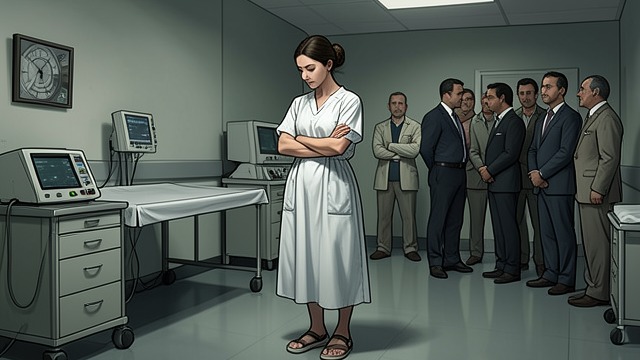
The Patient Who Says No
Resistance to treatment routines
Emma rejects group therapy and resents being expected to join activities. She argues that years of talking have exhausted her and that work should be enough to occupy her.
Needs beneath refusal
Rajid recognizes that social demands can overwhelm her, rather than simply reflecting unwillingness. Emma negotiates a limited program and begins navigating the ward on her own terms.
Her resistance is partly a defense, but it also begins to reveal what support must accommodate.
Learning What She Feels

Learning What She Feels
A difficult question
Emma has long struggled to identify her emotional state, partly because family attention often centered on her brother David. She can describe events more easily than feelings.
Patterns become visible
The mood charts force her to compare her sense of normality with repeated shifts above and below the baseline. She begins to see that familiar does not necessarily mean healthy or stable.
This new awareness unsettles her but gives her a language for experiences she had carried alone.
Boundaries with Lars
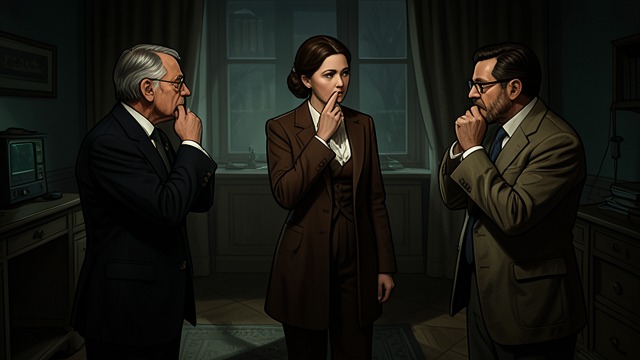
Boundaries with Lars
A rupture revisited
Emma confronts Lars about the way his earlier conversation intensified her despair. He apologizes, but the damaged trust remains and Emma concludes that she does not want to continue therapy indefinitely.
The word she can use
When Lars starts to shift responsibility back onto her, Emma says “stop” and repeats it. The moment demonstrates a new ability to protect her own limits rather than silently absorb discomfort.
Her growth appears not as confidence without fear but as action despite fear.
Home Without Cure

Home Without Cure
A deliberate departure
Emma leaves the PAAZ while still vulnerable to mood changes and unusual perceptions. She chooses continuing care with Rajid rather than waiting for a state of perfect health.
Making room for experience
At the former ward site, Emma recognizes a hallucinated dog without needing to treat it as a command or deny that she saw it. She accepts that life can continue alongside a condition.
The ending shifts her goal from becoming untouched by illness to living with greater choice.
Opening Friday morning
The first days after admission
Early to mid-admission, while filling in mood charts
Near the end of the admission, during the final sessions
At discharge and four months later
