
A Cure Versus a Livable Life
UpEmma and Rajid negotiate the limits of psychiatric treatment, balancing safety and medication against Emma’s right to live outside an institution before she is symptom-free.
increasing Bearing strength in each event
 decreasing
Bearing strength in each eventdecreasingThe New Medication Proposal

The New Medication Proposal
Adding Tegretol
Rajid proposes Tegretol alongside Emma’s existing lithium, hoping to reduce the elevated states. Emma wants a fast result because she believes a short admission will let her return to work.
A treatment bargain
She agrees to try the medication partly because it may provide a clear timeline for discharge. The agreement is shaped by her urgency more than by acceptance of the diagnosis.
The prescription begins a new conflict between speed and caution.
Adverse Effects and Emergency Care
Adverse Effects and Emergency Care
The body interrupts the plan
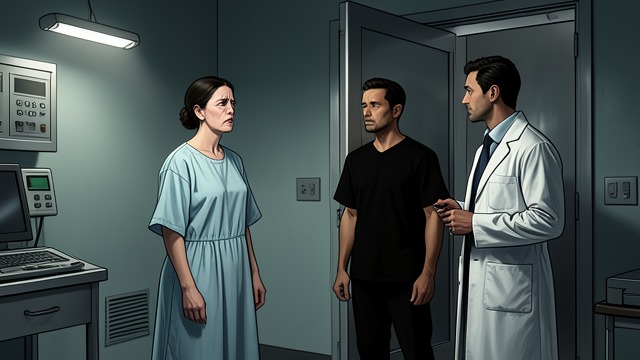
Emma develops troubling physical symptoms, including breathlessness, abdominal pain, elevated blood pressure, and a rapid pulse. She initially insists that the symptoms are merely medication side effects.
Assessment changes course
Rajid sends her to the emergency department, where clinicians assess a possible embolism and advise stopping Tegretol. The suspected danger proves less grave than feared, but the side effects are real.
The episode forces treatment to proceed more cautiously than Emma wants.
A Different Stabilizer

A Different Stabilizer
Trying Depakine
After Emma’s side effects settle, Rajid proposes Depakine with lithium. He warns that building the dose will require monitoring and may extend her admission.
Hope and limits
Emma agrees because she hopes medication may reduce depression, but Rajid explains that mood stabilizers may help elevated states more reliably than depressive episodes. The treatment offers a tool, not the cure she wants.
Their expectations begin to move closer to what medication can realistically provide.
The Discharge Disagreement
The Discharge Disagreement
Rajid’s concern
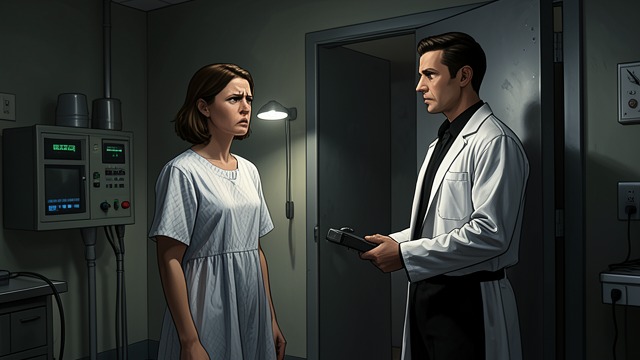
Rajid worries that Emma remains depressed and that her suicide plan makes discharge unsafe. He wants a period of stability before allowing her to leave.
Emma’s counterargument
Emma points to her mood chart and explains that waiting for a perfect interval would be misleading. Her moods will fluctuate at home too; the ward cannot promise to keep her permanently well.
The disagreement is about what safety means, not whether Emma has continuing needs.
Continuing Care, Not Cure

Continuing Care, Not Cure
Responsibility acknowledged
Emma tells Rajid that he helped by intervening when she was in immediate danger. She does not expect him or the PAAZ to make her condition disappear.
A bounded agreement
Rajid agrees to continue as her psychiatrist after discharge, while Emma chooses to end therapy with Lars. Their arrangement preserves medical support without treating inpatient care as the only available response.
The conflict resolves through limits and negotiation rather than a claim of complete recovery.
Early in the admission, after the bipolar hypothesis is raised
Mid-admission, within days of starting Tegretol
Several weeks into the admission, after the Tegretol reaction settles
Near the end of the admission, during a meeting with Rajid
At Emma’s discharge decision
