
Diagnosis and the Self
UpEmma encounters diagnosis as both a useful explanation and a threat to identity, gradually distinguishing a name for symptoms from the person who lives with them.
increasing Bearing strength in each event
 decreasing
Bearing strength in each eventdecreasingThe Label Arrives

The Label Arrives
A hypothesis unsettles her
Rajid suggests that Emma may have bipolar disorder in addition to Asperger syndrome. Emma fears that the new diagnosis means her previous periods of happiness were never truly hers.
Explanation with a cost
The possibility may clarify the rapid changes that treatment has not explained, but it also makes her future feel predetermined. She hears a clinical label as a verdict about who she is.
The conflict begins between diagnostic usefulness and existential fear.
The Charts and the Past

The Charts and the Past
A life redrawn in marks
The mood chart places elevated and depressive periods beside one another, making Emma’s history appear more patterned than she remembers. Days she called normal look like brief pauses in a larger cycle.
Recognition without relief
The evidence helps explain her experience but brings grief for the ordinary future she had imagined. Naming the pattern does not make her immediately willing to accept it.
Diagnosis becomes a tool that can reveal and wound at once.
More Than a Patient
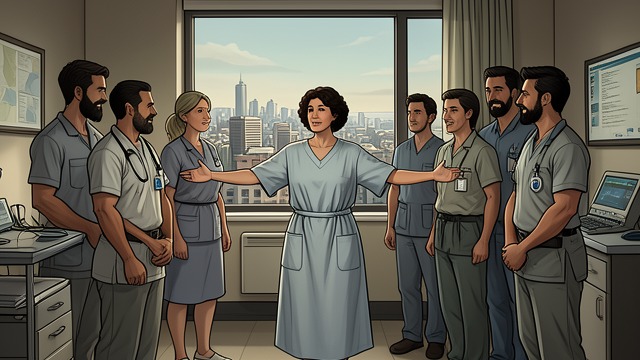
More Than a Patient
Identity under debate
The recovery course encourages patients to see themselves as more than diagnoses. Emma objects when this language seems to classify others as outsiders who cannot understand.
A lived identity remains
She argues that suffering is not owned by a medical category and that a person may be a patient without being reducible to one. Her own illness is real, but it does not replace her work, family, humor, or relationships.
The debate makes identity an active negotiation rather than a clinical conclusion.
Choosing the Useful Name

Choosing the Useful Name
A diagnosis as a map
Rajid explains that diagnoses group recurring symptoms so clinicians can communicate and choose treatment. Their names reflect current medical understanding, not an exhaustive truth about the patient.
A tool, not a sentence
Emma accepts that bipolar disorder may describe important parts of her experience while refusing to treat it as her whole identity. She continues with medication because it may help, not because the label has solved her life.
The diagnosis becomes useful when it supports choices rather than replacing them.
A Name on the Manuscript

A Name on the Manuscript
The institution becomes a title
Emma tells Doctor Visser that she may call her manuscript PAAZ. The title names the place where she has suffered and received care without claiming that the place defines her.
Writing beyond diagnosis
She leaves with the manuscript still part of her life, alongside medication, family, and uncertainty. Her story can include illness without becoming only a clinical case history.
The title converts an imposed setting into material she can choose to interpret.
Early in the admission, during Rajid’s diagnostic discussion
Mid-admission, as Emma begins reviewing her mood history
During the recovery sessions in the middle of the admission
Near discharge, during a later conversation with Rajid
On Emma’s final day at the PAAZ
