
The Ward as a Story About Change
UpThe PAAZ’s symbols of doors, broken boundaries, reversed paintings, and demolition trace Emma’s changing relationship to control and uncertainty.
increasing Bearing strength in each event
 decreasing
Bearing strength in each eventdecreasingThe Door Between Wards
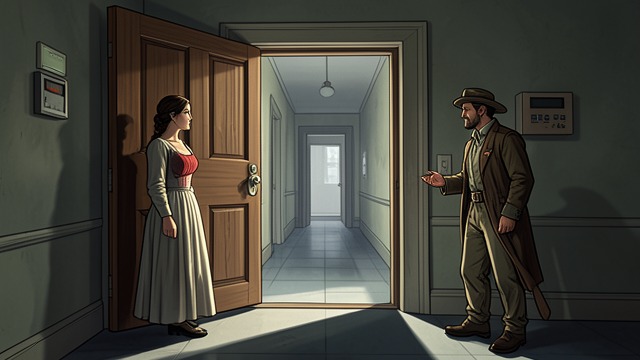
The Door Between Wards
A boundary made physical
A locked door separates the open ward from the nursing office and the locked side. Emma sees how a wall and a door can divide people even inside one institution.
Security and isolation combined
The boundary promises containment while making staff feel farther away. Patients cross to the other side for company, demonstrating that a safety architecture can also produce loneliness.
The door introduces the novel’s recurring question of how boundaries protect and exclude at once.
The Broken Garden Entrance
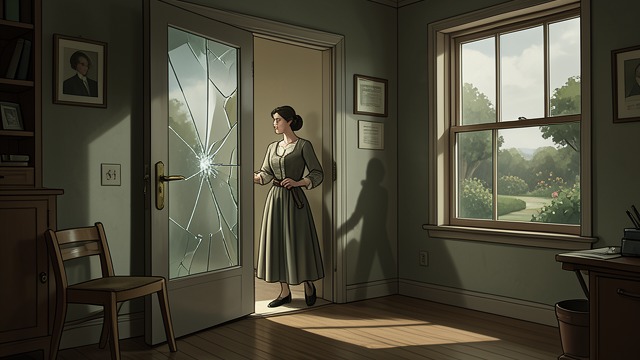
The Broken Garden Entrance
A daily flaw
The warped garden door lets in wind and must be kept either open or locked. Patients and staff repeatedly discuss the defect without securing a lasting repair.
A boundary shattered
Michiel eventually throws a chair through its glass. The destructive action forces attention onto the door but also makes the ward feel less safe.
The entrance embodies the cost of neglected boundaries and the danger of trying to create change through violence.
Paintings Turned Upside Down
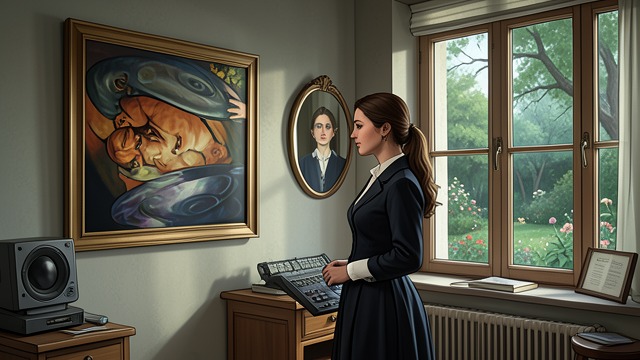
Paintings Turned Upside Down
A private test
Emma notices that some landscapes hang upside down and begins turning other paintings as an experiment. She wonders why staff who call her ill do not notice what she sees.
Disorder reclaimed as play
The small sabotage becomes a private joke and later a farewell ritual with Linda and Iefke. Emma uses order and inversion not only as symptoms but as a way to make meaning and share humor.
The paintings turn perception into a reversible act rather than an unquestioned verdict.
The Old Building Disappears
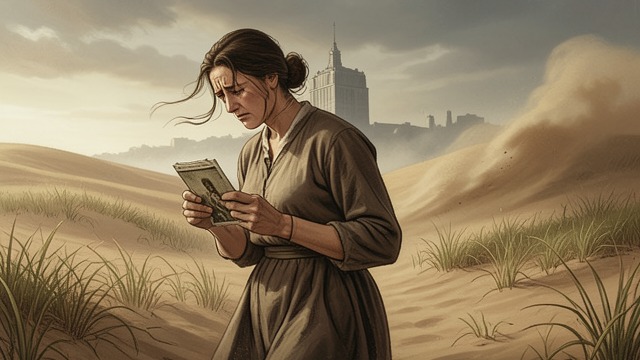
The Old Building Disappears
A place erased
Emma returns with Sergei and finds that the old PAAZ has been demolished. Sand covers the site, and she struggles to remember the exact shape of the building.
Loss without return
The building had been both frightening and protective, and its absence makes the end of the admission irreversible. Emma cannot go back to the same place even if she later wants to.
Demolition makes institutional change a form of personal grief.
Home Beyond the Threshold
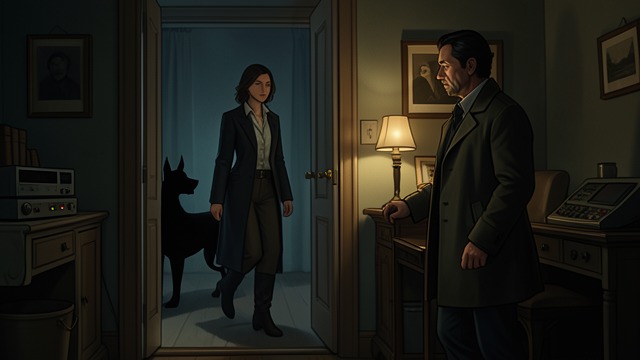
Home Beyond the Threshold
The old refuge cannot return
Emma accepts that the PAAZ is gone and that her life cannot be restored to an earlier version. A hallucinated dog appears, but she can recognize it without surrendering to its meaning.
Home as relationship
She turns toward Sergei and the family visit ahead, carrying her treatment and memories with her. Home is not the opposite of illness; it is a life in which illness has a place but not total control.
The final threshold leads outward without promising a simple cure.
Emma’s first day on the PAAZ
The first weekend and the later door crisis
Late in the admission, during Emma’s nocturnal walks
Four months after Emma leaves the ward
At the end of the novel, after Emma sees the vanished site
