
Choosing Life Beyond the Ward
UpEmma Nieuwenhuis moves from seeing hospitalization as the only safe future to leaving with continuing treatment, imperfect relationships, and a renewed capacity to choose.
increasing Bearing strength in each event
 decreasing
Bearing strength in each eventdecreasingA Life Put on Hold

A Life Put on Hold
Productivity as escape
Emma brings work to the ward and treats writing as a reason to keep life moving. She imagines that once she is released, she can return immediately to her job and ordinary schedule.
The ward intrudes
Her energy, poor sleep, and preoccupation with work make it hard for staff and friends to accept her claim that she is well. The ordinary routines of the PAAZ repeatedly interrupt her preferred story.
The tension exposes how productivity can hide both distress and dangerous certainty.
Work Falls Away

Work Falls Away
A contract not renewed
Emma learns that her temporary contract will not be extended while she is hospitalized. She understands the practical explanation but feels the loss as another consequence of becoming unwell.
Identity under pressure
Work had represented normality, colleagues, and a life regained after her first admission. Losing it weakens the future she had expected to resume at once.
The setback forces her to distinguish a meaningful role from proof that she has recovered.
The Choice to Leave
The Choice to Leave
Recognizing the limits
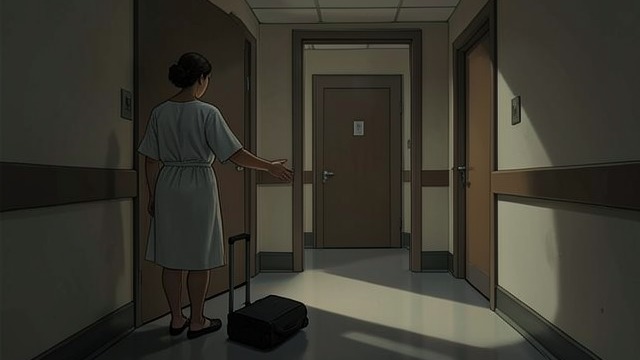
Emma tells Rajid that her mood will likely change again and that waiting for a permanently good stretch would make discharge impossible. She believes she can continue care more appropriately outside the ward.
A negotiated risk
Rajid remains concerned because Emma is still depressed, but he hears her reasoning and agrees to let her leave. The decision acknowledges risk without making hospitalization the only definition of safety.
Emma’s return home is neither cure nor denial; it is a chosen next step.
Farewells and Boundaries
Farewells and Boundaries
Choosing what ends
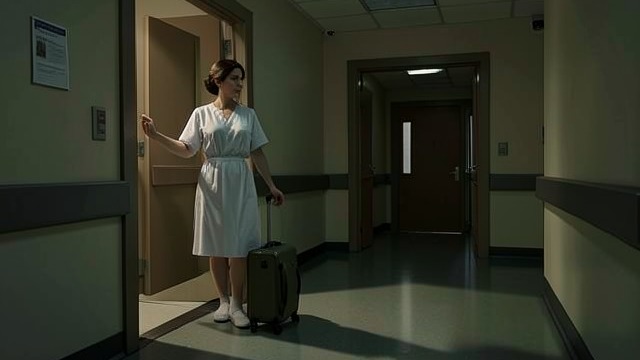
Emma tells Lars she wants to stop psychological therapy, though she intends to continue psychiatric medication with Rajid. She frames the decision as wanting to live outside the cycle of endless sessions.
Practicing refusal
When Lars begins to explain her part in an earlier conflict, Emma says “stop” repeatedly and holds the boundary. The exchange is uncomfortable, but she no longer lets discomfort erase her refusal.
Her departure involves not only leaving the building but deciding what forms of help she will accept.
The Vanished Building
The Vanished Building
A return to an empty site
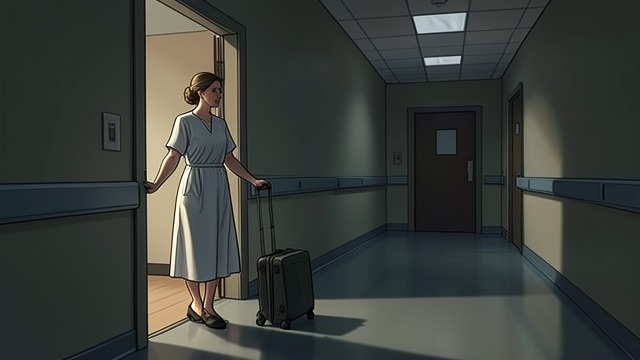
Emma visits the old PAAZ grounds with Sergei and finds only sand where the ward once stood. The building’s disappearance removes the possibility of returning to the familiar place she had both dreaded and relied upon.
Carrying the experience forward
She sees a dog in the shadows, recognizes that it belongs to her perception, and does not need to deny its presence. Her life continues with treatment, relationships, and uncertainty beyond the old ward.
The ending makes home a lived connection rather than a building or a guarantee of cure.
Early in the admission, while Emma insists she will soon leave
Midway through the admission, after the employer calls
Near the end of the admission, during Emma’s discharge discussion
Emma’s final days on the ward
Four months after Emma’s discharge
