
The Ward That Is Being Dismantled
UpThe PAAZ’s staffing cuts, broken facilities, and impending move shape the patients’ daily lives and expose the gap between institutional ideals and available care.
increasing Bearing strength in each event
 decreasing
Bearing strength in each eventdecreasingA Split Ward
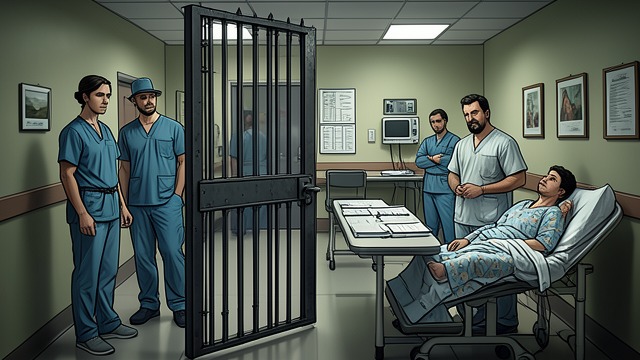
A Split Ward
New boundaries
Emma discovers that the old U-shaped unit has been divided into open and locked sections. The nursing office now sits behind a locked door, separating staff from patients on the open side.
A changed atmosphere
The reorganization affects where patients gather, how they seek help, and which staff members they can find. Emma senses that the ward has changed even before she understands the reasons.
The physical division makes institutional change visible in everyday routines.
The Broken Garden Door
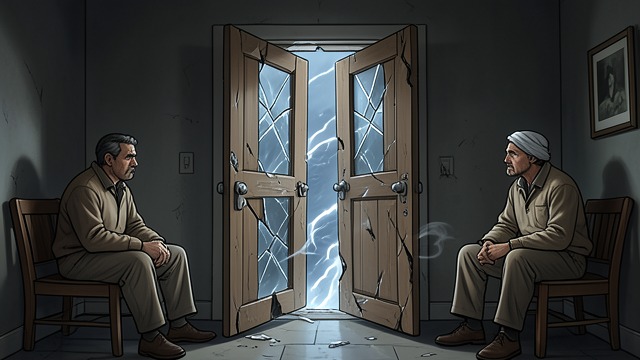
The Broken Garden Door
A defect left unresolved
The garden door is warped and its glass is damaged, leaving it either open or locked. Staff explain that arguments over responsibility and the approaching move have stalled repairs.
A symbol of neglect
Patients complain that the door makes the ward cold and insecure, but repeated assurances produce little change. The broken entrance becomes an everyday reminder that their needs are easily postponed.
The door’s eventual repair will follow a disruptive act rather than a successful administrative process.
Walking by Insistence
Walking by Insistence
A schedule without practice
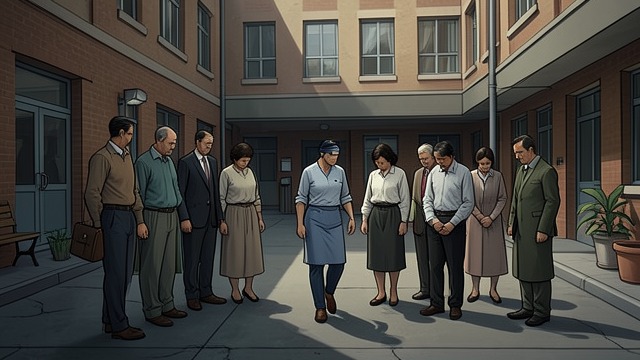
Emma finds walking listed on the ward program, although staff say it is no longer routinely organized. She argues that the activity should happen if it remains on the schedule.
Making a group move
She persuades other patients to come outside and asks staff to accompany them, despite their reluctance. The outing briefly replaces passive waiting with shared movement.
Her insistence reveals both her need for structure and the ward’s failure to deliver what it promises.
Staffing and Absence
Staffing and Absence
A thinner presence
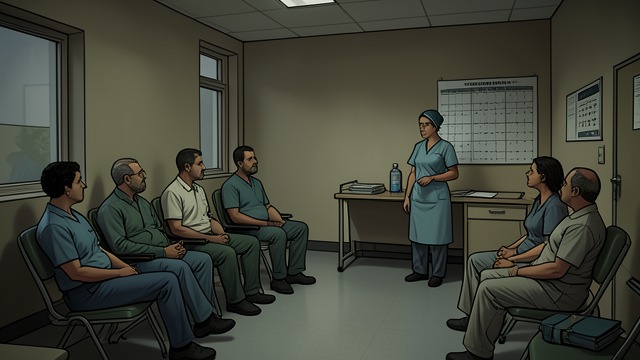
Emma notices that nurses spend much of their time on the locked side, leaving the open ward to organize itself. Patients gather on the locked side in the evenings because staff and company are there.
Care reduced to schedules
The ward still lists activities, but supervision and informal attention are often missing. Sandra acknowledges that staffing reductions have left a small team covering demanding needs.
The gap between patients’ apparent independence and their loneliness becomes a central institutional problem.
The Move and the Name
The Move and the Name
A future without the old ward
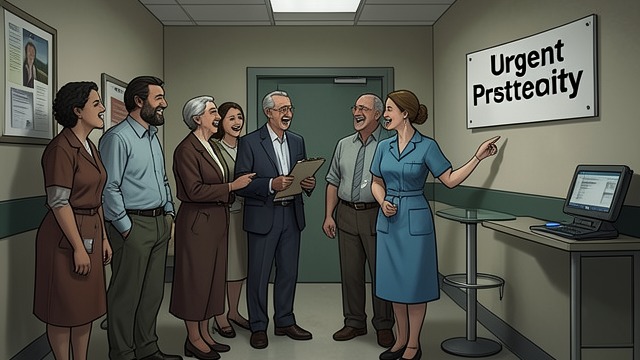
The group hears that the PAAZ will merge with another service and move into a new building. Staff ask patients to help devise a name that will suit the expanded unit.
Humor amid uncertainty
Patients joke about possible titles, and “Urgent Psychiatry,” shortened to UP, emerges as a suggestion. The humor offers a moment of shared authorship amid changes that patients otherwise cannot control.
The new name gestures toward a future institution while the old one continues to deteriorate.
Emma’s first Friday back on the PAAZ
The first weekend of Emma’s admission
Early in the admission, after Emma notices the unused walking slot
Across the first weeks, especially during evenings
Late in Emma’s admission, during a group discussion about relocation
