
The Manuscript and the Right to Tell
UpEmma Nieuwenhuis’s unfinished manuscript shifts from private work and a source of identity to a challenged project she must reclaim on her own terms.
increasing Bearing strength in each event
 decreasing
Bearing strength in each eventdecreasingWork as a Refuge

Work as a Refuge
A task to preserve
Emma carries a laptop and plans to edit a manuscript while hospitalized. Work gives her a familiar sequence of tasks that seems more manageable than treatment or emotion.
The cost of concealment
She presents the writing as ordinary work and avoids explaining its personal subject. Productivity helps her feel continuous with her former life, but also keeps others from seeing how unwell she is.
The manuscript begins as both refuge and barrier.
Michiel’s Challenge
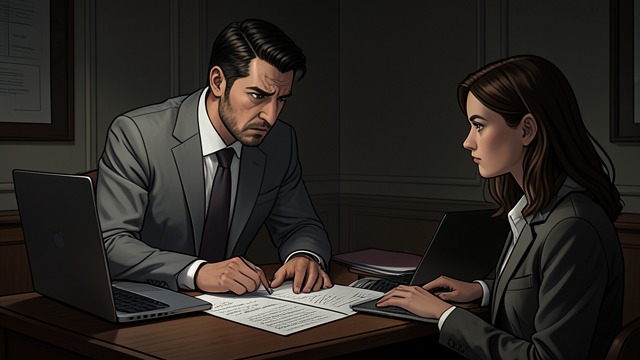
Michiel’s Challenge
Questions of authority
Michiel Viguurs discovers Emma’s writing and asks who she is to describe reality when her perceptions can become delusional. His challenge strikes at the legitimacy of writing from a life she does not fully understand.
A sudden rupture
Emma cannot defend the manuscript on the spot. Her attention fragments and she leaves the room, carrying both the laptop and the fear that her account may be unreliable.
The confrontation makes authorship a question of trust rather than mere craft.
The Page Goes Dark

The Page Goes Dark
Doubt takes over
Emma reads her own sentence asking who she is to write the story. The diagnosis and the confusion between hallucination and reality make the manuscript feel too small and possibly dishonest.
Silence as retreat
She stops writing, telling herself she has nothing left to say. The laptop remains nearby, but the work no longer offers a stable route through the admission.
The stalled manuscript mirrors her fear that illness has invalidated her memory and voice.
Permission from Her Mother
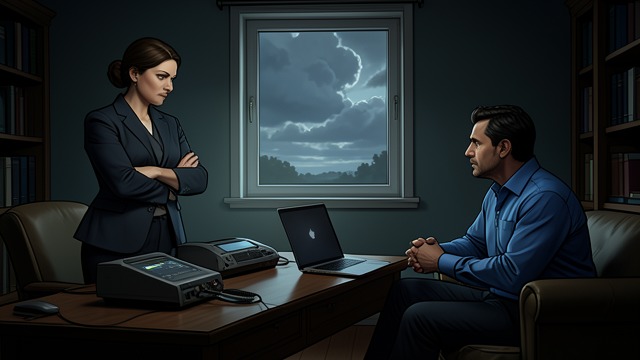
Permission from Her Mother
A story that belongs to Emma
Emma tells her mother she has stopped writing because she doubts her right to describe what happened to others. Her mother answers that the account is Emma’s and that Emma alone can write it from her own perspective.
A possible audience
Her mother says she would like to read it, though not while Emma is still hospitalized. The response does not erase the difficulties but gives the manuscript a reason to exist beyond private self-examination.
The conversation restores authorship as a choice rather than a duty.
A Title and a Return
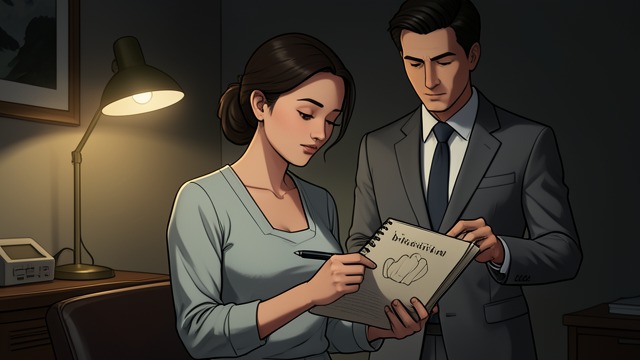
A Title and a Return
Naming the work
Doctor Visser asks about the manuscript, prompting Emma to consider a title. She chooses PAAZ, turning the ward’s name into a frame for a story that once seemed impossible to tell.
Leaving it unfinished no longer
The manuscript’s title makes the project feel real, but Emma does not claim that it is complete or resolved. She leaves with the possibility of writing from outside the institution.
The work becomes a way to carry experience forward, not a demand to explain everything.
At admission, when Emma brings her laptop to the ward
Mid-admission, during activity therapy
After Emma’s disclosure of psychosis to Rajid
Near the end of the admission, during her mother’s visit
On Emma’s discharge day
