
Amelie’s Relapse
UpAmelie’s recovery is destabilized by a conversation with Michiel, while the ward’s divided response exposes competing ideas about responsibility, vulnerability, and blame.
increasing Bearing strength in each event
 decreasing
Bearing strength in each eventdecreasingA Time-Out Admission
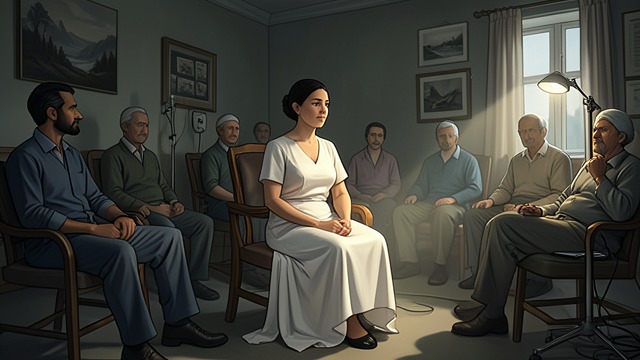
A Time-Out Admission
A composed newcomer
Amelie arrives as a well-presented patient taking time away from ordinary life. She does not initially disclose the full details of her recovery, and other patients read her as capable and settled.
A fragile boundary
Her presence in the ward does not mean that risk has disappeared. She is trying to remain stable in an environment where conversations, access, and supervision are uneven.
Her apparent normality conceals a recovery that can be disrupted.
The Conversation at the Table
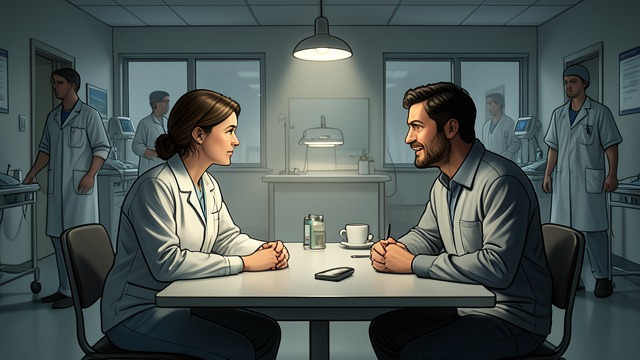
The Conversation at the Table
Shared histories
Michiel Viguurs spends a long time talking with Amelie about drugs. He understands the exchange as conversation rather than pressure and does not initially know how close she is to relapse.
A hazardous setting
The discussion takes place within a ward meant to support people who may be vulnerable to substance use. Staff pass through without recognizing the risk gathering at the table.
The scene shows how casual familiarity can become dangerous without any explicit intention to cause harm.
The Return to Use
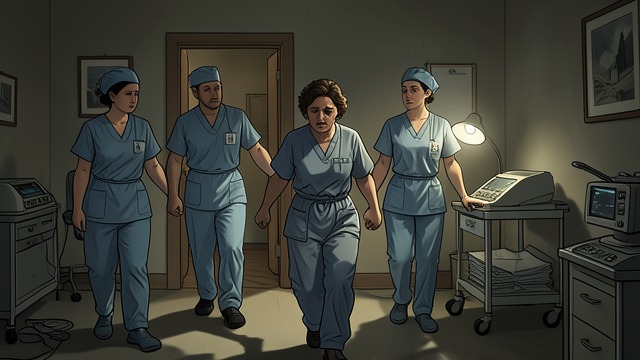
The Return to Use
A relapse becomes visible
Emma hears that Amelie has returned to the ward under the influence and is with nursing staff. Amelie had reportedly been clean for two years before using again.
Consequences beyond the ward
Patients learn that Amelie has a child and that the relapse may lead to separation from that child. The news transforms an apparently private choice into a family crisis.
The relapse makes the cost of exposure and insufficient support painfully concrete.
Iefke Accuses Michiel
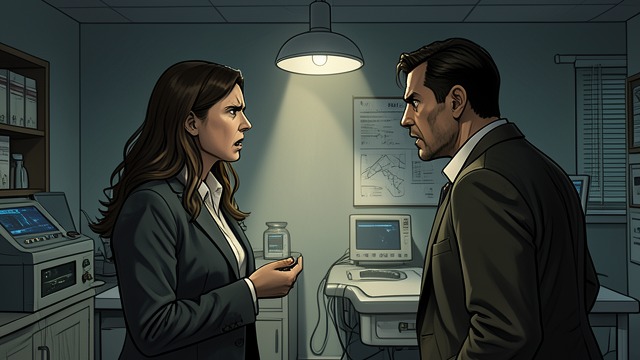
Iefke Accuses Michiel
Anger seeks an answer
Iefke Stam blames Michiel for discussing drugs with Amelie, arguing that he should have recognized her vulnerability. She confronts him with the possibility that Amelie could lose access to her child.
A wound is used as a weapon
Iefke invokes Michiel’s adoption and family history, turning a dispute about conduct into a personal attack. Michiel leaves rather than striking back, but the group’s trust in him is damaged.
The confrontation reveals how concern can become cruelty when blame overrides understanding.
No Simple Villain

No Simple Villain
Reassessing what she saw
Emma recalls Michiel describing his effort to keep outside dealers away from the ward. She also remembers that he talked with Amelie and did not intervene when her recovery was at risk.
Responsibility without certainty
Emma cannot reduce the relapse to one person’s intent, yet recognizes that actions have consequences even when no harm was planned. Amelie’s own agency and the ward’s failures remain part of the story.
The episode complicates the easy division between a protective patient and a dangerous one.
Midway through Emma’s stay, when Amelie joins the ward
A day before Amelie’s relapse is discovered
The following day, after Emma returns from visiting Sergei
Immediately after Amelie’s relapse is discussed
Later in the admission, as Emma reconsiders what happened
