
Goods Without Private Ownership
UtopiaThis flow traces how shared property and distribution challenge the security, status, and inequalities of a money-based society.
increasing Bearing strength in each event
 decreasing
Bearing strength in each eventdecreasingShared Houses
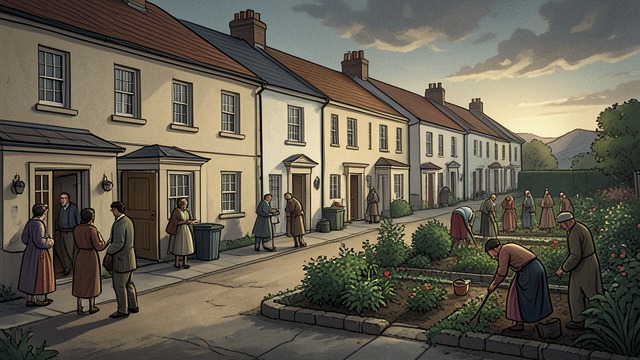
Everyday Access
Doors Without Private Claims
Utopian houses are exchanged by lot, and people may enter them freely because property is not privately held.
The arrangement makes shared ownership part of daily experience, not simply a legal principle.
Gardens in Common
Residents care for attractive and productive gardens.
Stores for Necessities
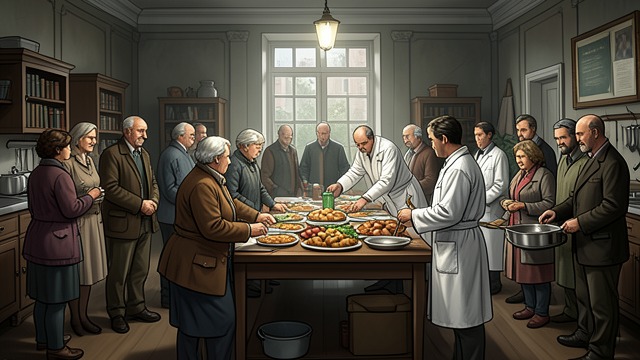
Distribution by Need
Goods Brought Together
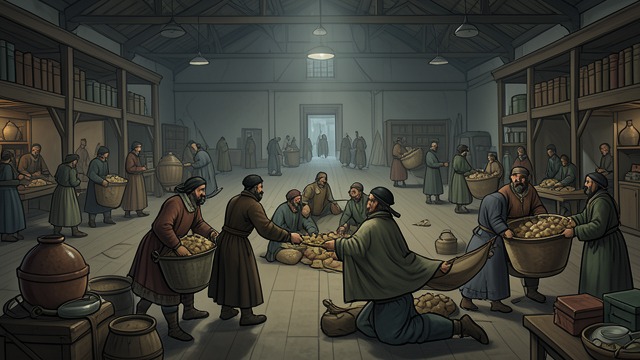
Families deliver what they produce to common stores, where households obtain what they need without payment.
Raphael argues that guaranteed provision removes incentives to hoard necessities.
Public Care
Food is also directed toward hospitals and communal meals.
Money Lost Its Prestige
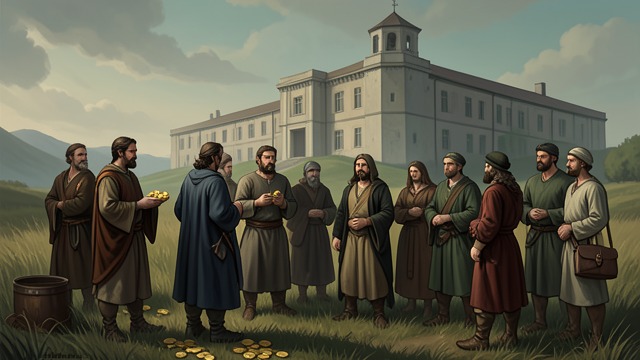
Wealth Revalued
Gold Kept for Use
Utopians retain precious metals mainly for external exchange and emergencies, not as measures of personal worth.
Their customs deliberately weaken the social power of money.
A Reversal of Status
Gold becomes associated with objects and marks of disgrace.
More’s Objection
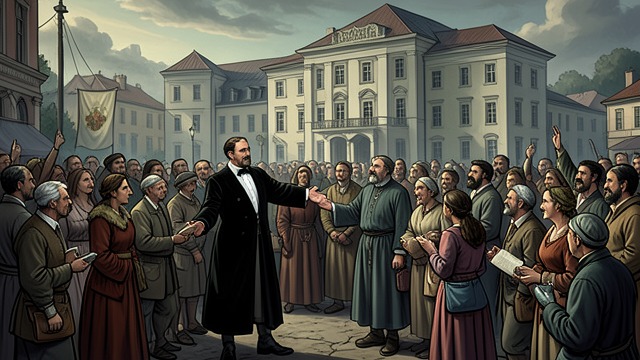
Doubt About Common Property
Incentives and Authority
More argues that shared ownership might invite idleness, shortage, and weakened respect for magistrates.
His objection exposes the assumptions that Raphael’s account asks listeners to reconsider.
An Answer from Experience
Raphael claims that lived institutions dispel More’s doubts.
Private Property Condemned
Inequality Under Ownership
Wealth Concentrated
Raphael argues that private property allows a small group to possess abundance while many live in misery.
He presents common ownership as a condition for fairer distribution and social calm.
An Ideal, Not a Resolution
More’s closing response leaves the proposal open to judgment.
During Raphael’s description of Utopian cities
During Raphael’s account of city markets
During Raphael’s explanation of Utopian trade
Before Raphael begins the island’s detailed description
Near the end of the philosophical exchange
