
The Making of an Ideal Commonwealth
UtopiaThis flow follows Utopia from conquest and island-making to the institutions Raphael presents as its mature social order.
increasing Bearing strength in each event
 decreasing
Bearing strength in each eventdecreasingThe Conquest
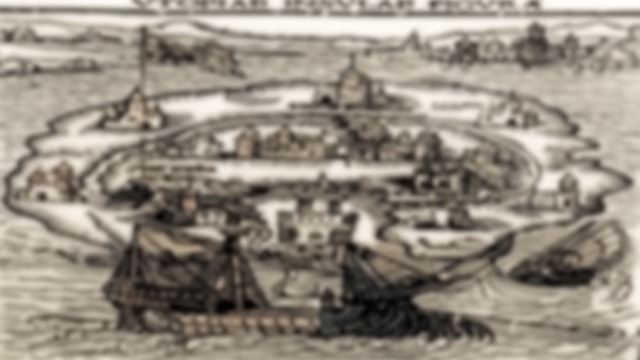
A New Political Beginning
Utopus Takes Power
Utopus conquers Abraxa and brings its inhabitants under a common government.
The founding story makes political order the result of deliberate transformation, not untouched nature.
A Contested Legacy
The account celebrates reform while retaining the force of conquest.
The Channel Cut

Separating the Island
Collective Labor
Utopus orders a channel dug to separate the territory from the mainland, involving inhabitants and soldiers in the work.
The engineering project reshapes geography and gives the new state a defensible boundary.
Security by Design
The island’s difficult entrance later strengthens its protection.
Common Institutions
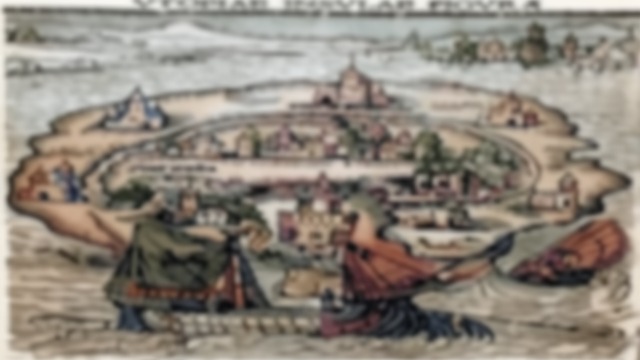
A Shared Framework
Cities and Councils
The island’s cities share closely related customs and send representatives to deliberate over common affairs.
Political coordination makes the island function as more than a collection of separate towns.
Local Continuity
Similar rules connect civic life across the territory.
Work and Provision

Organized Abundance
Productive Households
Agriculture and useful trades are widely taught, while labor is distributed across communities.
Public stores and shared provision reduce the insecurity Raphael associates with private competition.
Time for Learning
The system also promises leisure for intellectual cultivation.
An Unfinished Example

The Ideal Under Examination
Admiration and Doubt
Raphael calls Utopia exceptionally well governed, but More notes customs he cannot accept without question.
The commonwealth therefore functions as both an imagined model and a provocation.
No Final Verdict
The dialogue closes with comparison, not conversion.
In the island’s distant founding era
Soon after Utopus’s conquest
After the founding reforms, in Utopia’s established era
During Raphael’s description of ordinary Utopian life
At the close of Raphael’s account
