
Raphael’s Refusal of Court Life
UtopiaThis flow follows Raphael’s defense of independence from princes and his argument that political courts frustrate honest philosophical counsel.
increasing Bearing strength in each event
 decreasing
Bearing strength in each eventdecreasingA Deliberate Independence

Choosing Freedom
Refusing Employment
Raphael rejects Peter Giles’s suggestion that he enter a king’s service.
He regards dependence on a prince as a loss of the freedom to live according to his own judgment.
A Different Measure
Personal wealth and advancement do not persuade him to abandon that independence.
The Courtroom of Power
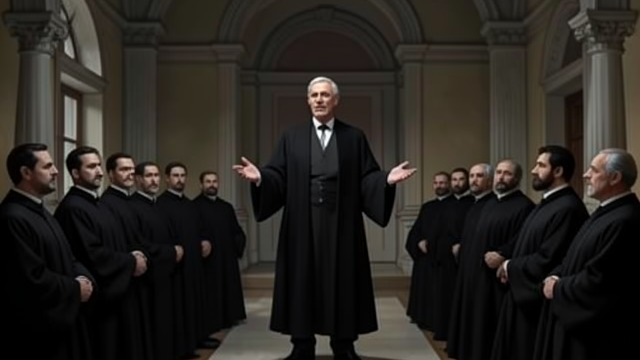
Advice Against Expansion
War as Policy
Raphael imagines advising a French court to abandon territorial ambition and govern existing lands well.
He expects advisers committed to conquest to reject a proposal that threatens their shared assumptions.
Counsel Without Purchase
His example frames honesty as politically costly.
The Treasury Schemes

Rule by Extraction
Revenue at Any Cost
Raphael lists proposals for manipulating money, reviving penalties, selling exemptions, and bending judges toward royal interests.
The imagined council makes statecraft look like organized exploitation.
A King’s Security
He counters that public prosperity is safer than impoverishment.
The Ship in the Storm

Engagement or Withdrawal
More’s Practical Counsel
More argues that a wise adviser may reduce harm without abandoning public life.
His image of a ship in a storm makes partial improvement a political duty.
Raphael’s Objection
Raphael fears that courtiers will force an adviser to endorse wrongdoing.
The Unresolved Choice

Independence Preserved
No Court Appointment
Raphael’s arguments leave him outside the princely service More recommends.
His refusal protects his integrity but leaves the possibility of direct political influence unresolved.
Dialogue as Alternative
The conversation itself becomes a space for the counsel he distrusts courts to hear.
During the first Antwerp conversation
During Raphael’s account of royal advisers
Later in the same debate about princely counsel
During More and Raphael’s disagreement over compromise
At the end of their political exchange
