
The Economics of Immortality
Vainqueur the DragonThis flow follows the novel's recurring transformation of magic, religion, labor, and death into competing commercial systems.
increasing Bearing strength in each event
 decreasing
Bearing strength in each eventdecreasingThe Adventurer Market
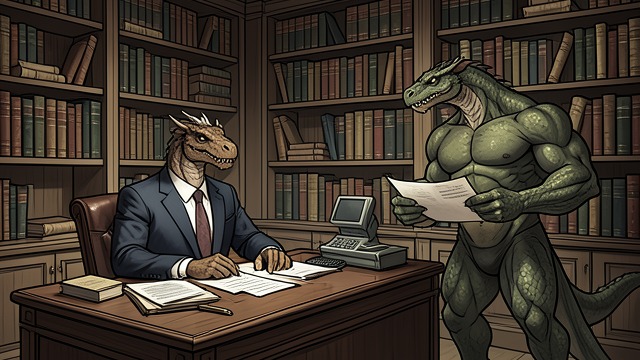
The Adventurer Market
Violence for Hire
The Adventurer Guild converts monster killing and crisis management into ranked contracts. Vainqueur recognizes the system as a way to monetize abilities he already possesses.
Institutional Absurdity
The guild tries to preserve procedure despite the presence of an ancient dragon. Plates, fees, bounties, and paperwork become a thin administrative shell around overwhelming force.
The story's economy begins as comedy but governs survival.
Undead Labor
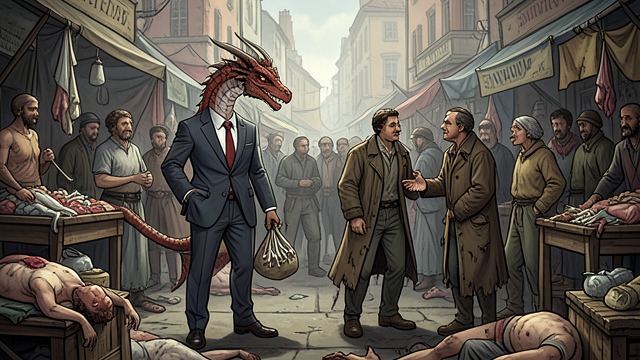
Undead Labor
Bodies as Assets
Victor Dalton sells enemy corpses to the Church of Camilla, while Jules Rapace defends undead labor as efficient and environmentally harmless. Death becomes raw material for mining, farming, and trade.
Ethics by Contract
The characters debate legality rather than morality, revealing a society willing to redefine exploitation when the laborer no longer has a living voice.
The Undead Labor Trade becomes one of Murmurin's foundational industries.
Heaven Insurance
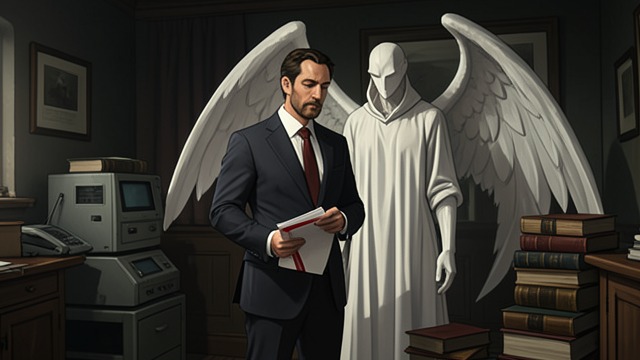
Heaven Insurance
Salvation as Subscription
Miel offers Victor Dalton a Hellfire Protection Plan in exchange for recurring Special Points. Even angels present salvation through pricing structures and contractual urgency.
Spiritual Competition
The offer reveals that Heaven, Hell, and Shesha compete for souls as markets. Moral language becomes advertising, while afterlife destinations become products with different coverage levels.
Victor's uncertainty is therefore both theological and financial.
Soul Nethermart
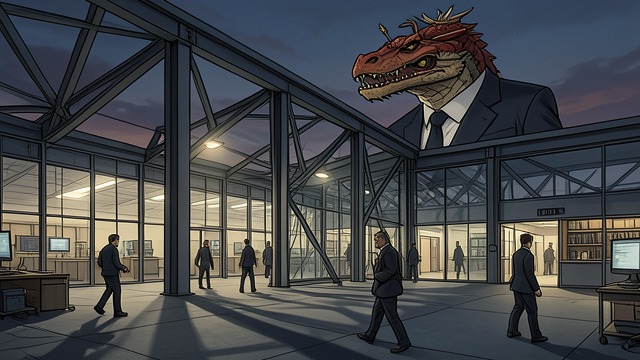
Soul Nethermart
Hell Rebranded
Malfaisant presents Happyland as a modern corporation with customer protection, shareholder value, and soul-backed investment. The language of business masks the violence of damnation.
A Competitive Empire
Murmurin becomes a tax-free market where Hell, Heaven, Shesha, and the Church of the Dread Three seek influence. Victor's policies create prosperity by inviting predatory institutions to compete.
The novel turns capitalism into a supernatural battlefield.
The Resurrection Invoice
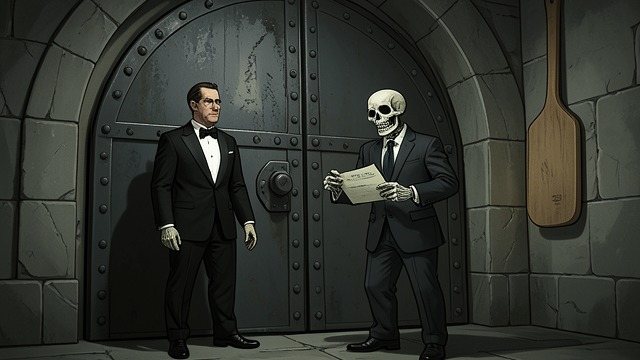
The Resurrection Invoice
A Price Beyond Wealth
Shesha revives Victor Dalton after receiving a fortune pooled from Murmurin and surrendered by Vainqueur. The exact cost becomes a debt that reshapes the pair's future.
Sacrifice as Investment
Vainqueur frames the payment as the price of preserving his most valuable asset. The transaction demonstrates that resurrection does not erase economic reality; it intensifies it.
Immortality is attainable, but never free.
when Vainqueur joins V&V
during the Haudemer aftermath
after Victor's first near-death experience
during the opening of Nethermart
during Victor Dalton’s Resurrection
